
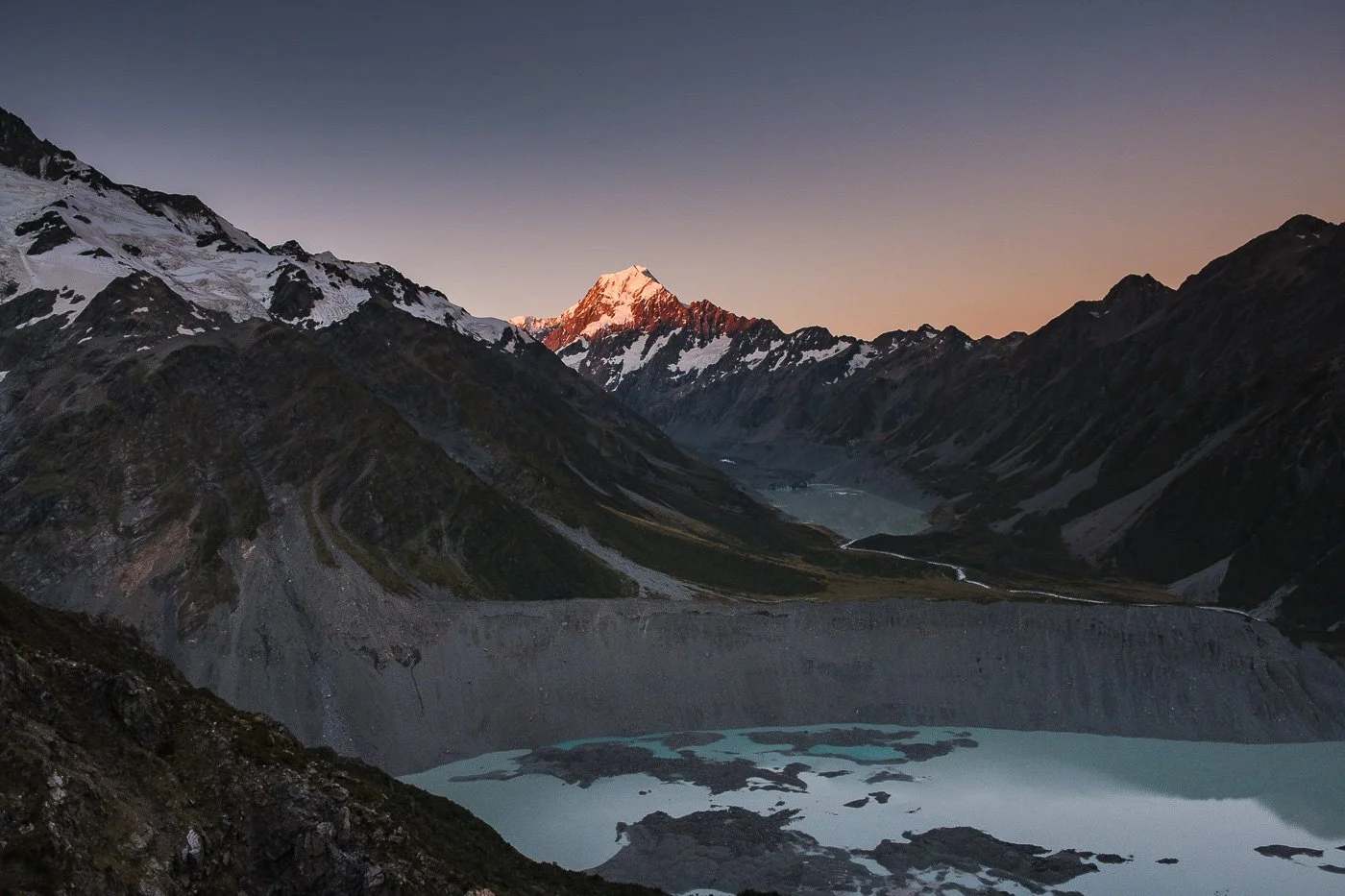
Sunset from Sealy Tarns, after a climb into the mountains of Aoraki / Mount Cook National Park.
I’ve lived in New Zealand for 8 years and spent a lot of that time travelling around the country with a camera in hand. From glaciers and alpine lakes to surf towns, geothermal landscapes and some of the wildest coastline I’ve ever seen, these are the places I’d recommend prioritising on a trip to New Zealand.
If you’re searching for the best places to visit in New Zealand for first timers, this guide is a mix of the big New Zealand must-see places and some of the spots I personally think deserve a place on your itinerary.
I know New Zealand intimately as a local, but I’m also a photographer and have spent much of my life heading off on epic adventures around the world, so I have the perspective of both a traveller and a local… with the added bonus of knowing which places are truly photogenic and iconic.
Planning your own trip? Save this guide somewhere you can find it again when you start piecing together your New Zealand itinerary. There are a LOT of places in here, and you definitely don’t need to squeeze them all into one trip.
Plan your New Zealand adventure
Jump straight to the part you need:
My top 10 places to visit in New Zealand
If you’re short on time and just want my personal shortlist, these are the 10 places I’d put highest on your New Zealand bucket list:
Aoraki / Mount Cook National Park, for enormous mountains, glaciers and some of the most incredible scenery in the country.
Queenstown, for mountains, Lake Wakatipu, great food and as much or as little adrenaline as you want.
Wānaka, for alpine scenery, hiking, lake life and a slightly more relaxed alternative to Queenstown.
Lake Tekapo, for turquoise water, mountains, stargazing and those famous lupins if you time it right.
Fiordland National Park and Milford Sound / Piopiotahi, for waterfalls, rainforest and enormous fiord landscapes.
Rotorua, for geothermal landscapes, Māori culture, lakes, forests and adventure.
Tongariro National Park, for volcanic landscapes, hiking and actual Middle-earth scenery.
Hobbiton, because even if you’re not obsessed with Lord of the Rings, wandering through the Shire is pretty magical.
Mount Maunganui, for beaches, surf, Mauao, great food and laid-back coastal New Zealand life.
Lake Matheson and Fox Glacier, for glaciers, native forest and some of the most photogenic mountain reflections in New Zealand.
If I had to narrow that list down even further for a first trip, I’d concentrate on the South Island and build the trip around Aoraki / Mount Cook, Lake Tekapo, Wānaka and Queenstown. If you have enough time for both islands, start north and work your way south.
Find your bearings: take a look at my map of the best places to visit in New Zealand.
Why is New Zealand such a great place to visit?
New Zealand is an island nation, and although it’s commonly associated with being in the same region as Australia, it’s actually tucked away in a corner of the world far removed from… well… almost anywhere. Sitting in the southwestern Pacific Ocean, around 2,000 km from Australia, it can feel like a little world of its own when you’re here.
And it also happens to be spectacular.
New Zealand has always been known as a wonderful place to travel, but its landscapes became considerably more famous after The Lord of the Rings and The Hobbit movies were filmed here. You can quite literally visit Middle-earth, Hobbiton, Mount Doom and many of the incredible landscapes that became the backdrop to those fantasy worlds.
The country stretches roughly 1,600 km from north to south and is predominantly made up of two main islands: the South Island, Te Waipounamu, traditionally associated with pounamu or greenstone, and the North Island, Te Ika-a-Māui, the fish of Māui.
How to make the most of your time in New Zealand
If you’re coming from the other side of the world and only have a couple of weeks, I’m going to say something potentially controversial, because I live in the North Island, but: prioritise the South Island.
If you have longer, I recommend adding the North Island. It’s where I live, and there are places here I wouldn't miss either. But if you only have a short time and you want to experience that iconic New Zealand of enormous mountains, glaciers, alpine lakes and landscapes fit for fantasy movies, start with the South Island.
For anyone trying to narrow down the best places to visit in New Zealand on a shorter trip, concentrating on one island will generally give you a much better experience than trying to race through both.
If you have enough time to visit both islands, however, I’d actually do the opposite geographically: start in the North Island and travel south.
Personally, I wouldn’t finish an enormous cinematic road trip around the South Island and then head to Auckland. Start north and let New Zealand get progressively more ridiculous as you travel south.
The best places to visit in New Zealand’s South Island | Te Waipounamu
If you’re researching New Zealand South Island places to visit and want that iconic New Zealand experience, this is where I’d concentrate most of your trip.
Aoraki / Mount Cook National Park
Absolutely iconic. Do not miss.
Even the drive into Aoraki / Mount Cook National Park is spectacular, with views of Mount Cook for much of the journey. Stop at the Tasman Glacier area for a short walk and glacier views before heading further into the national park.
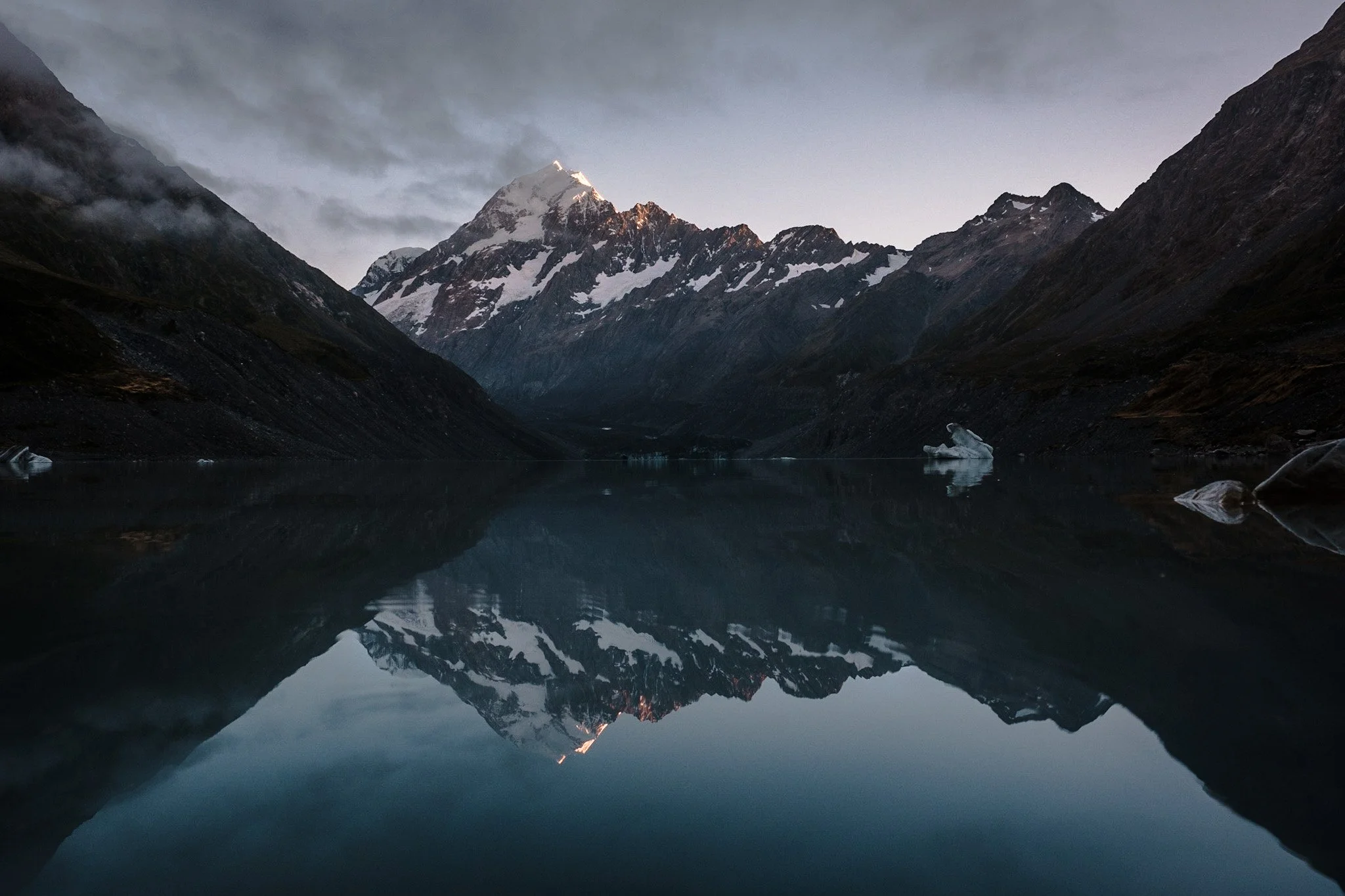
Once you’re there, the Hooker Valley Track is one of the obvious walks to do. It’s fairly long but relatively flat, with incredible views of Aoraki / Mount Cook along the way. We did it for sunrise, which was a MISSION, but so rewarding.
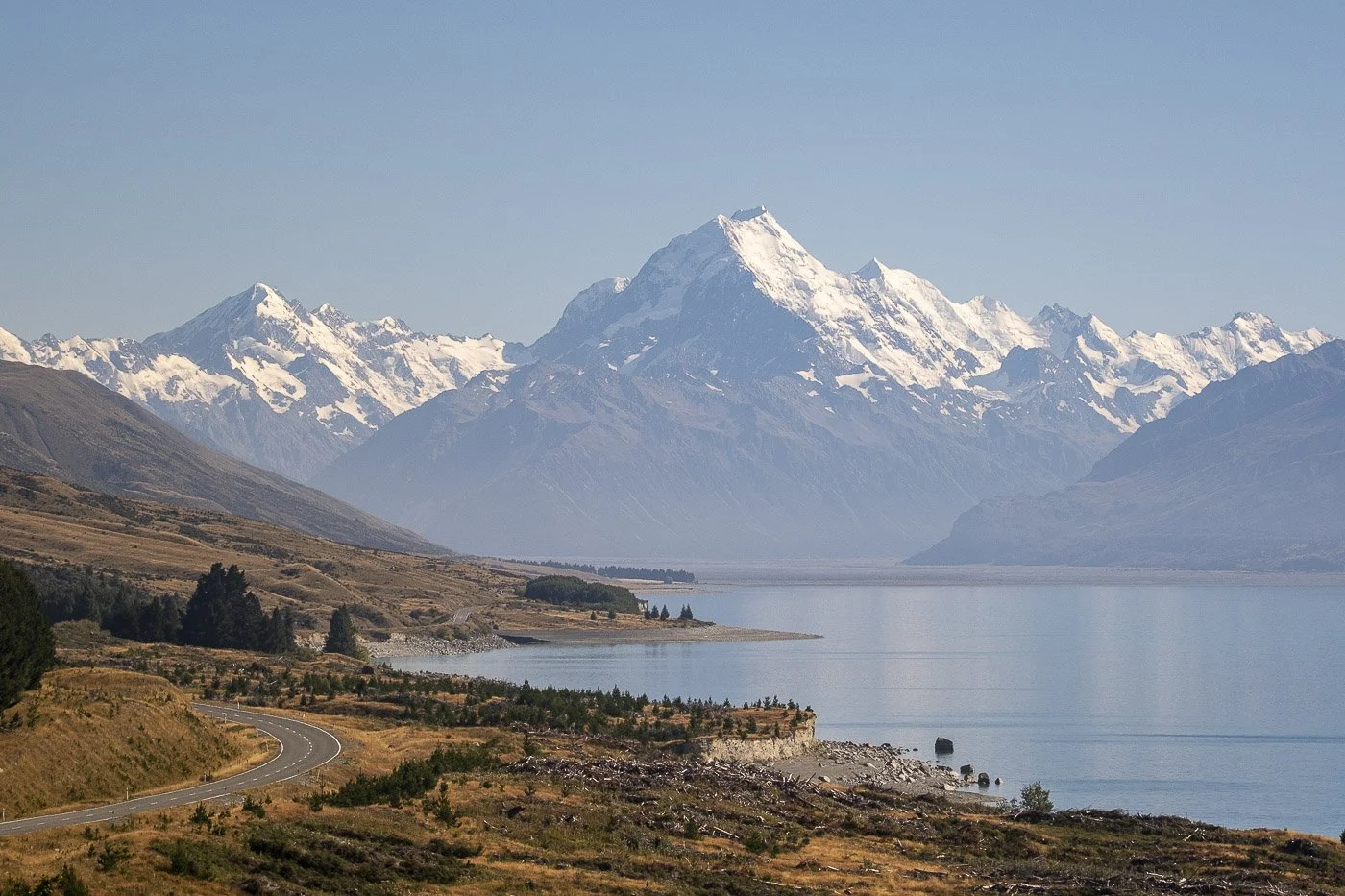
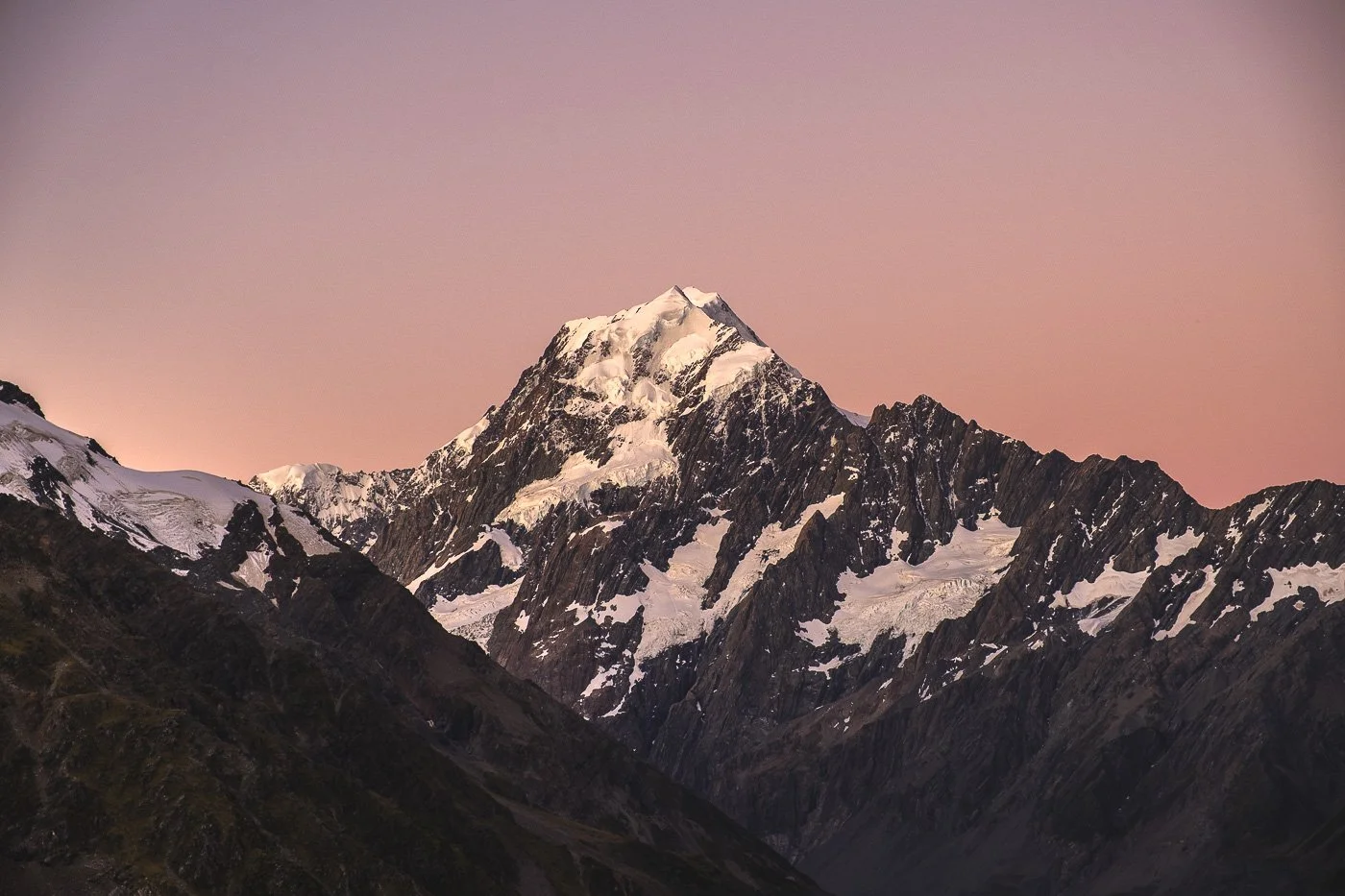
We actually packed a lot into our short time here. We walked part of Hooker Valley on the evening we arrived, did the whole thing for sunrise the following morning and then hiked Sealy Tarns for sunset. It was summer, so thankfully there were plenty of daylight hours and plenty of time for naps in between.
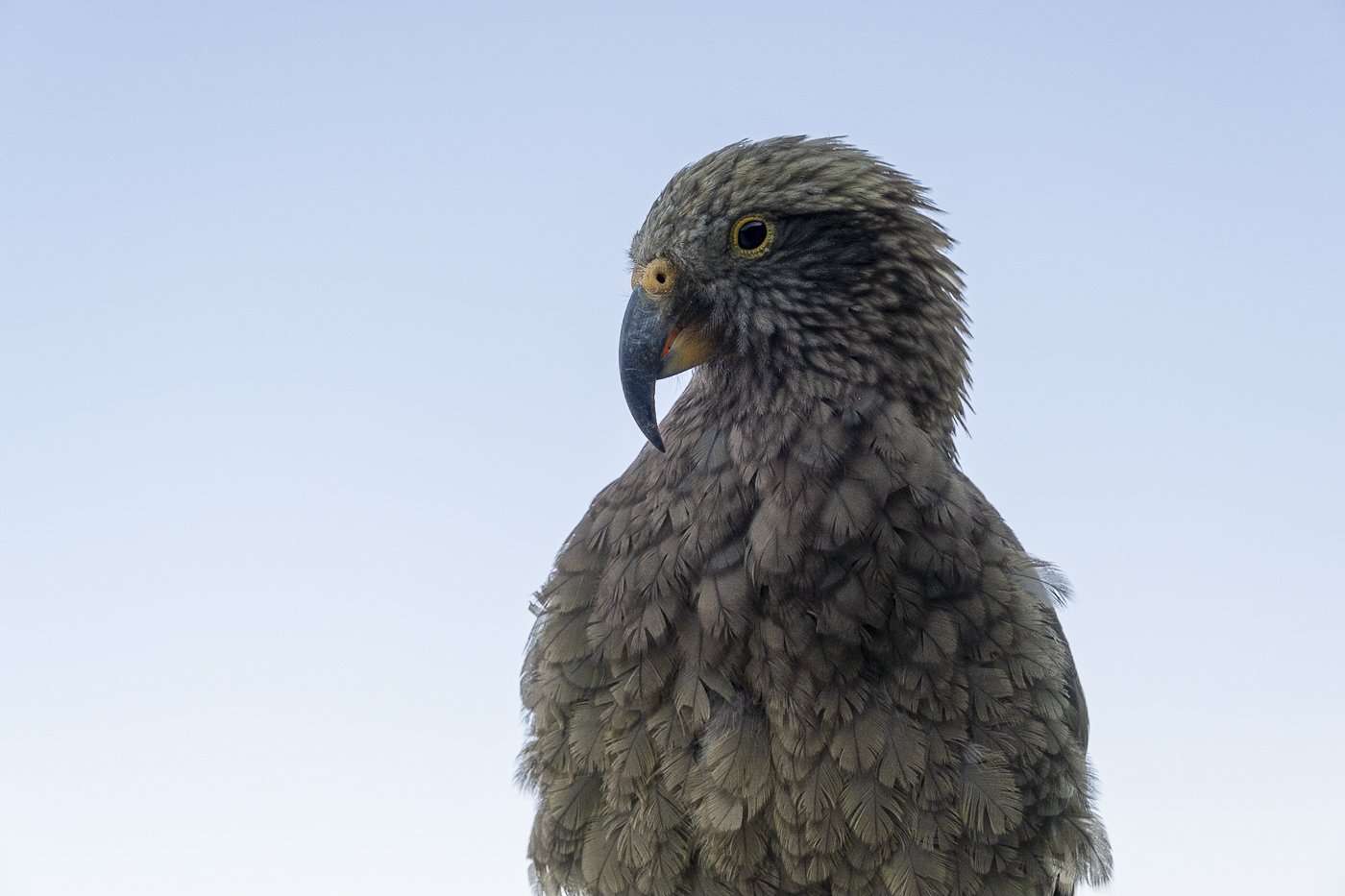
We also took a helicopter flight after our day of walking, and landed on a glacier, which gave us an incredible view of Aoraki up close. Keep an eye out for the cheeky kea while you’re in the national park too. Oh and I was 14 weeks pregnant at the time too (exhausts me just thinking about what I did!)
Fiordland National Park and Milford Sound
Fiordland is actually one of the few places on this list I haven’t personally visited yet, so it remains firmly on my own New Zealand bucket list.
But there is no way I could write a guide to New Zealand’s most iconic places and leave Milford Sound / Piopiotahi off it.
Towering mountains rising almost vertically from the water, waterfalls, rainforest and enormous fiords make this one of the landscapes New Zealand is most famous for. Cruises are one of the classic ways to experience Milford Sound, but there are also kayaking and hiking opportunities throughout Fiordland.
If being in, on or around water is your priority when travelling, this is also one to put high on your list.
Queenstown
Queenstown is another New Zealand icon, and while it’s famous for adrenaline-fuelled activities, you don’t have to throw yourself off something attached to a bungy cord to enjoy it. Take the Skyline Gondola up above Queenstown and do the luge. I’ve done the luge in both Rotorua and Queenstown and, if you’re choosing one, I’d prioritise Queenstown.
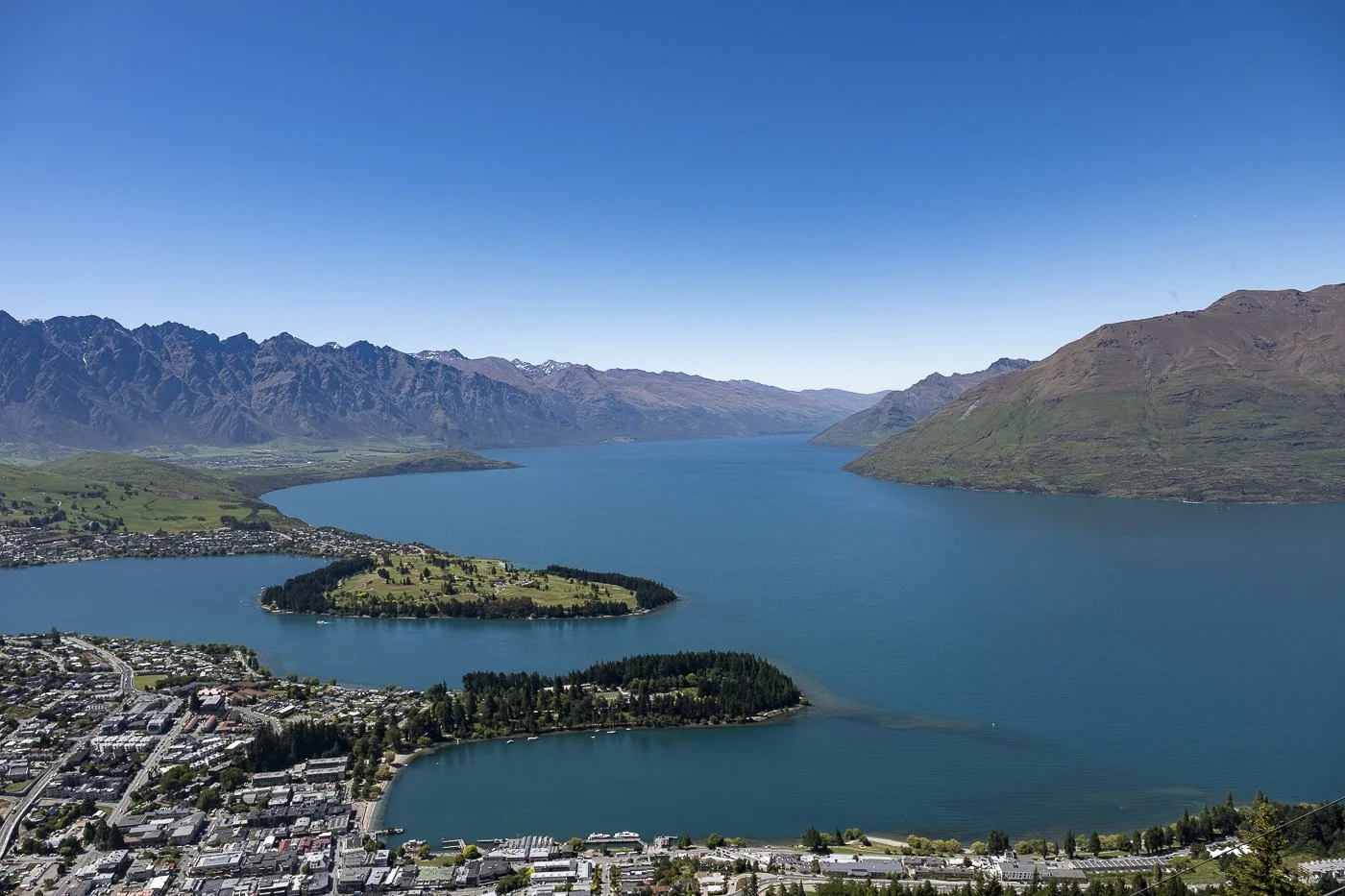
Looking out over Queenstown and Lake Wakatipu from the Skyline Gondola.
Walk along Lake Wakatipu, hike Ben Lomond if you’re up for a proper hike, eat freaking great food and make time to actually enjoy the town rather than treating it purely as an adventure-sports base.
For food, I love Yonder for coffee or dinner and Margo’s for Mexican.
If you want to get out of town, drive towards Glenorchy and stop at Bob’s Cove for a short walk and beautiful lake views. Arrowtown is also an easy side trip from Queenstown. If you’re making Queenstown your South Island base, I’ve compiled some amazing trips that depart from Queenstown here: Queenstown tours collection in Viator.
And if you do want the adrenaline activities, there’s heaps up for grabs in Queenstown including jet boating, bungee jumping and more! I’ve curated my picks in a Queenstown Adrenaline collection in Viator, see it here.
Wānaka
Wānaka is a great place to base yourself for exploring the surrounding area, particularly if you’re heading towards Mount Aspiring National Park or continuing north through Haast towards the West Coast.
It has some of the beauty and outdoor lifestyle of Queenstown without feeling quite as hectic. I also just really like hanging out here, drinking coffee and eating at Big Fig.
If you’re a hiker, Roys Peak is one of the area’s most recognisable viewpoints, while the lake itself is worth slowing down for.
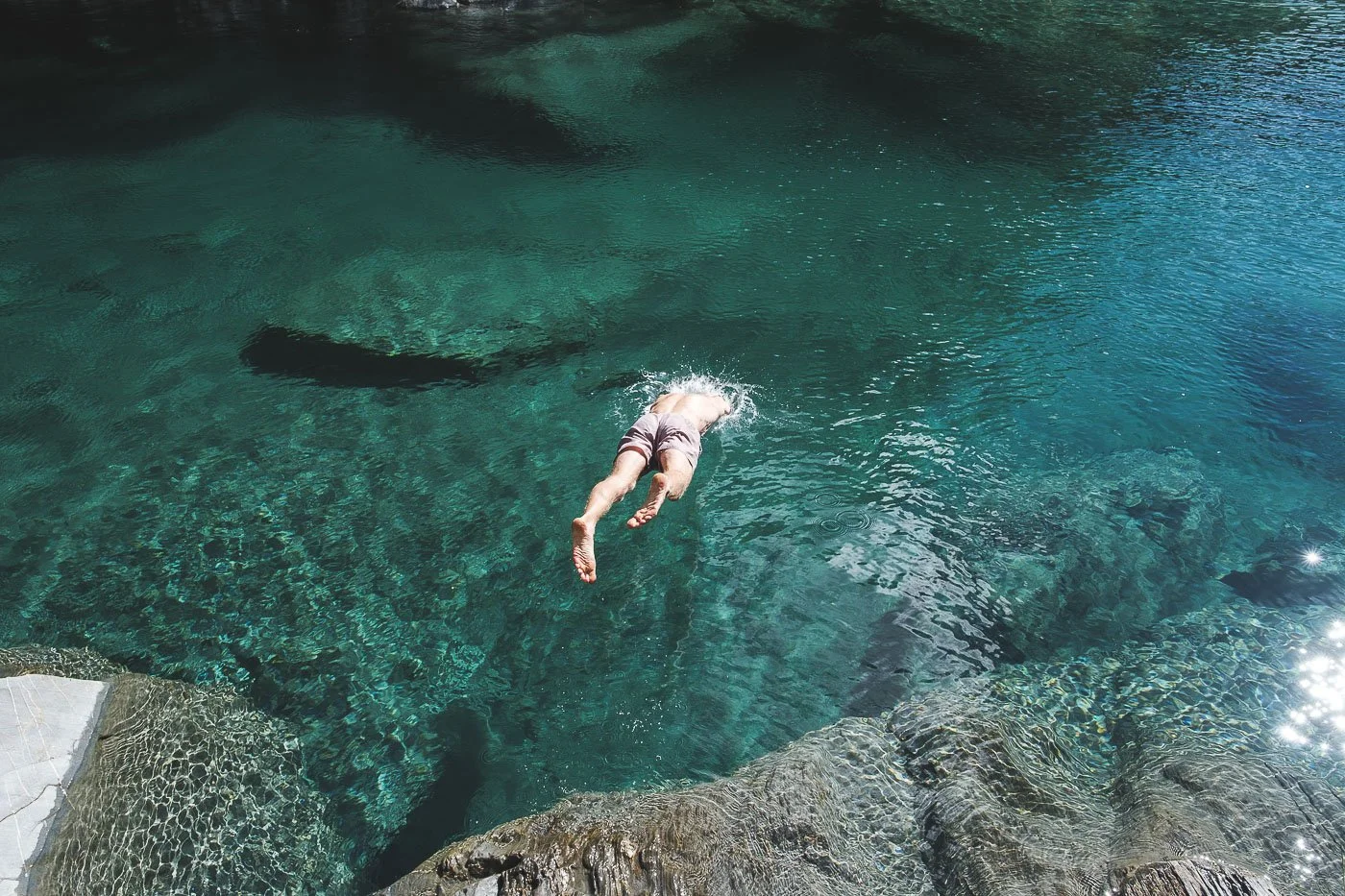
Around an hour out of Wānaka you’ll also find the Blue Pools, where insanely clear blue water flows through native forest. The track reopened after a lengthy closure, and if you’re brave enough, you can even take a VERY cold dip.
Don’t be deceived by that dreamy turquoise water. The Blue Pools are VERY cold.
Lake Tekapo
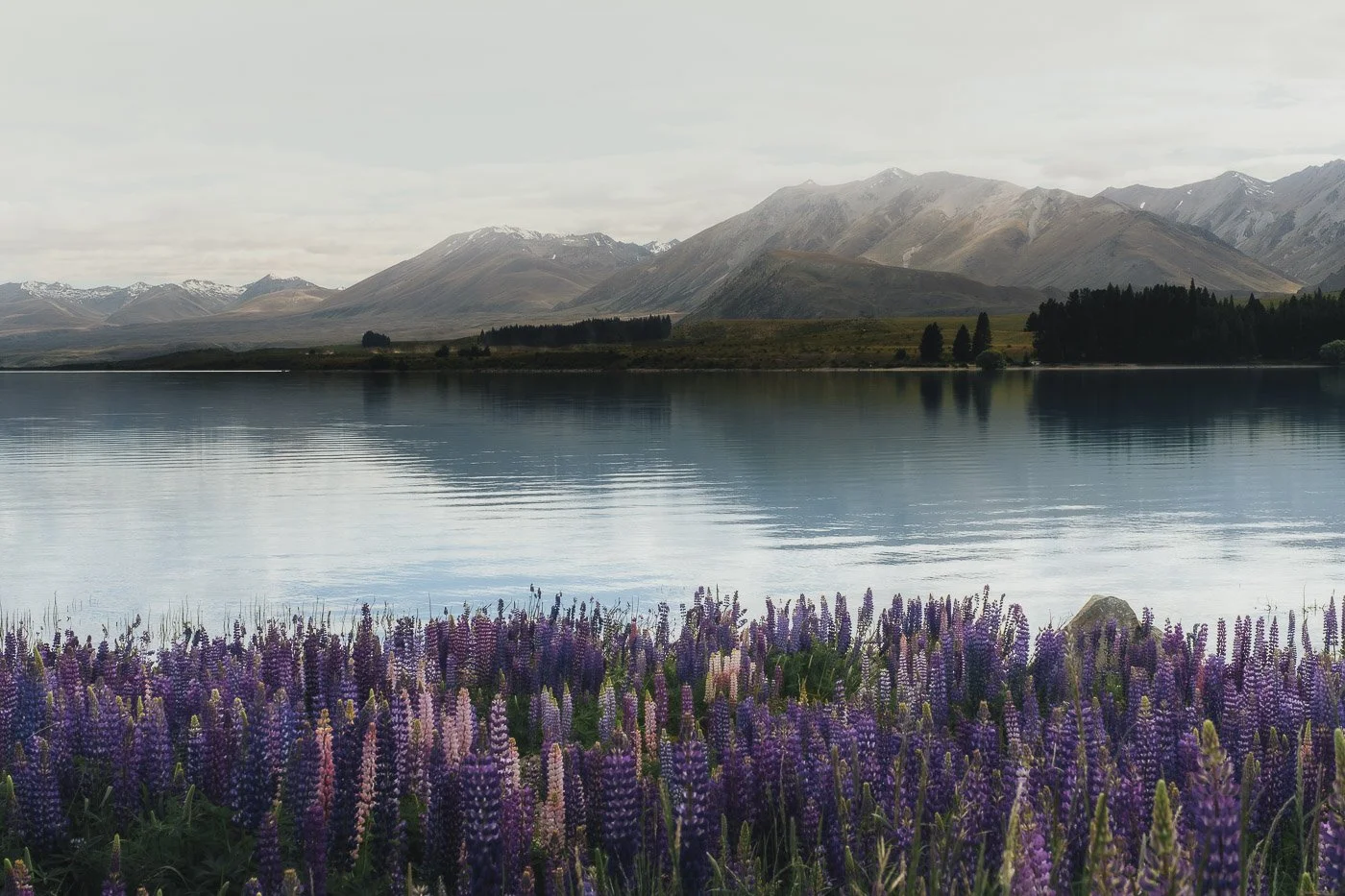
If you’re visiting around late spring or early summer, Lake Tekapo can be surrounded by lupins, creating those iconic New Zealand scenes of purple flowers, turquoise water and mountains.
But even without the lupins, Tekapo is beautiful.
Visit the Church of the Good Shepherd, find a quiet spot beside the lake, take a cold swim if you’re feeling brave or warm up in the hot pools instead.
This is also one of the best areas in New Zealand for stargazing, so I’d absolutely spend a night here rather than just driving through.
If you’re travelling to or from Christchurch, Tekapo makes a great overnight stop to break up the drive.
Lupin season at Lake Tekapo, when an already incredible landscape gets a colourful purple cherry on top.
Fox Glacier
If you’re short on time, I personally don’t think you need to visit both Fox Glacier and Franz Josef Glacier.
They’re both spectacular, but I’d choose one and give yourself more time elsewhere. My pick would be Fox because you can combine it with nearby Lake Matheson. I also wouldn’t necessarily prioritise the walk towards Fox Glacier itself. We found it long and much of it followed a fairly uninteresting 4WD-style track. Fine if you want to stretch your legs, but there are walks elsewhere I’d prioritise if your time is limited.
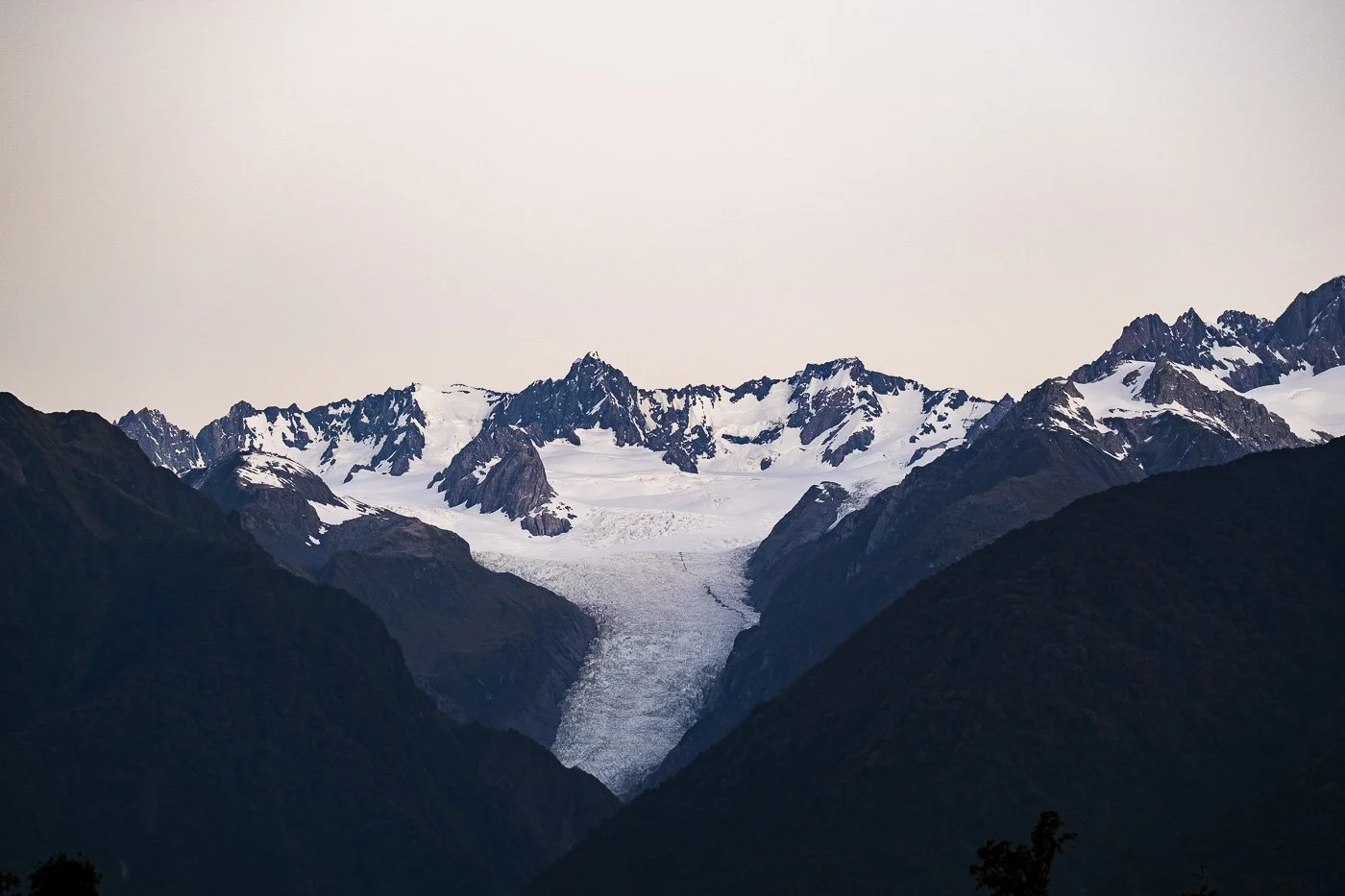
Fox Glacier winding its way down from the Southern Alps on New Zealand’s wild West Coast.
Lake Matheson
Lake Matheson is very close to Fox Glacier, which is another reason I think this area gives you plenty of bang for your buck. The walk around the lake is relatively easy, and when conditions are calm, the water can produce incredible mirror-like reflections of Aoraki / Mount Cook and Mount Tasman. This is definitely one for photographers, but it’s beautiful even if the only camera you’ve brought is your phone.
South Island places worth visiting if you have longer
The places above are the ones I’d prioritise for a first trip, but there are plenty more that are worth adding if you have longer. Some of these are still on my own New Zealand bucket list, so I’m not going to pretend I’ve personally explored them all.
Kaikōura
For: whales, dolphins and that incredible New Zealand combination of mountains meeting the sea.
Kaikōura would move much higher up my list if wildlife and ocean experiences are a big part of why you’re coming to New Zealand.
Hokitika Gorge
For: almost unbelievably turquoise glacial water surrounded by native forest.
It’s an easy place to add while travelling the West Coast and one I’d visit primarily for the scenery and the colour of that water.
The Catlins
For: wild, dramatic coastal New Zealand.
The Catlins sit firmly on my photographer bucket list for their rugged coastline, waterfalls, wildlife and generally windswept end-of-the-world feeling.
Hanmer Springs
For: hot pools, alpine scenery and a bit of adventure.
Hanmer Springs is best known for its thermal pools, but the surrounding area also offers hiking, mountain biking and plenty of more adrenaline-fuelled activities.
Kura Tāwhiti / Castle Hill
For: enormous limestone rock formations scattered across an alpine landscape.
It’s visually completely different from many of the other places on this list and has important cultural significance to Ngāi Tahu.
Abel Tasman National Park
For: golden beaches, turquoise water, kayaking and hiking.
The Abel Tasman Coast Track is one of New Zealand’s Great Walks and gives you a very different Great Walk experience from the alpine and volcanic landscapes elsewhere in the country. It’s a little out of the way depending on your itinerary, so I’d add it if you have the time rather than trying to cram it into an already packed trip. And if water is basically the reason you’re coming to New Zealand, move it much further up your list.
The best places to visit in New Zealand’s North Island | Te Ika-a-Māui
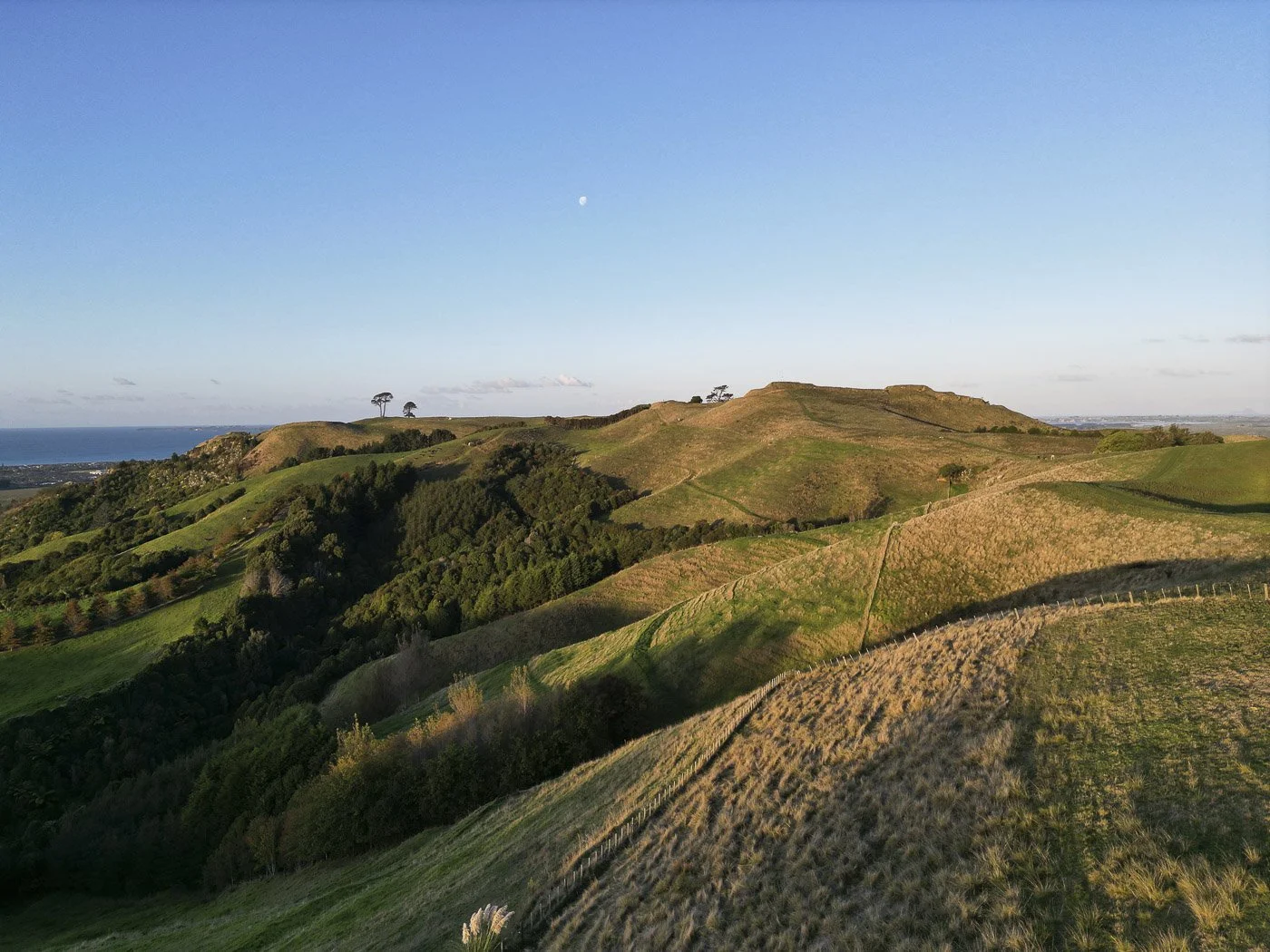
The North Island is where I live, and it has a completely different character from the South. Think geothermal landscapes, volcanic mountains, surf towns, Māori culture, beaches and some of the places I return to again and again.
If you’re searching for New Zealand North Island places to visit, these are the ones I’d put highest on the list, particularly if geothermal landscapes, beaches, Māori culture and volcanic scenery are part of what’s bringing you here. And if you’re travelling both islands? I’d start here and work your way south.
Rotorua
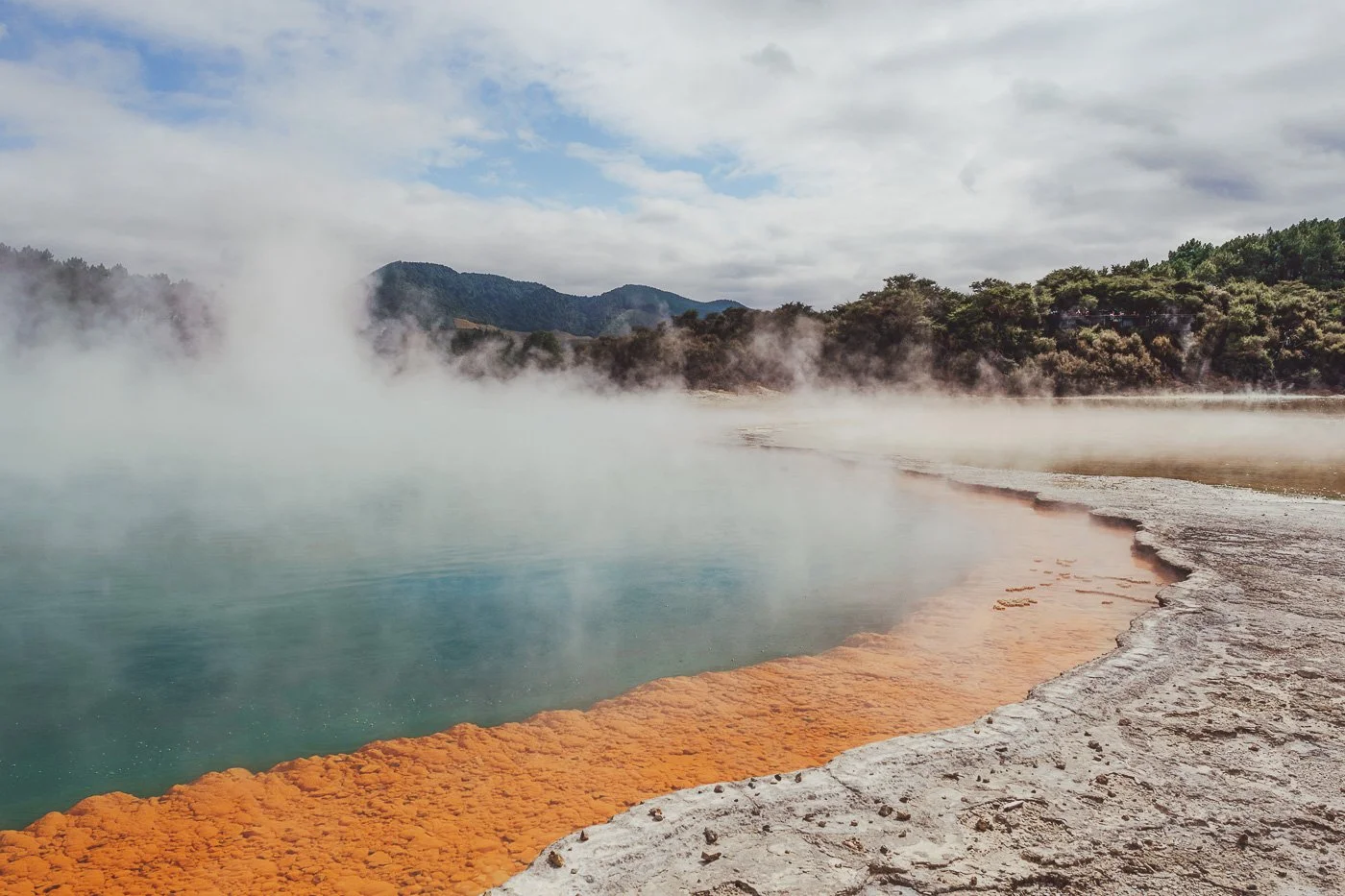
Steaming pools, surreal colours and that unmistakable Rotorua smell. Welcome to geothermal New Zealand.
Rotorua is absolutely one of the places I’d prioritise on a first trip to New Zealand. This is geothermal New Zealand: steaming landscapes, bubbling mud pools, geysers, hot pools and lakes, alongside opportunities to experience and learn more about Māori culture.
There’s also the Redwoods / Whakarewarewa Forest, adventure activities, mountain biking and plenty to do if you’re travelling with children. I’ve already written a separate guide to visiting Rotorua with kids, and I think I need to write a general Rotorua guide too because there is WAY too much to fit in here.
Hobbiton
Even if you aren’t a die-hard Lord of the Rings fan, I think Hobbiton is worth visiting. I’m not a mega LOTR person myself, but I loved it.
The gardens are kept beautifully, the detail is incredible and wandering through the Shire genuinely feels like you’ve gone back in time or been sucked through a portal into Hobbiton. It’s one of those tourist attractions that could easily have felt gimmicky but for me it didn’t.
Tongariro National Park
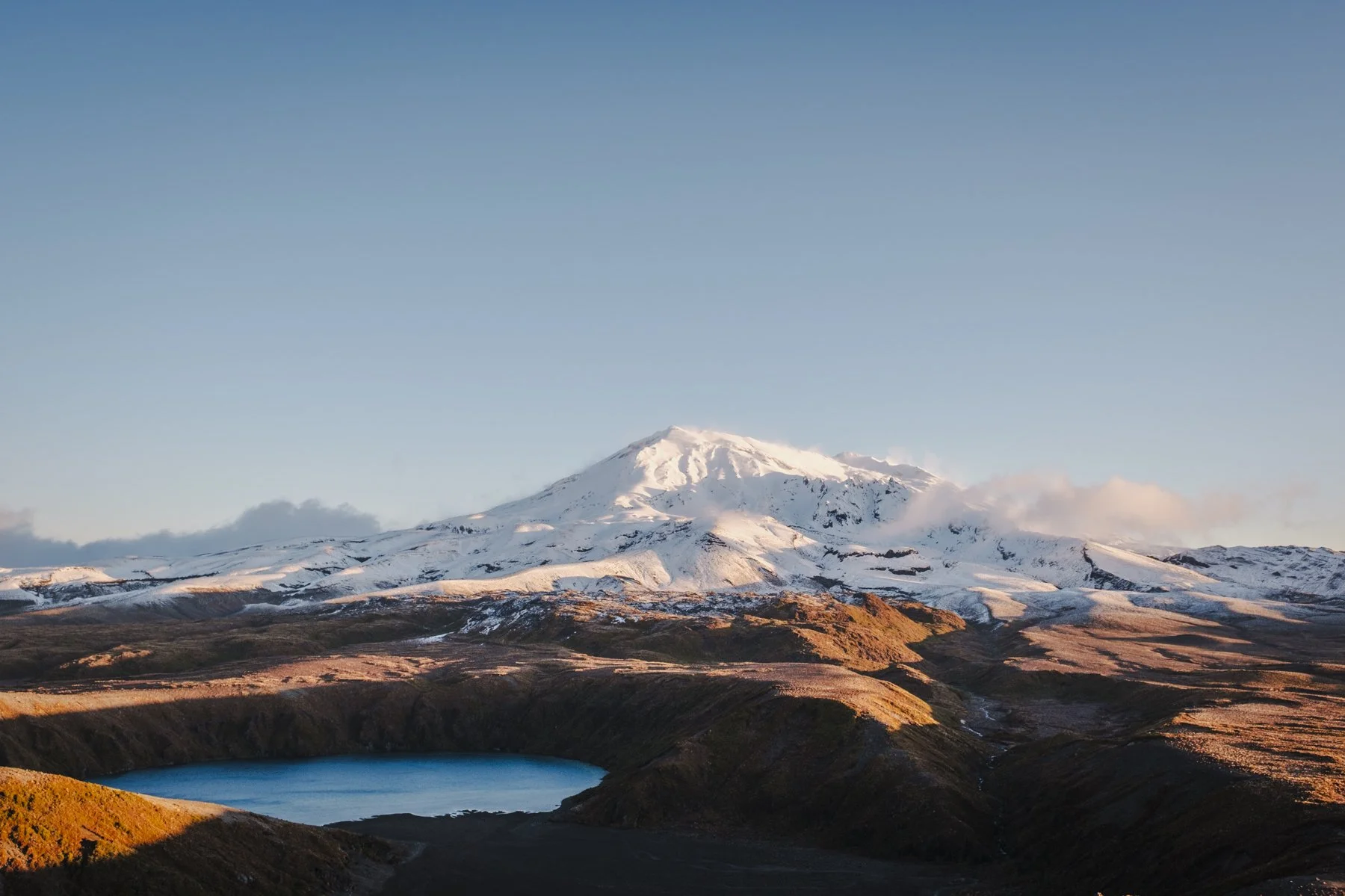
Mount Ruapehu and Tama Lakes catching the last of the light in Tongariro National Park.
If you want volcanic New Zealand and actual Lord of the Rings landscapes, head to Tongariro National Park. Mount Ngauruhoe was used as Mount Doom, and Tawhai Falls is recognisable as Gollum’s Pool.
The Tongariro Alpine Crossing is the famous day hike here, while the longer Tongariro Northern Circuit is one of New Zealand’s Great Walks. If you don’t have time for those, the Tama Lakes Track is another incredible option.
BUT. Do not look at photos of Tama Lakes and think you’re just popping out for a little wander. It’s a proper hike. Go prepared with plenty of water, snacks and layers, check the weather and treat the alpine environment with respect.
Mount Maunganui
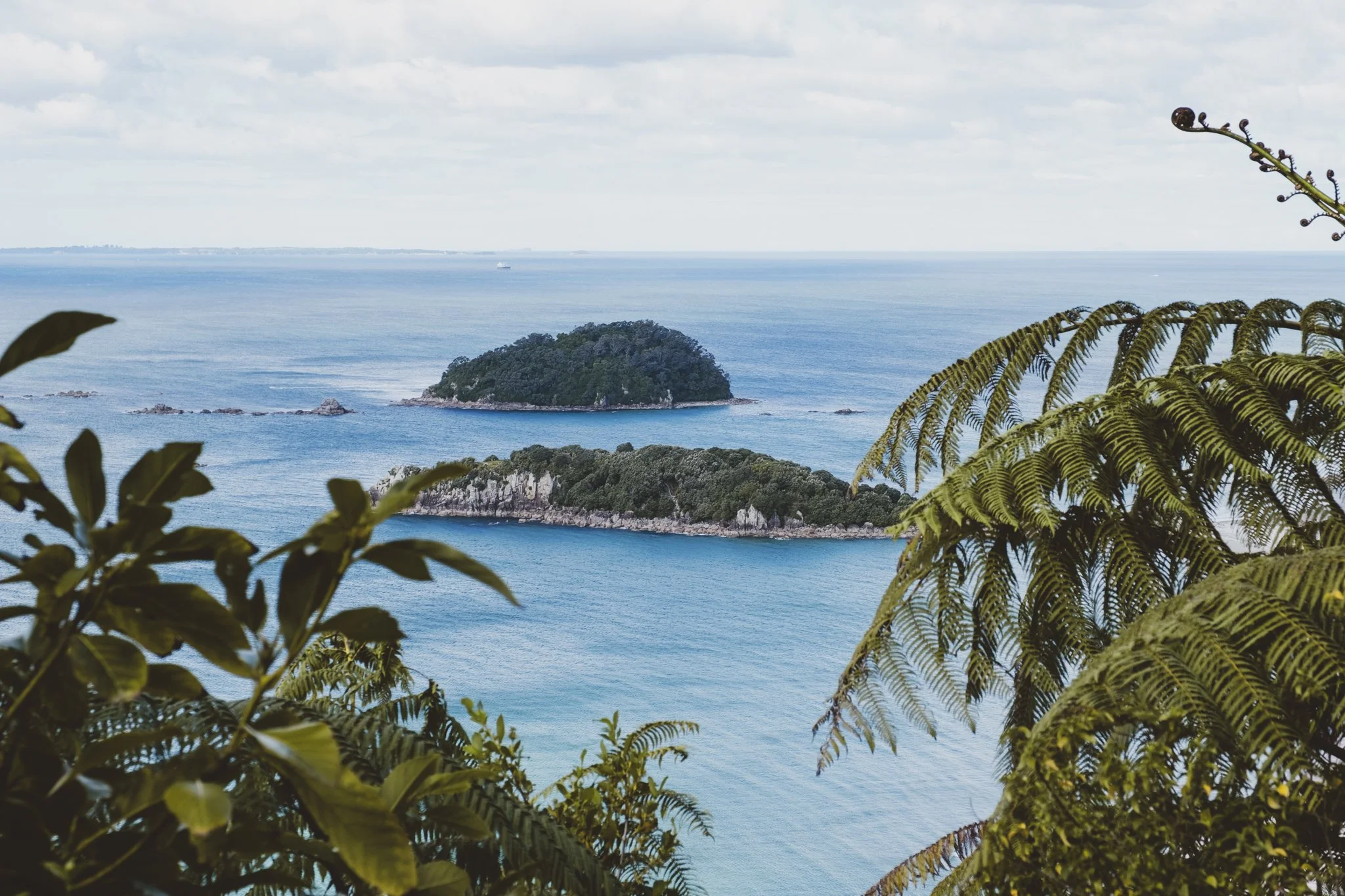
Looking out over the ocean from Mauao. One of the many reasons I’m pretty happy to call Mount Maunganui home.
Obviously I have to include Mount Maunganui. It’s home! If you want laid-back New Zealand beach life, this is one of my favourite places to experience it. Swim at Main Beach, head out on a boat trip to look for dolphins, spend time around Mauao (closed at time of writing) and wander over to Moturiki / Leisure Island.
And then eat. Get a cinnamon scroll from Wildflour, a smoothie bowl from Soul Boul or make your own fro-yo bowl at Yomi.
I’ve written extensively about Mount Maunganui, so rather than turning this section into an entire essay, explore all of my Mount Maunganui guides here:
North Island places worth visiting if you have longer
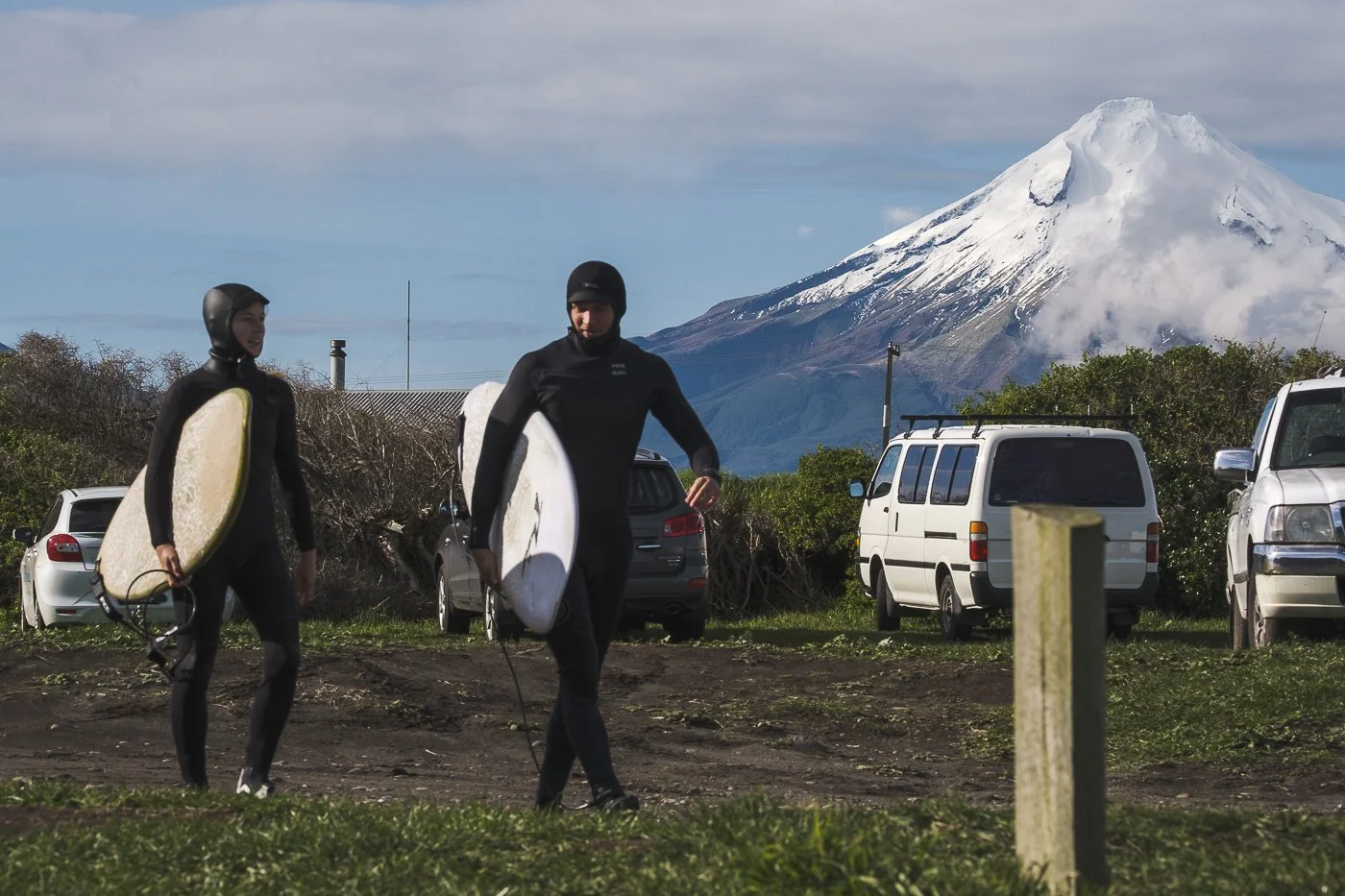
Only in Taranaki. Heading out for a surf with a snow-covered volcano as your backdrop. This is where the surf meets the snow.
Taranaki
Taranaki is where the mountain meets the sea. The region is dominated by Mount Taranaki, a dormant volcano rising dramatically from the surrounding landscape, while the coastline has some epic surf. I’d prioritise Taranaki if you’re into hiking, surfing or photography. For a general first-time New Zealand itinerary I’d probably call it a nice-to-have rather than essential. It’s unique for it’s close proximity between mountain and surf, but you will see plenty of mountains in the South Island.
Raglan
I have to include Raglan, for the surfers and ocean lovers out there. It’s one of New Zealand’s best-known surf towns and recently hosted the New Zealand leg of the WSL, but you don’t need to surf to appreciate it. When a big swell is running, the energy along the coast is insane. You can stand at the viewpoints and watch huge lines of swell wrap around the points while the sun goes down. Winter (June/July/August) often brings bigger swell, so if you’re travelling through New Zealand at that time of year, it’s well worth checking what’s happening on the coast.
Auckland
I’m going to say it: I don’t think you need to spend loads of your New Zealand trip in Auckland. You’ll likely pass through it if you’re flying internationally, and there are absolutely things worth doing. Go up the Sky Tower, visit the aquarium, explore the city and head west to see the wild black-sand coastline around Piha.
But if you have limited time in New Zealand? I definitely wouldn’t build the trip around Auckland. I grew up in England so spent many a school trip going to the likes of the London Aquarium, Tate Modern and Natural History Museum. So Aucklands cultural scene just isn’t worth it - in my honest opinion, you’re in New Zealand for the awe-inspiring nature, so get stuck into it as soon as you’ve rested after the flight. And if you’re travelling both islands, I’d start here rather than finish here. Let the landscapes get progressively more out-of-this-world as you head south rather than finishing your South Island road trip and then wondering what on earth could possibly follow it!
How many days do you need in New Zealand?
New Zealand might look relatively small on a world map, but don’t underestimate the distances involved in travelling around it. Trying to see both islands in a week will likely mean spending a lot of time in a car. If you’ve got around 7–10 days, I’d choose one island. For a first trip focused on iconic landscapes, personally I’d choose the South Island. With two weeks, you can explore one island properly or combine carefully selected highlights from both.
If you’re planning a New Zealand itinerary for 2 weeks, I’d say… resist the temptation to see everything! You can see both islands in two weeks if you’re speedy and strategic about it, especially if you fly between the two rather than driving the entire way. For example, you could explore part of the North Island, fly from Rotorua to Christchurch, and continue your trip through the South Island from there.
However, I’d recommend giving yourself more time if you can. Around 2 to 3 weeks would be the ideal amount of time to see both islands because you can actually stop for a few nights in major locations to explore and enjoy where you are.
If you have three weeks or longer, travelling through both islands becomes much more enjoyable. Whatever you do, don’t build an itinerary around driving enormous distances every single day. Give yourself time to stop, rest and actually experience the places you’ve travelled so far to see.
Getting around New Zealand
Public transport in New Zealand is pretty limited, which I think catches a lot of international visitors out. You can get intercity buses between many major destinations, and organised tours such as Wild Kiwi are a good option if you don’t want to drive, but renting a car will usually give you the most freedom to stop at viewpoints, beaches, trailheads and all the random beautiful places you’ll inevitably spot along the way.
That said, you do need to be comfortable driving. Do not underestimate New Zealand roads. Distances can look fairly short on a map but take much longer than you expect once you add winding roads, mountains, one-lane bridges, weather and stops along the way. I’d strongly recommend being an experienced and confident driver before taking on a big New Zealand road trip, and planning plenty of rest stops. As a local, I can tell you that unsafe tourist driving is a genuine issue on New Zealand roads. I also know this from first-hand experience after surviving a head-on crash caused by a tourist, so please take the driving side of your trip seriously.
A lot of the joy of a New Zealand road trip is being able to slow down and stop when you want to, so build that flexibility into your itinerary rather than treating every drive as something you need to rush through.

We rented a campervan for our first New Zealand road trip and had SO much fun. There’s something pretty special about having your home on wheels and the freedom to stop wherever you fancy.
Is the North or South Island better to visit?
If this is your first trip to New Zealand and you only have time for one island, I’d choose the South Island.
That’s where you’ll find many of the enormous landscapes people picture when they imagine New Zealand: Aoraki / Mount Cook, glaciers, alpine lakes, Queenstown, Fiordland and Milford Sound.
But that doesn’t mean the North Island isn’t worth visiting.
For geothermal landscapes, Māori culture, volcanic scenery, surf, beaches and places like Rotorua, Hobbiton, Tongariro and Mount Maunganui, the North Island offers something completely different.
If you have the time, do both.
And my order would be:
North first. South second.
Save the most cinematic bit for last.
Ultimately, the best places to visit in New Zealand depend on what you want from the trip. For enormous alpine scenery, head south. For geothermal landscapes, volcanic mountains, Māori culture, beaches and surf towns, make time for the North Island too. And if you can experience both, even better.
Map of the best places to visit in New Zealand
You can find everywhere in this blog shown on the map below, colour co-ordinated for easy reference and planning depending how much time you have in New Zealand.
Red for the must visit places
Yellow for the nice-to-have additions
FAQs about the best places to visit in New Zealand
What are the best places to visit in New Zealand?
If it’s your first trip to New Zealand, I’d prioritise Aoraki / Mount Cook National Park, Queenstown, Wānaka, Lake Tekapo and Fiordland National Park in the South Island, plus Rotorua, Hobbiton, Mount Maunganui and Tongariro National Park in the North Island. If you have longer, you can add places like Raglan, Taranaki, Kaikōura, Abel Tasman National Park and the Catlins.
What should you not miss in New Zealand?
For me, Aoraki / Mount Cook National Park is the absolute don’t-miss. The drive into the national park alone is incredible, and once you’re there you have the Hooker Valley Track, Tasman Glacier and some of the best mountain scenery in New Zealand. I’d also make time for Queenstown and Wānaka, one of New Zealand’s geothermal areas around Rotorua, and at least one proper stretch of wild New Zealand coastline.
How many days do you need in New Zealand?
I’d give yourself at least 10 to 14 days if you can. New Zealand looks small on a map, but driving takes longer than you might expect and you don’t want to spend your entire trip moving between destinations. With a week, I’d concentrate on one island. With two weeks, you can see highlights from both, although I’d still resist trying to squeeze absolutely everything in.
Is the North Island or South Island better for visiting New Zealand?
If this is your first trip and dramatic scenery is your priority, I’d choose the South Island. You have huge mountains, glaciers, turquoise lakes and places like Aoraki / Mount Cook, Queenstown, Wānaka and Fiordland. The North Island has a completely different feel, with geothermal landscapes, volcanic scenery, surf towns and beautiful beaches. Ideally, visit both, but if you have limited time, I’d rather explore one properly than rush through two.
Should I visit the North or South Island first?
If you’re visiting both, I’d start in the North Island and travel south. You can begin with places like Auckland, Mount Maunganui, Rotorua, Hobbiton and Tongariro, then head to the South Island for the enormous mountains, glaciers and alpine lakes.
It’s partly practical, but mostly because I like the way the trip builds. Personally, I wouldn’t finish an epic South Island road trip and then head back to Auckland. Start north and let New Zealand get progressively more ridiculous as you go south.
Can you see both islands of New Zealand in two weeks?
Yep, you can, especially if you’re fairly speedy and strategic about how you travel. Flying between the islands can save a lot of time. For example, you could explore Rotorua and the central North Island, fly from Rotorua to Christchurch, and then spend the rest of the trip travelling through the South Island.
I wouldn’t try to see absolutely everything, though. Two weeks is enough to experience selected highlights from both islands, but 2 to 3 weeks would be much more comfortable. You’ll have more time for hikes, beaches, weather delays, spontaneous stops and actually enjoying the places you came all this way to see.
Where should you go in New Zealand for the first time?
For a first trip, I’d build your itinerary around a handful of New Zealand’s most iconic landscapes rather than trying to see the entire country. In the South Island, that could mean Lake Tekapo, Aoraki / Mount Cook, Wānaka and Queenstown. In the North Island, Rotorua, Hobbiton, Tongariro National Park and Mount Maunganui make a great introduction to a completely different side of New Zealand.
What is the most beautiful part of New Zealand?
This is completely subjective, but for huge, dramatic landscapes, the area around Aoraki / Mount Cook, Lake Tekapo and Wānaka is very hard to beat. I’m also biased towards anywhere the mountains meet the ocean, which is why places like Taranaki and Kaikōura are high on my list.
What are the best places to visit in New Zealand for photography?
Aoraki / Mount Cook National Park is one of my favourite places I’ve ever photographed, particularly around sunrise and sunset. Lake Tekapo, Wānaka, Taranaki, Tongariro National Park and New Zealand’s wild coastlines also offer incredible landscape photography.
If you’re specifically looking for the best places in New Zealand for photography, I’d prioritise locations where you can experience several different landscapes within one trip, particularly the alpine scenery of the South Island alongside the volcanic mountains and coastlines of the North Island.
If you love photographing water like I do, you’ll have an almost ridiculous amount to work with here.
You can also browse my New Zealand photography here if you’d like to see more of the landscapes I’ve photographed around the country.
And now I want to know: which of these places is going straight onto your New Zealand itinerary? Tell me in the comments.
Bookmark this guide for your New Zealand road trip so you can come back to it when you start planning the route.