
Best lenses for water photography: surf, shoreline and in-water shooting
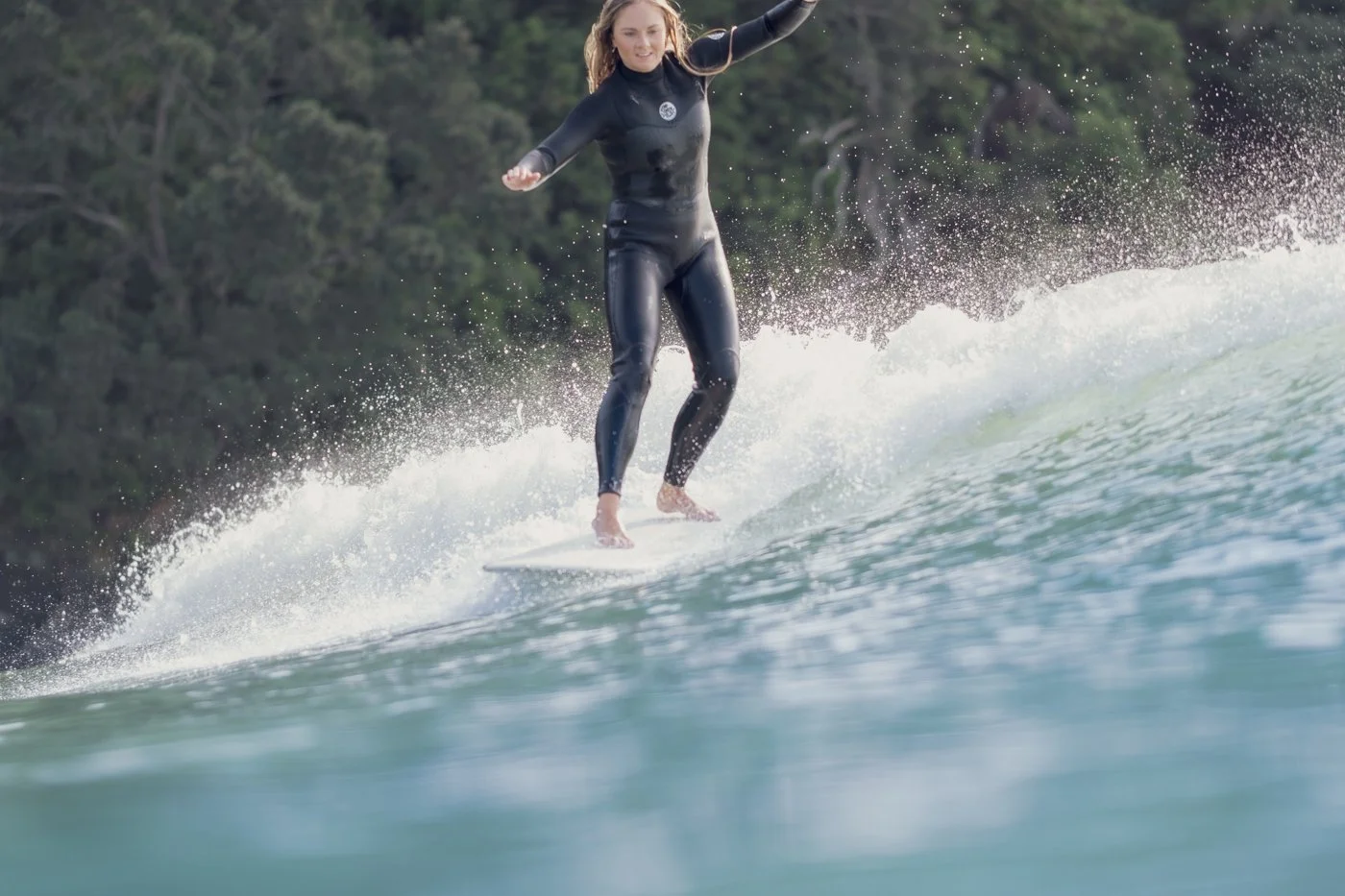
One of my favourite perspectives for water photography is when I’m sitting right here at the sweet spot inside the break.
One of the questions I get asked most often about water and surf photography is what lens to use.
The honest answer is that the best lens for water photography depends on where you’re shooting from. The lens that works perfectly on the shoreline can feel completely different once you are swimming in the surf with a housing in your hands.
Choosing the right lens for water photography often depends more on your position in the ocean than the camera body and lenses you’re using. If you’re just getting started, these essential surf and water photography tips will help you build confidence in the ocean before worrying about gear choices.
That’s why the best lenses for water photography aren’t about one perfect focal length, but choosing the right tool for where you’re standing or swimming.
Over time I’ve found a small group of focal lengths that cover almost everything I like to photograph in and around the ocean. You don’t need a huge collection of lenses to begin. A simple setup that suits your position in the water will take you a long way.
Choose the right lens for where you’re shooting from in and around the ocean
Jump to a section:
Why lens choice matters in water and surf photography
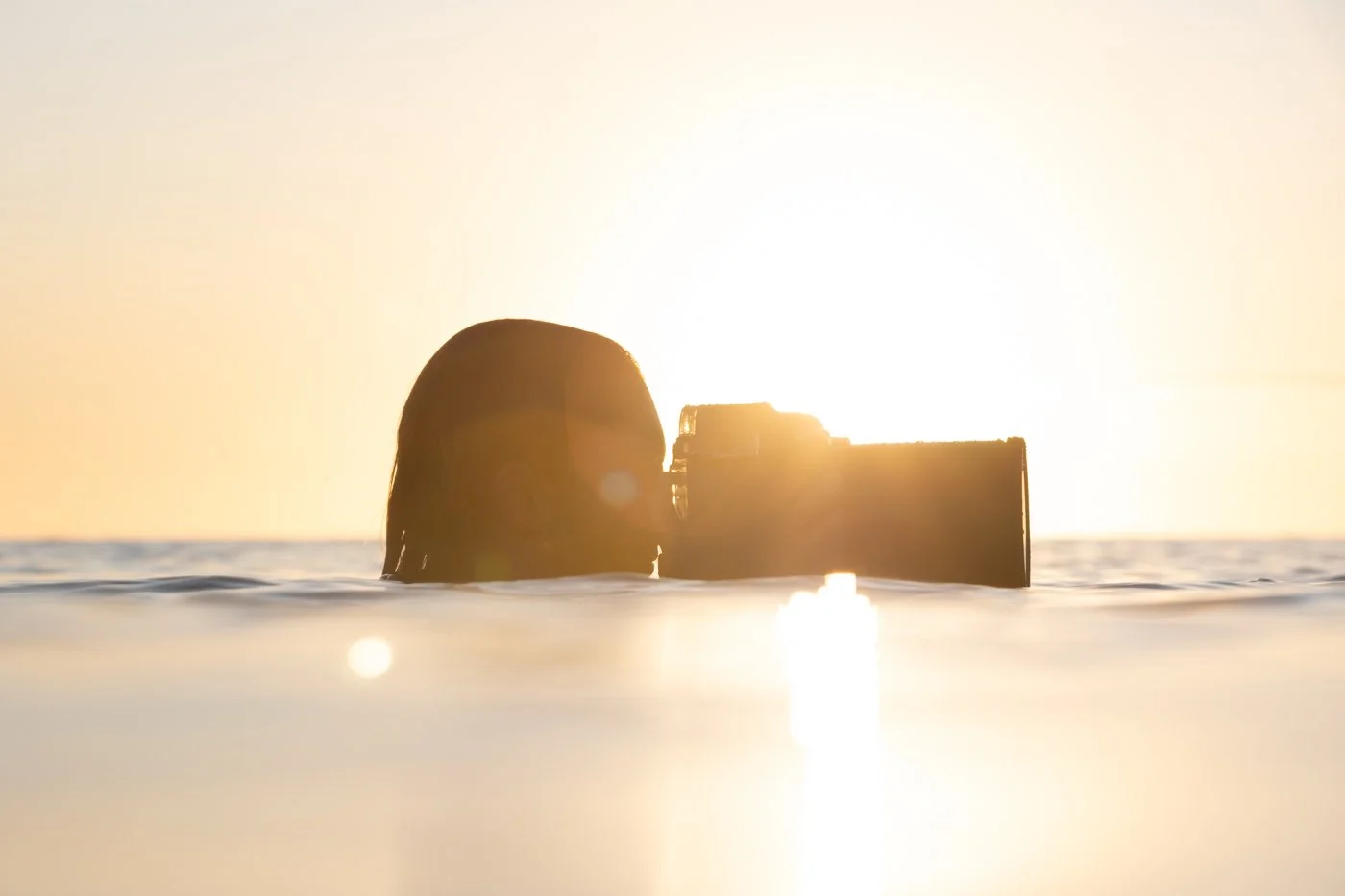
Where you position yourself in the water often shapes lens choice more than the camera you’re using.
In surf photography, the lens you choose changes how close you need to be to the action and what kind of image you’ll be able to create.
Sometimes you’re swimming inside the break. Sometimes you’re further out the back. Some days the currents are too strong to get in the water and you’re photographing from the beach. Each of those situations suits a different focal length.
A wider lens lets you stay close to the water and include more of the surrounding environment. A longer lens allows you to stay back and still capture detail when surfers are sitting far out beyond the break. Mid-range focal lengths in the water can also change how light and texture appear in the frame.
For me, choosing a lens always starts with one question. Where will I be when I take the photo?
Once you’ve made that plan, the decision becomes much easier.
16–55mm for flexible in-water surf photography
If you’re choosing one lens to begin water photography, something in the range of a 16–55mm is a great place to start.
This focal length gives you flexibility without needing to swim too close to the action, especially when you’re still getting comfortable using a water housing. You can photograph wider scenes, surfers moving across the frame, and quieter moments on the surface without constantly repositioning yourself.
For a long time this was my main lens for in-water surf photography. It allowed me to react quickly and experiment with composition while I was still building confidence swimming with a housing.
If you’re starting out with water photography, this is the focal length I’d recommend first.
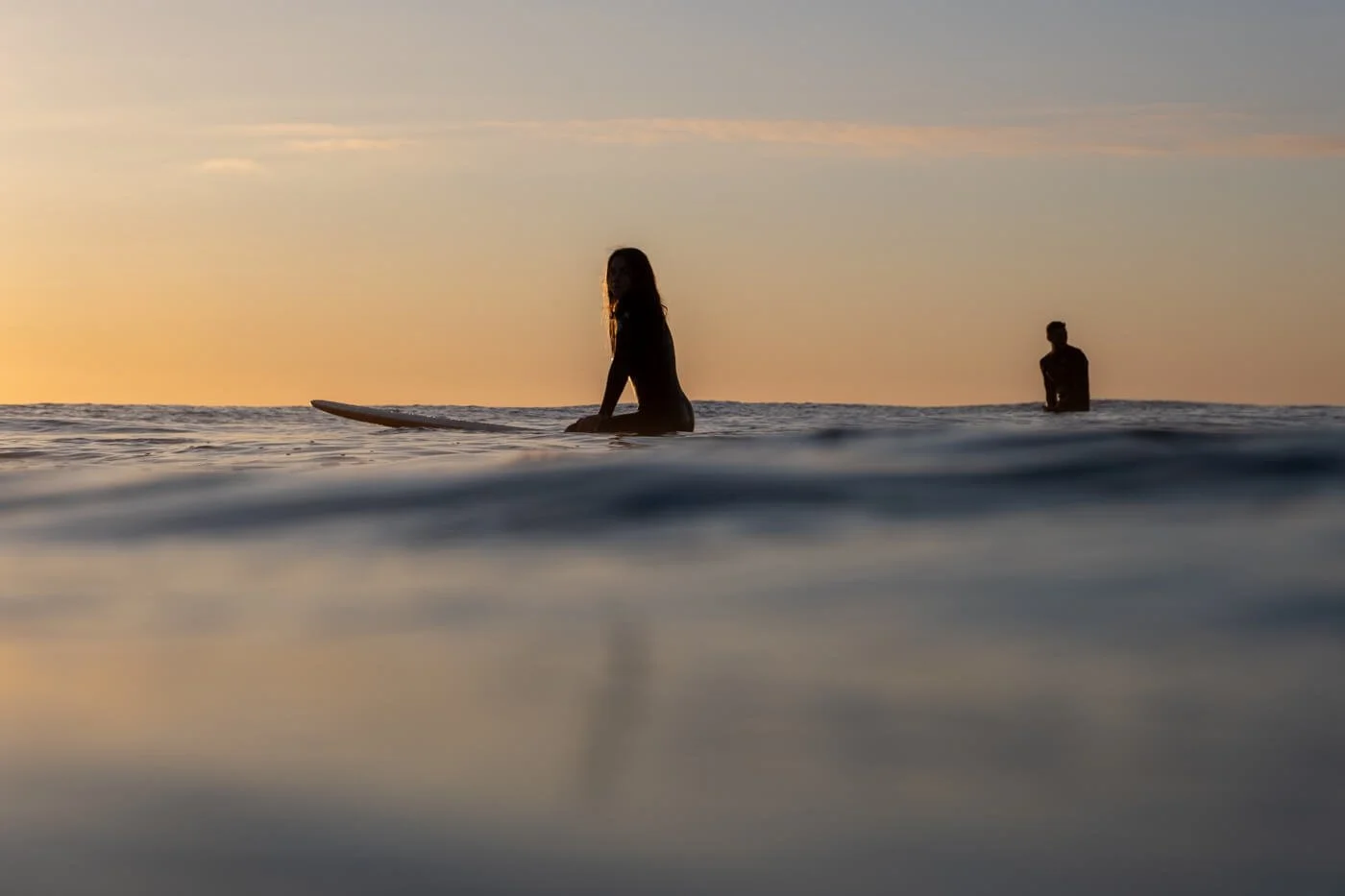
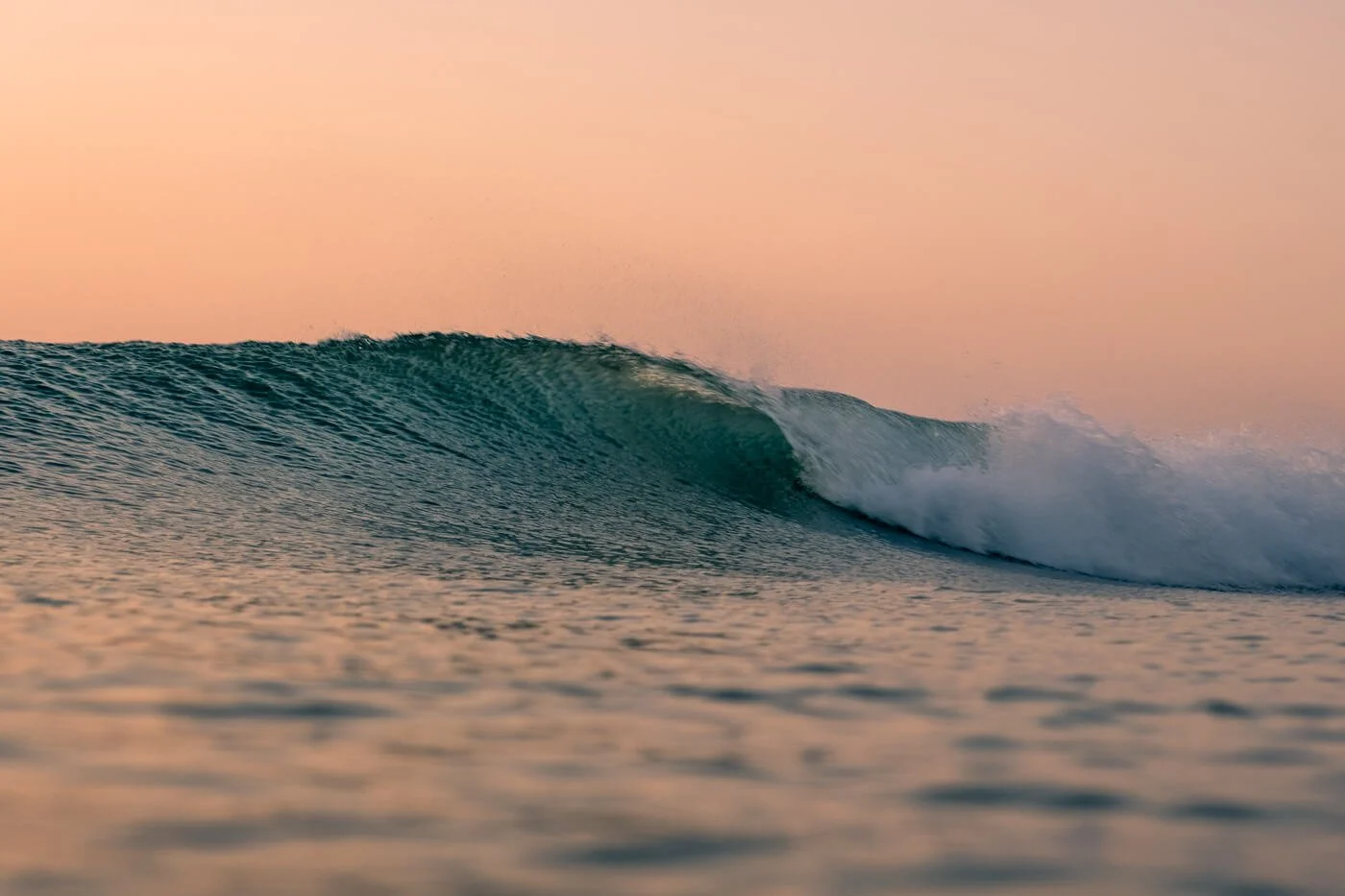
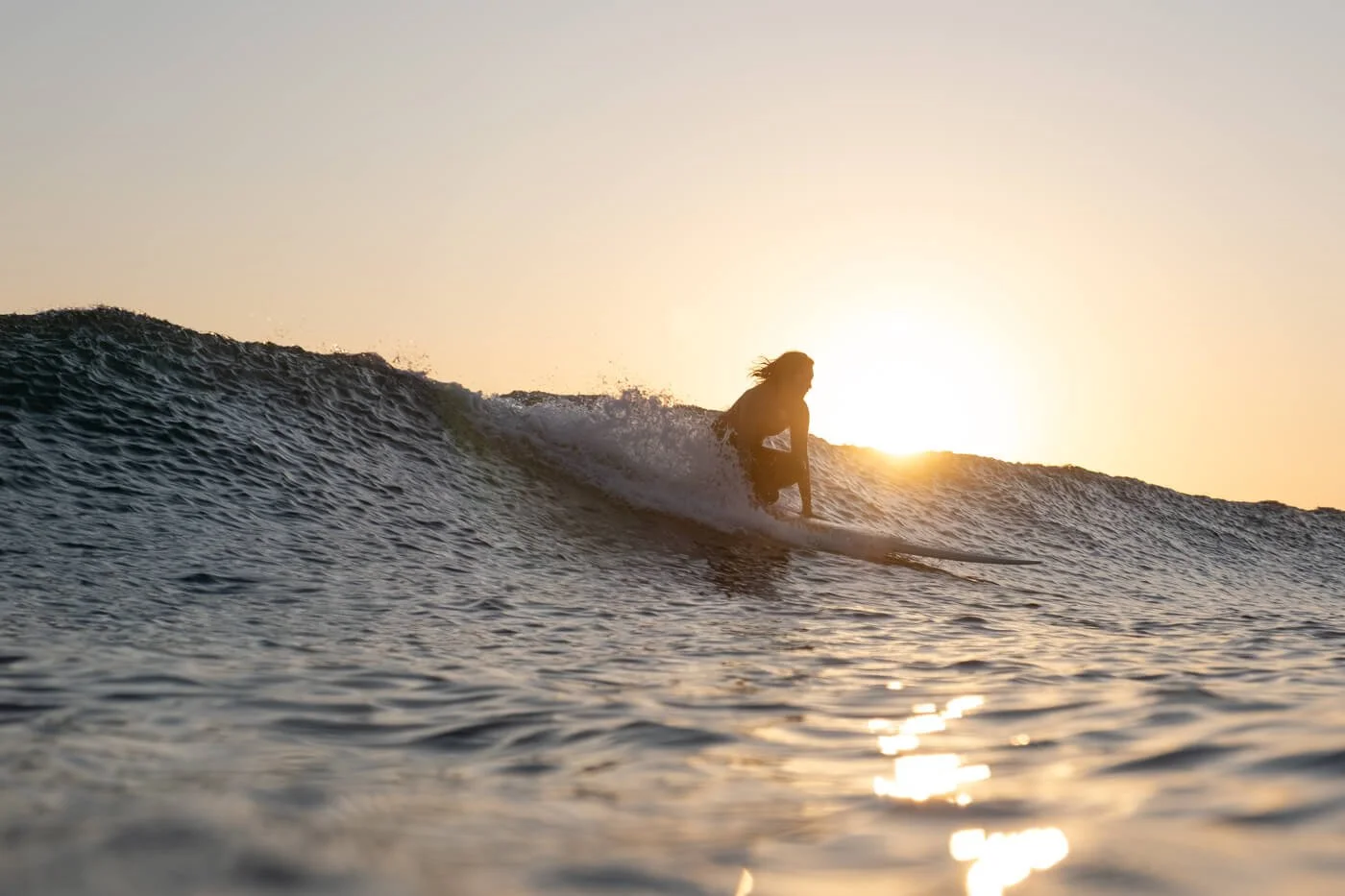
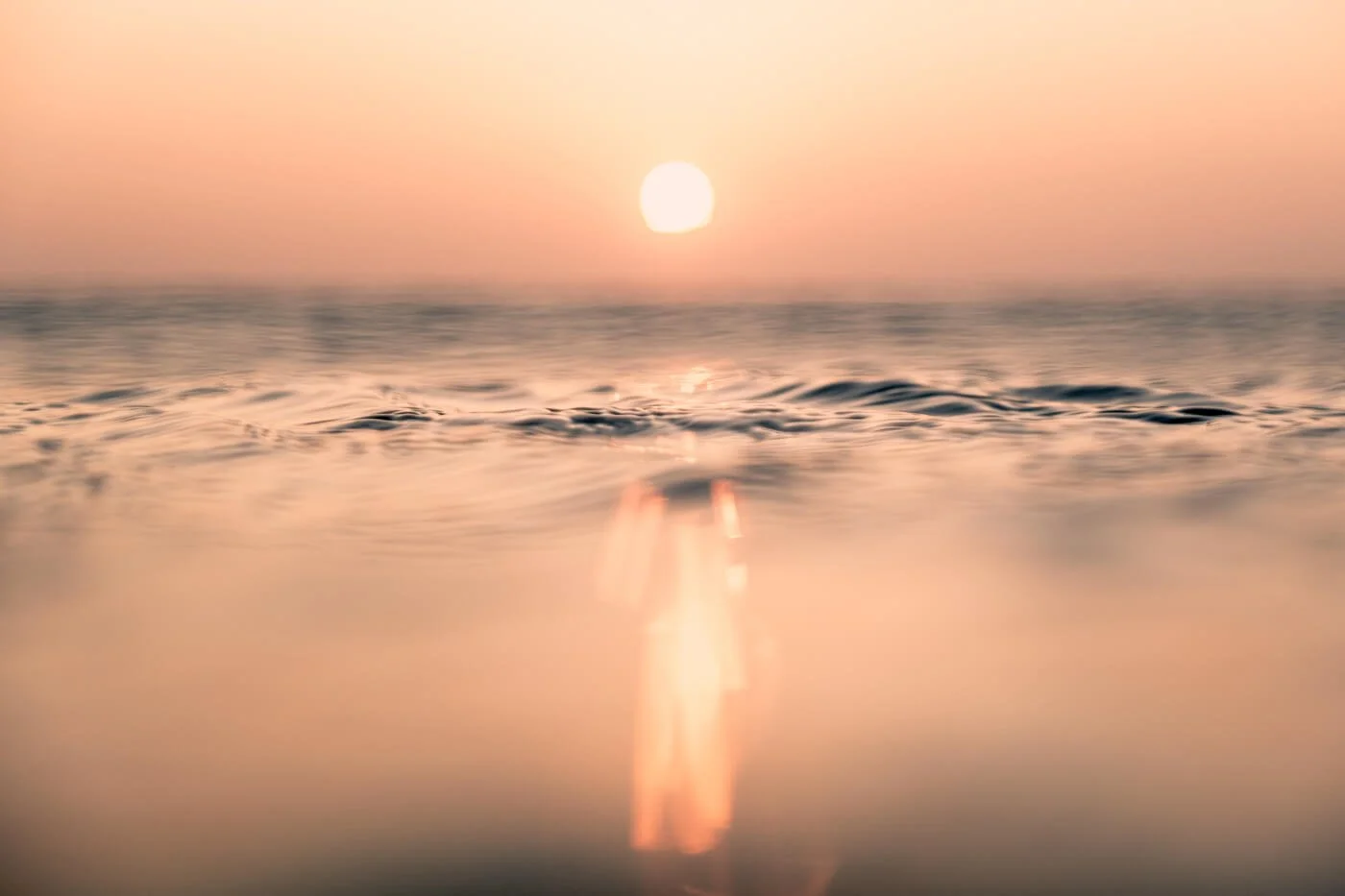
A 16–55mm lens gives enough flexibility to photograph changing moments in the water without needing to move constantly.
80mm or 90mm for detail and compression in water photography
These days I reach for an 80mm lens most often when I’m swimming with my camera.
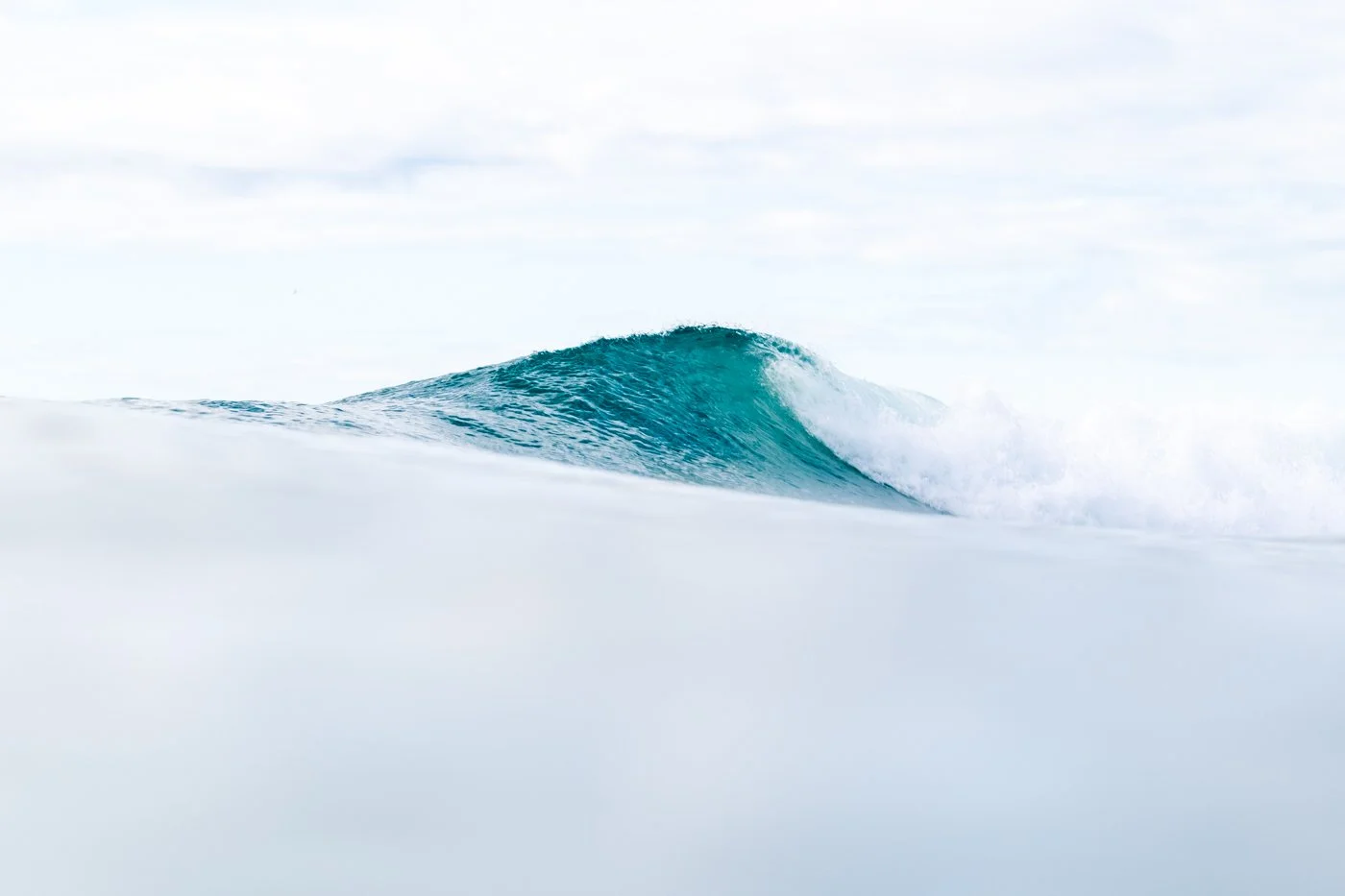
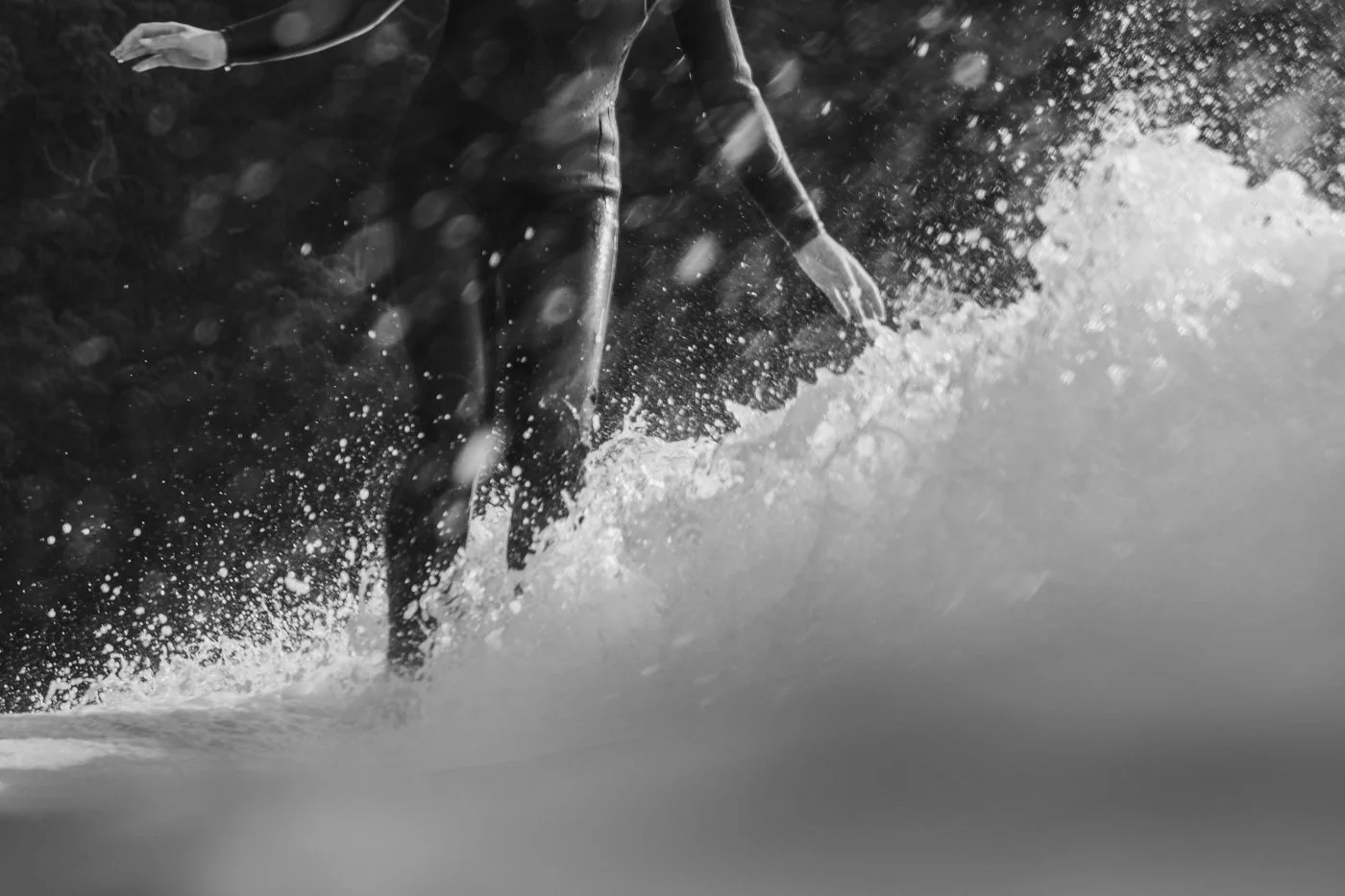
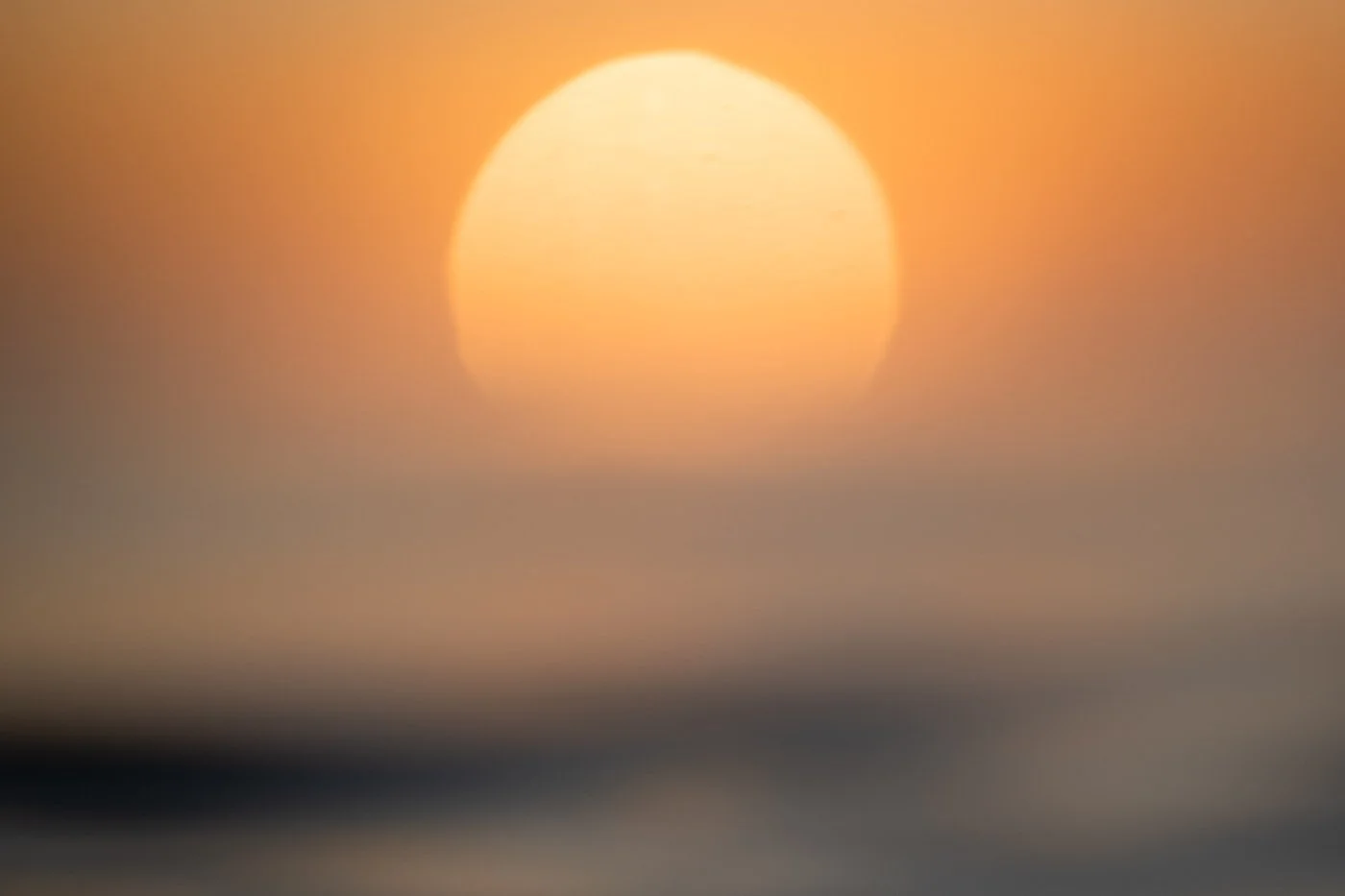
This focal length lets me capture more detail without needing to be right beside the surfer. It changes the feeling of the image in a subtle way. The sun appears larger behind the subject, textures in the wave become more noticeable, and the background starts to play a stronger role in the composition.
I use an 80mm macro lens, which opens up creative options for photographing reflections, surface textures, and small details across the water.
An 80mm or 90mm lens is one of my favourite choices for in-water surf photography. Which is actually kind of ironic because I usually don’t love prime lenses for most of my other shoots. I prefer the flexibility of zoom. But in the water I’d rather swim to adjust composition than reach for a zoom ring.
Here are a few examples of how mid-range focal lengths change the feeling of light and texture across the water.

100–400mm for shoreline surf photography from land
When conditions are too strong to swim, I nearly always photograph from land instead. In fact, photographing the surf from land is often the safest place to begin while you’re learning how ocean conditions affect positioning and timing, especially if you’re still working through some of the beginner mistakes in surf photography.
A longer lens like a 100–400mm is one of the best lenses for shoreline surf photography. It allows you to stay back from the water or get to an elevated position while still capturing surfers clearly.
This is one of the reasons a 100–400mm is considered one of the most useful lenses for surf photography from the beach.
I shoot with a crop sensor camera (Fujifilm), which gives extra reach compared to full frame. Crop sensors change how focal length appears compared to full frame cameras. On a full frame body, 400mm will feel slightly wider than it does in my images, so you may find yourself cropping more or choosing something closer to a 600mm lens to get a similar framing.
Surfers often sit a long way out beyond the break, so extra reach makes a big difference.
This focal length also makes it easier to include foreground elements such as dunes, headlands, or trees to give context to the location. I love to experiment with foregrounds to create a sense of place and visual interest in the composition, as well as just beautiful surf ocean-scapes. Some of my favourite surf images have been made this way.
It’s also the lens I use when photographing the moon over the ocean.
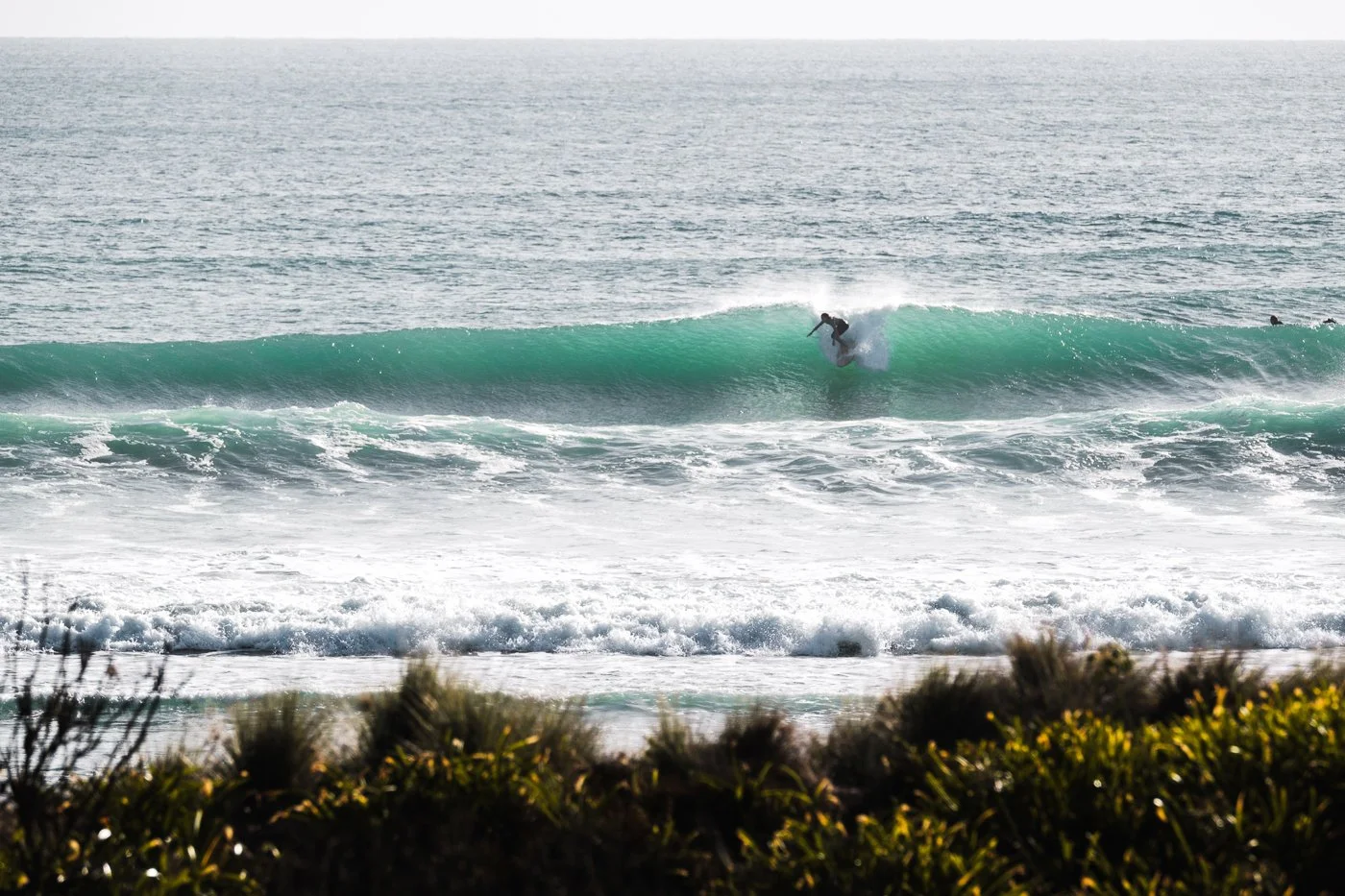
Foreground elements like dunes and coastal plants help create a stronger sense of place when shooting surf photography from land.
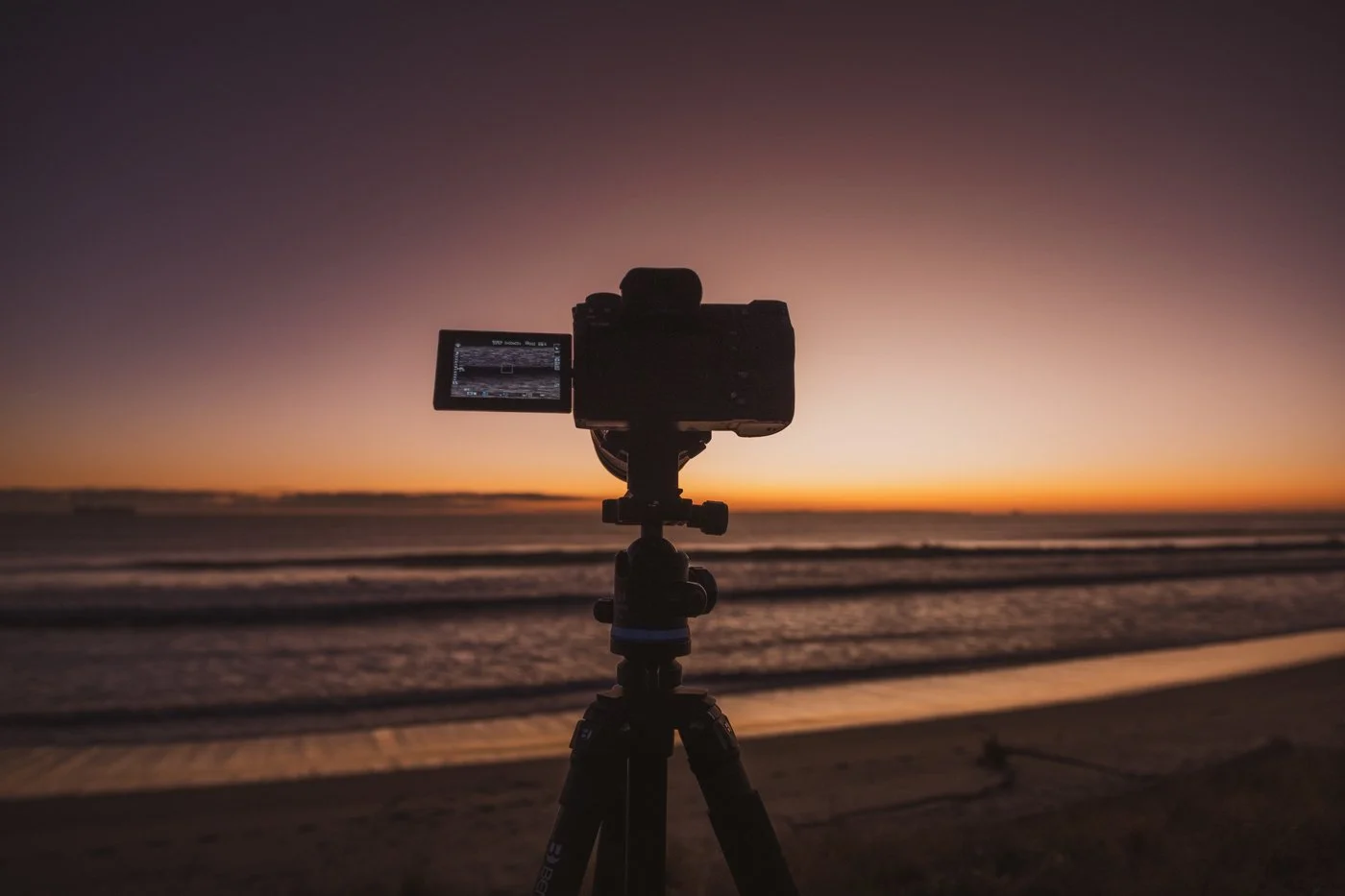
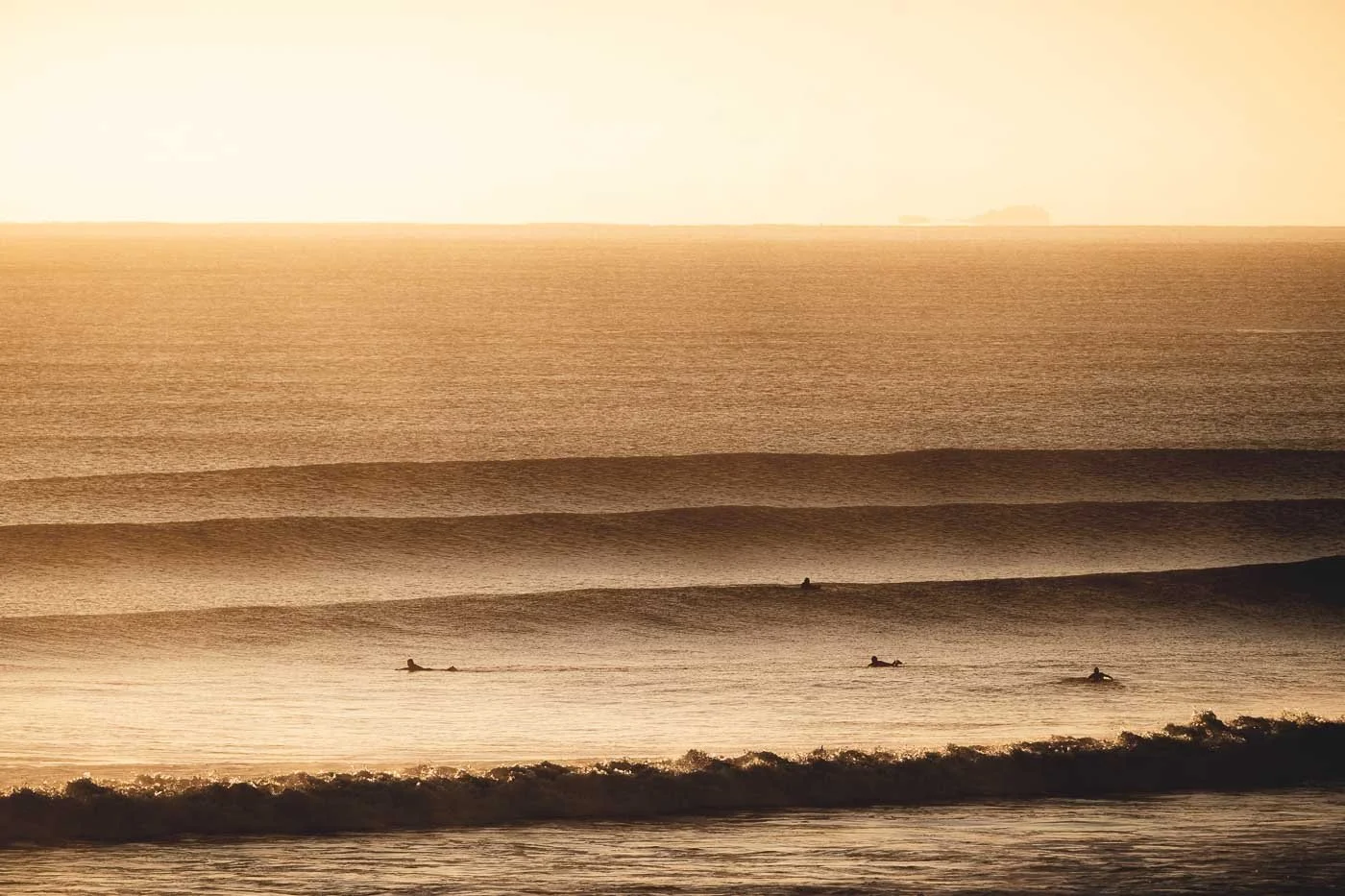
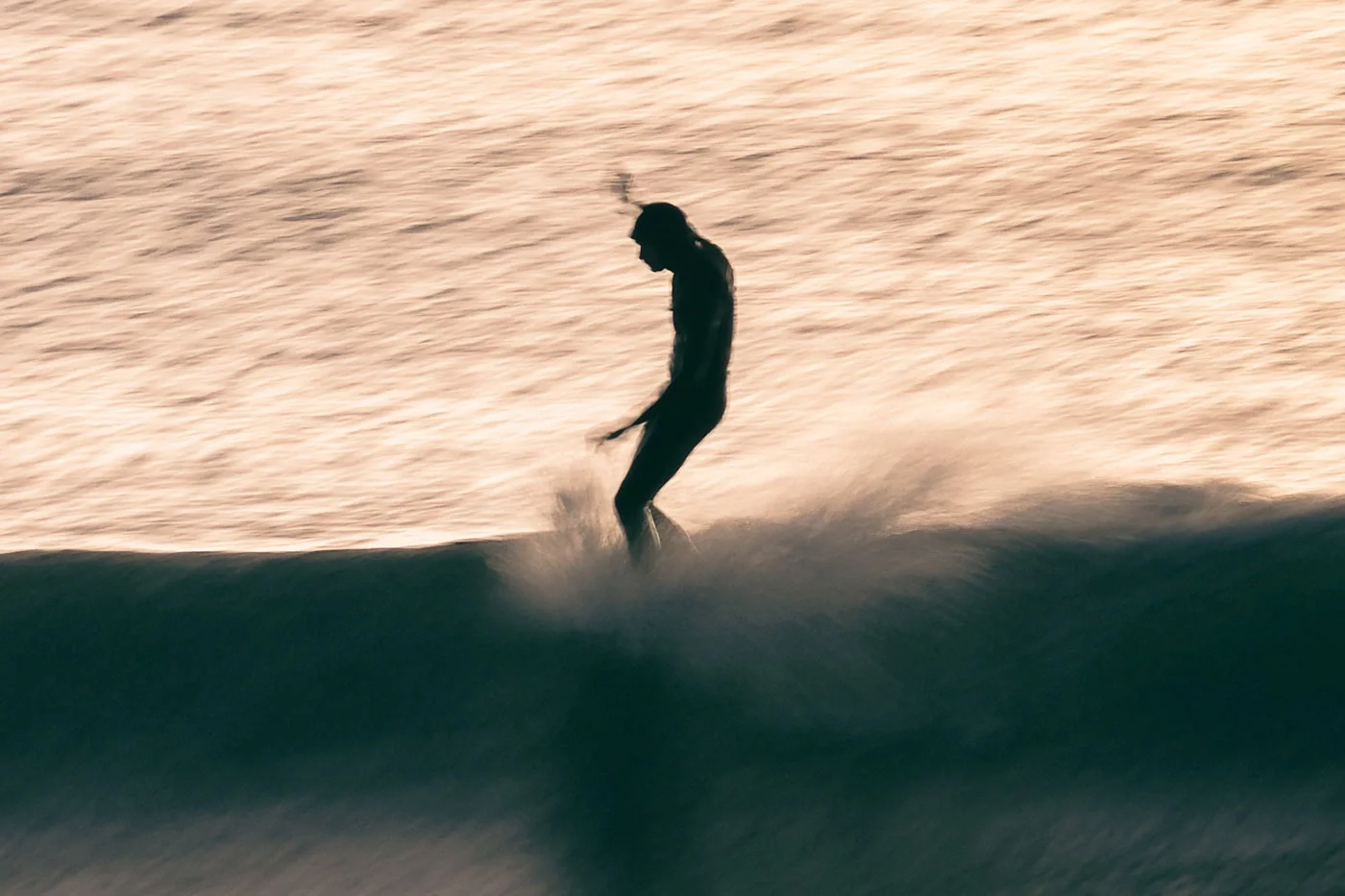


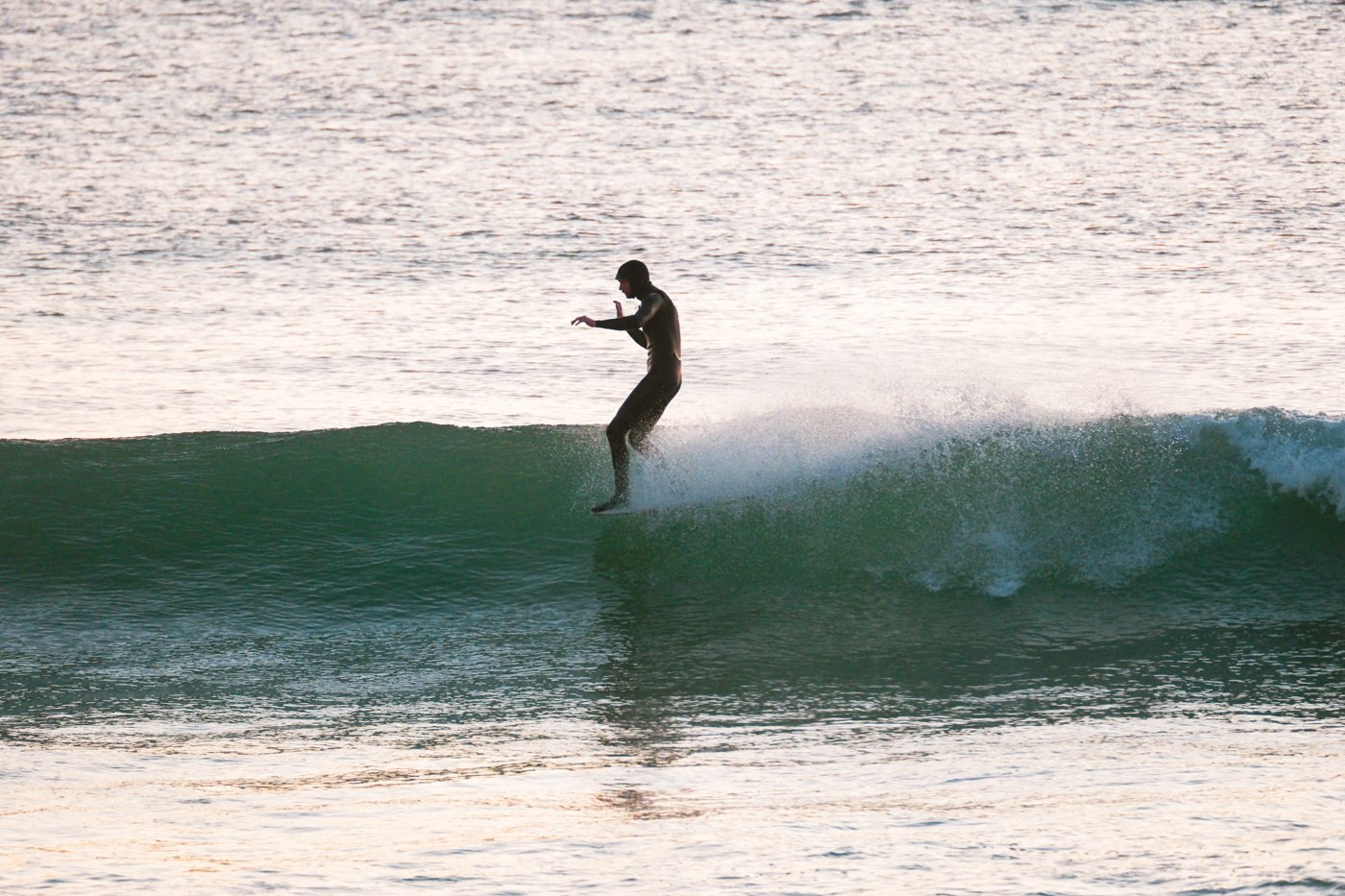
These are the kinds of scenes where longer shoreline lenses really make a difference.
Can you use a 70–200mm for surf photography?
Yes, absolutely.
A lens up to 200mm can still work really well from the shoreline, especially if that’s what you already have in your camera quiver. The main difference is distance. Because surfers sit so far out from the beach, you might find yourself wanting a little more reach where something like a 100–400mm becomes the natural progression.
That doesn’t make it the wrong choice. It just changes how close you need to be to the action.
A 70–200mm can still be a very practical surf photography lens from land, and fine if you’re starting out to get a feel of the compositions you want to shoot.
I don’t currently carry a 70–200mm lens, but these images from the same session show what this focal range can look like in practice, and how your framing changes as you move closer to 200mm.
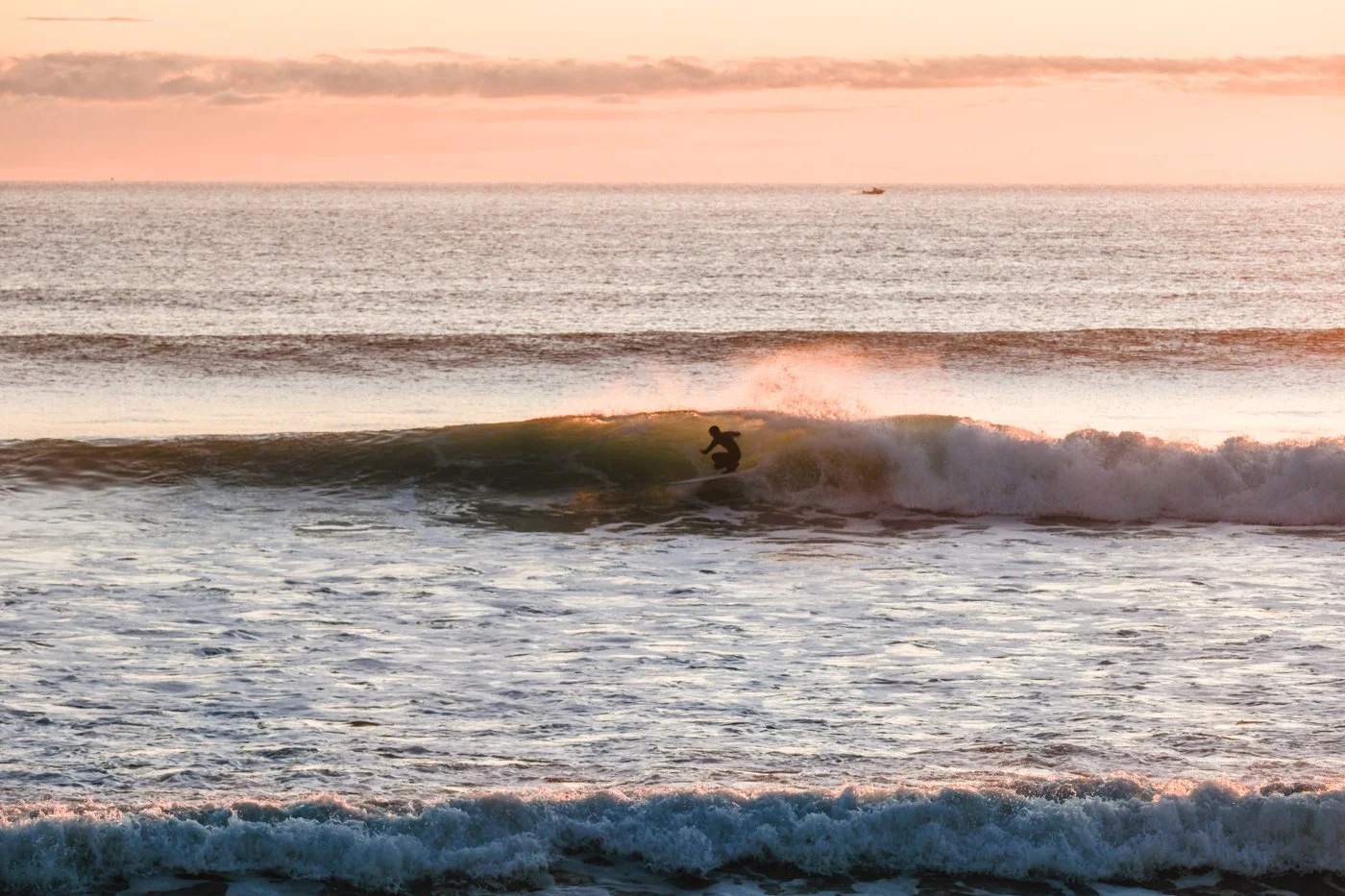
100mm: At around 100mm you can still include more of the surrounding wave and environment while keeping the surfer clearly visible in the frame.
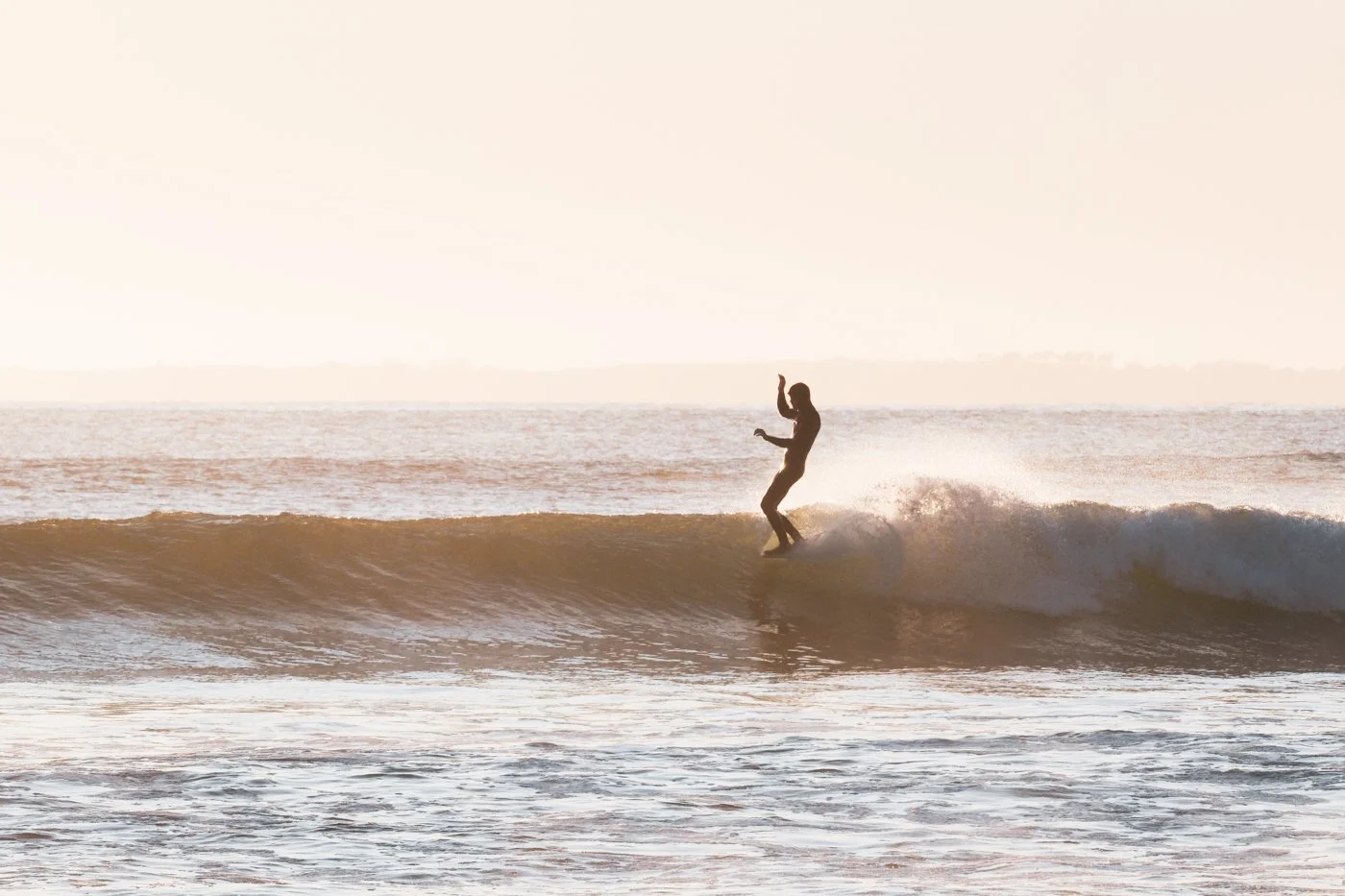
164mm: Around the middle of the 70–200mm range, the frame tightens and attention shifts more directly onto the surfer and the shape of the wave.
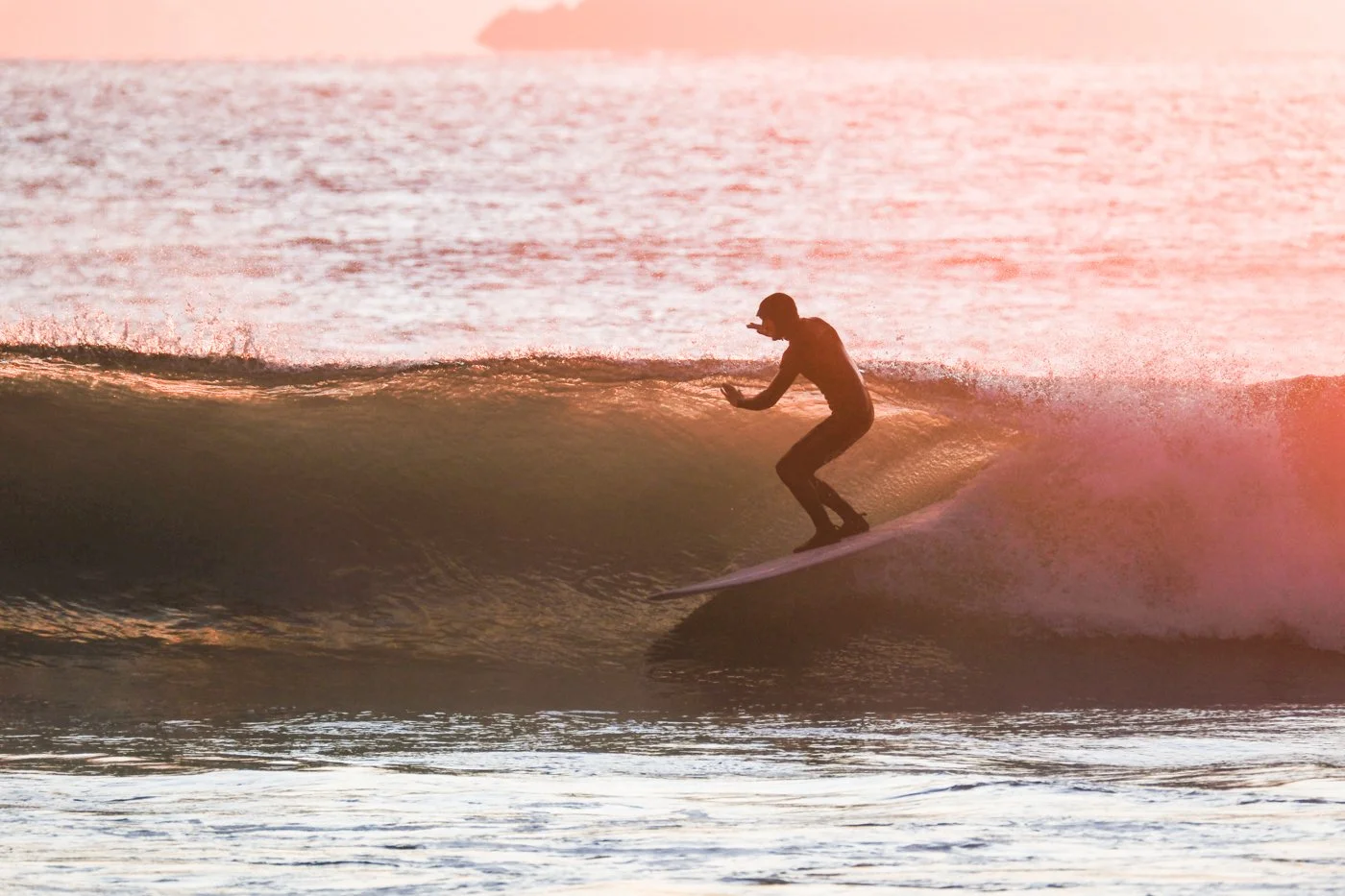
400mm: With more reach, like 400mm here, the composition becomes tighter again and details in the wave and body position become more prominent.
Are prime lenses good for water photography?
Prime lenses can work beautifully in the water.
An 80mm or 90mm prime feels very natural for in-water shooting. It provides enough reach to capture detail while still keeping you connected to what is happening around you.
Using a macro-capable lens also opens up opportunities to photograph smaller details across the surface of the ocean. Which is my forever-challenge because the water is always moving, and therefore tough to get a macro focus to… well… focus. But when it does, it’s magic!
Reflections, bubbles, textures, and light patterns become part of the story rather than something happening in the background.
Those tiny shifts in light and colour are also what inspired Droplets, one of the presets in my Oceania Lightroom preset collection. I used it to edit the image below.
Prime lenses can feel more limiting at first, but that limitation often encourages more creative decisions in the water.
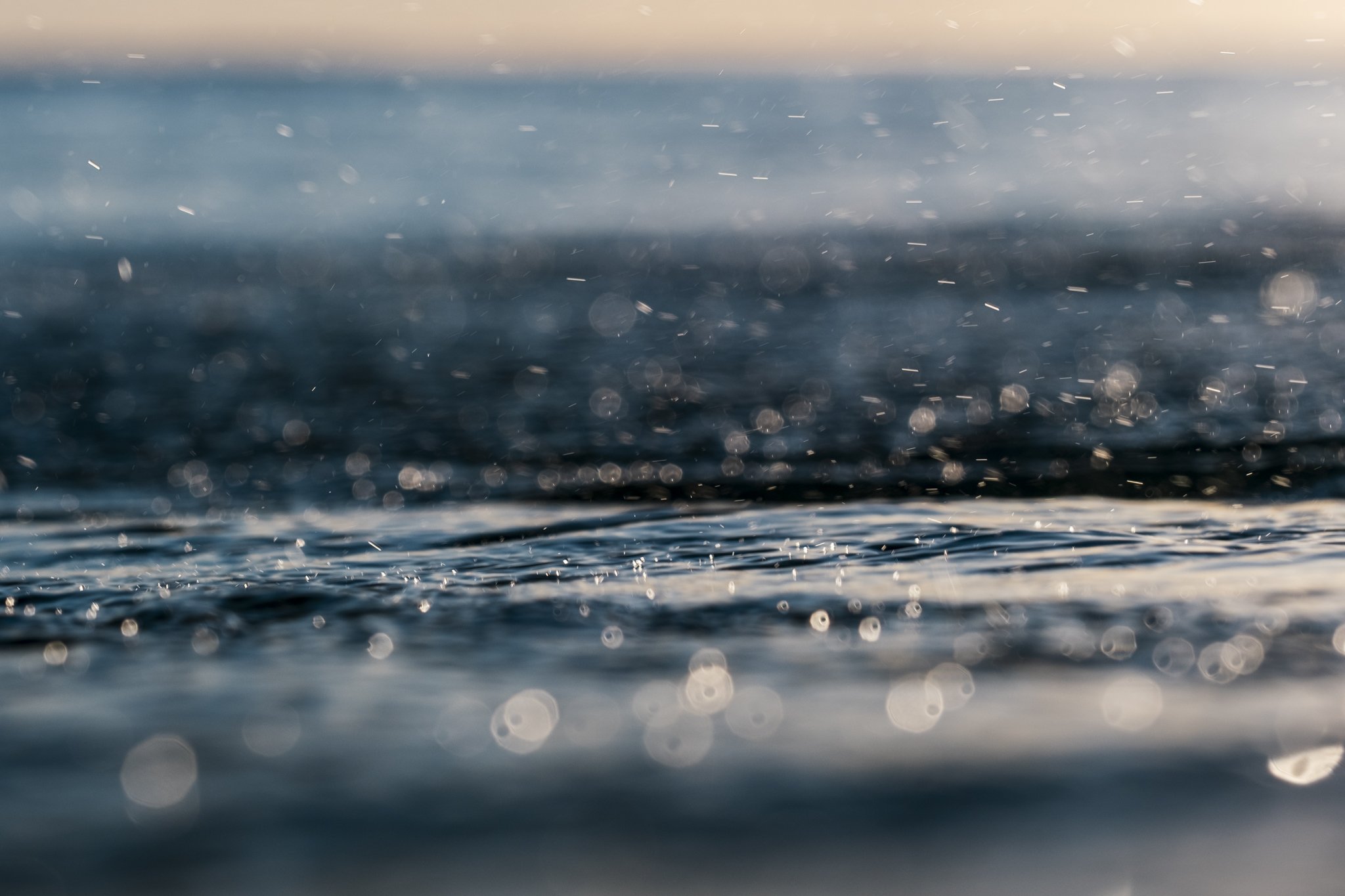
Prime lenses often reveal small details in the water that are easy to miss at wider focal lengths. Edited with Droplets from Oceania, my ocean and water photography Lightroom preset collection.
A simple water photography lens kit for surf and ocean shooting
If you’re building a small kit for water photography, this combination works well across most conditions:
16–55mm for in-water flexibility
80mm or 90mm for detail and compression in the surf
100–400mm for shoreline surf photography and photographing the moon
With these three focal lengths you can photograph most situations you’re likely to encounter in and around the ocean. If you’re building your first ocean photography setup, this is the combination I’d start with.
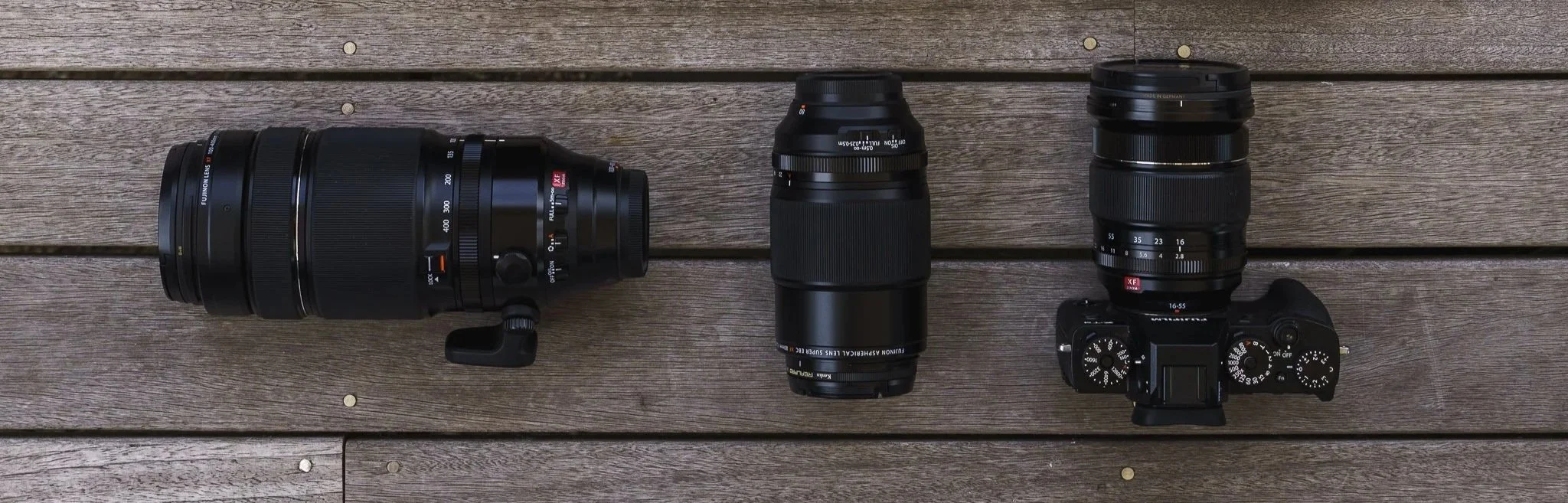
This is the small lens kit I use to cover most surf and water photography conditions.
That’s a wrap on choosing the best lens for water photography
The thing I love most about working with different focal lengths in the ocean is how each one offers a different perspective. I’m genuinely exploring and documenting one subject from many different angles, in different lights. Over time, that process becomes less about gear and more about learning how you like to see the water.
The best lens for water photography depends less on the lens itself and more on where you are standing or swimming when you take the photo.
Once you understand your position in the surf and the kind of moments you’re drawn to photographing, lens choice becomes much simpler.
You don’t need a large collection of gear to begin. One lens and time in the water is enough to start noticing how light, movement, and perspective change across the ocean.
If you‘re learning in-water shooting, this is often where your visual style starts to take shape.
If you’re starting water photography, which lens are you thinking of trying first?
Until next,
L ✌️
FAQs about lenses for surf and water photography
What’s the best lens for surf photography beginners?
A 16–55mm is one of the most useful starting points for in-water surf photography because it balances flexibility with safe shooting distance.
What lens is best for shoreline surf photography?
A 100–400mm lens gives enough reach to photograph surfers sitting far beyond the break while keeping strong detail in the frame.
Can you shoot surf photography with a 70–200mm lens?
Yes. A 70–200mm works well from the shoreline, although you may occasionally want more reach depending on how far offshore the surfers are.
Are prime lenses good for in-water surf photography?
Yes. An 80mm or 90mm prime lens works especially well for capturing reflections and surface texture in the surf, while giving you a safe distance from surfers to capture the action without putting yourself in danger.
What is compression in surf and water photography?
Compression happens when a longer lens makes background elements appear closer to your subject. In surf photography, this can make the sun look larger behind a surfer or bring layers of waves closer together in the frame. It’s one of the reasons focal lengths like 80mm or 90mm create a more detailed and atmospheric feeling across the surface of the ocean.
Do I need multiple lenses for water photography?
No. You can start with one versatile lens and expand later once you understand how you like to shoot in the ocean.
What lens do you use for in-water photography?
A focal length between 16–55mm works well for most in-water photography because it gives flexibility while keeping you safely positioned in the surf.
Is a 100–400mm lens worth it for surf photography?
Yes. A 100–400mm lens gives the reach needed to photograph surfers sitting beyond the break and is one of the most useful shoreline surf photography lenses if you’re shooting from land.
If you’re still deciding what gear you need to get started, I’ve answered more beginner questions about cameras, lenses, and editing here. Read more beginner surf photography FAQs