
Surf photography gear: the essential setup you actually need in the water
When I first started taking photos in the ocean, I thought I needed all the gear straight away.
When people ask me what surf photography gear I actually carry into the ocean, the answer is usually simpler than they expect. What made the biggest difference early on was a simple, reliable setup that let me move confidently between sets.
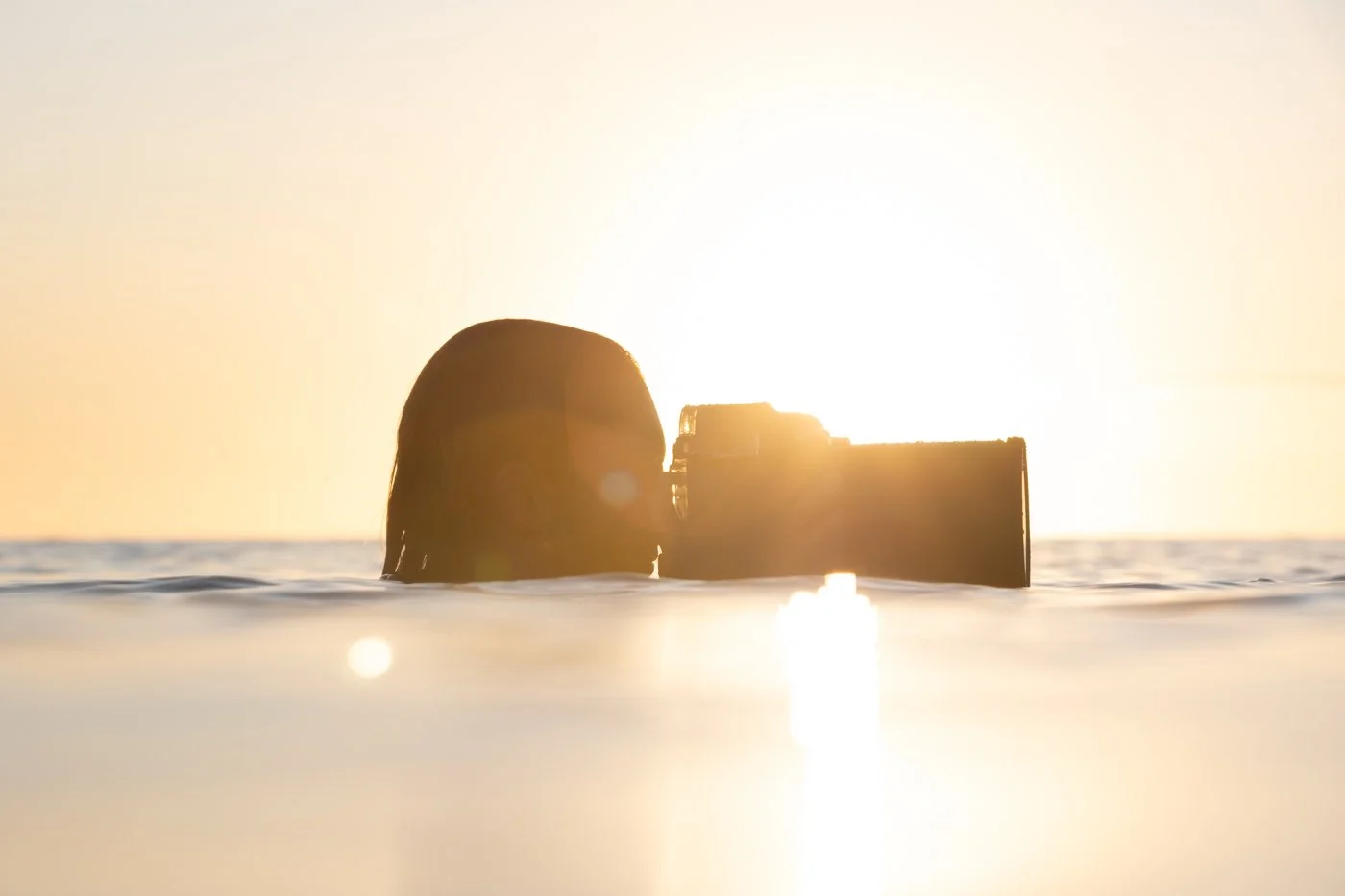
A simple in-water surf photography gear setup is what I rely on most when shooting out in the ocean.
This is the surf photography gear setup I rely on most when I’m shooting in the ocean, especially when working in changing conditions out in the surf.
Surf photography gear can look complicated from the outside, but the truth is you can begin with a small setup and build from there as your skills grow. Most of what I use now came later, once I understood how I liked to work in and around the ocean.
If you’re just starting out I put together a beginner-friendly guide to surf and water photography that walks through how everything fits together before you even think about gear.
Some of my earliest sessions started at sunrise, watching the first sets roll through while figuring out how to keep position between waves without losing my fins or my housing. Those early sessions taught me very quickly which pieces of surf photography gear actually matter.
Here’s the surf photography gear setup I rely on most when shooting in the water, and what actually makes a difference once you’re beyond the break.
Build a simple surf photography gear setup for shooting in the ocean
Jump to a section:
Why surf photography needs different gear from other types of photography
Surf photography asks something different from you than most other types of photography.
You’re not standing still while the scene unfolds in front of you. You’re swimming, watching the sets, keeping track of where surfers are moving, and adjusting your position constantly. The environment is changing all the time, which means your equipment has to work with you rather than slow you down.
This is why surf photography gear often looks different from a typical photography setup. Equipment choices are less about variety and more about reliability and movement in the water.
Simple things like fins and a reliable water housing make a huge difference once you’re in the surf. They help you move safely, stay in position, and protect your camera while you focus on what’s happening around you.
Even when shooting from land, surfers often sit far beyond the break. That’s where shoreline surf photography gear like longer lenses and a stable tripod become important much sooner than people expect.
Having the right gear is not about carrying more equipment. It is about choosing the pieces that make it easier to move with the ocean instead of working against it.
The most important piece of gear isn’t your camera
Before we talk about cameras or lenses, it’s worth saying this first.
Your confidence in the water matters more than anything else.
You’re working in a moving environment where waves shift constantly, currents change quickly, and your position is never fixed. The more comfortable you are swimming, duck diving, and reading the ocean, the easier it becomes to focus on photography instead of simply getting through the session safely.
When I first started preparing to shoot in the surf, I spent time swimming beyond the break with a local ocean swim group before I ever took my camera out. That made a huge difference once I introduced a housing into the mix.
For anyone learning in-water surf photography, this step matters more than upgrading gear.
Gear helps. Confidence keeps you safe.
Fins are essential for in-water surf photography
If you plan to photograph from the water, fins are the first thing I recommend buying.
Short bodyboard-style fins give you speed and control in moving water and make it much easier to reposition between sets. They also make it safer to get back to shore if conditions change unexpectedly.
I use DaFin fins with fin saver straps so they cannot slip off in the surf. There have been sessions where I genuinely would have struggled to get back in without them.
Some people ask whether they can take a surfboard or bodyboard out with their camera. I’d avoid that. The fewer moving parts you take into the water, the better.
For most in-water surf photography, fins are the single biggest upgrade after a housing. And a non-negotiable in my opinion.
Swim fins (or lack of) are one of the first common mistakes I mention in my guide to surf photography mistakes because positioning becomes much easier once you can move confidently in the water.
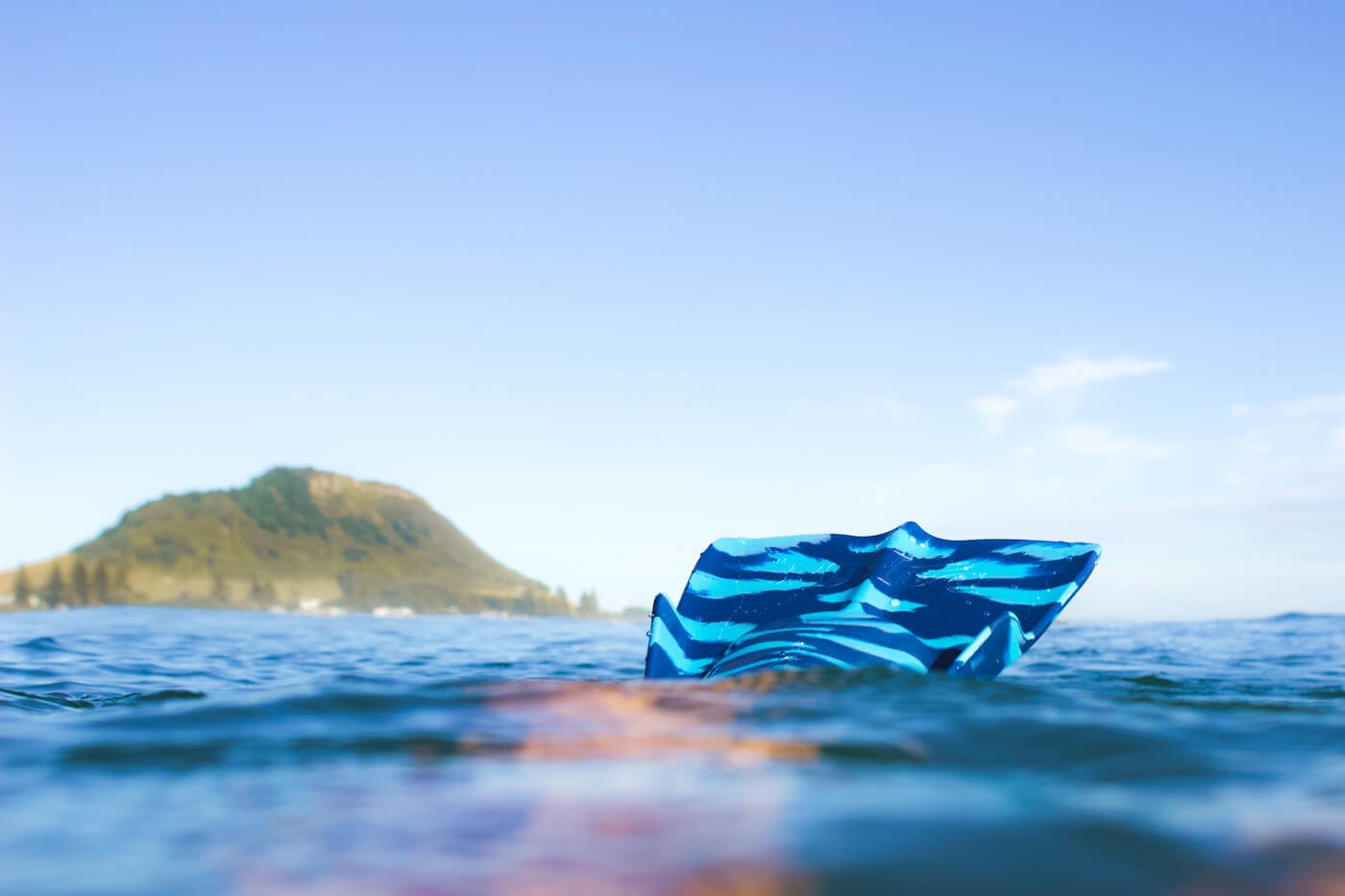
Swim fins make positioning between sets much easier when shooting surf photography in the water.
A reliable water housing protects everything
If you’re serious about photographing in the ocean, a proper water housing is essential.
Early on I tried using a dry bag style housing to test whether I enjoyed shooting in the water. It lasted three sessions before leaking and damaging my camera. That experience taught me very quickly that not all housings are designed for surf conditions.
There are a few solid entry points depending on budget.
JOBY SeaPal or AxisGo smartphone housing
A great option if you want to experiment with in-water shooting before committing to a full camera housing.
Seafrogs housing
This is what I use. It is a cost-effective way to bring a mirrorless camera into the water and gives access to camera controls while shooting. The lens port is generally included in this kit, making it great value for money.
Aquatech housing
A higher-end option and the industry standard if you know surf photography is something you want to pursue long term. Note, you’ll need to buy the lens port separately with this one.
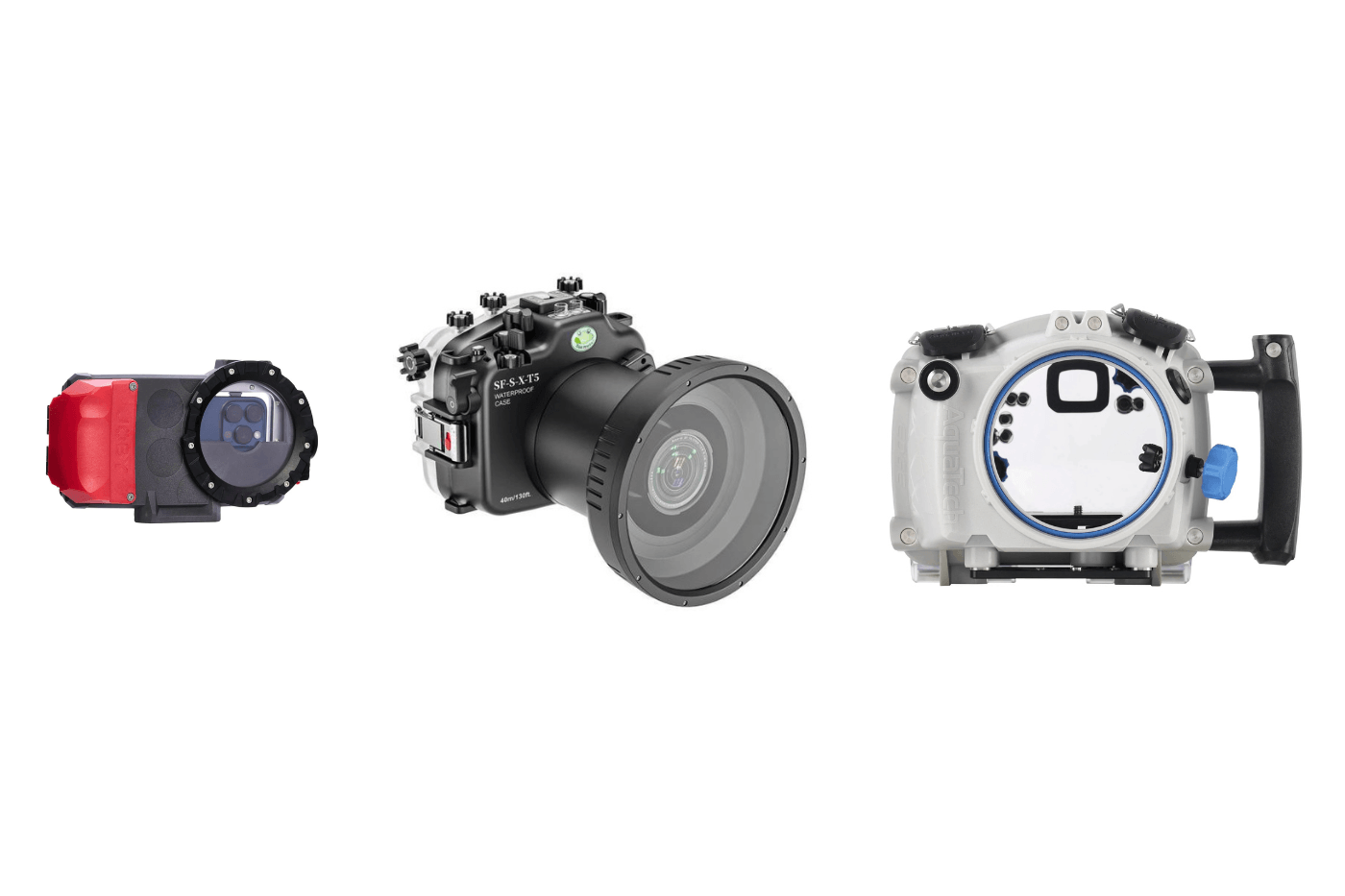
Left to right: JOBY SeaPal smartphone housing, Seafrogs mirrorless housing (often sold as a full setup bundle), and Aquatech Edge Pro water housing (lens ports sold separately). Product images shown for comparison.
A dependable housing is the foundation of most in-water surf photography gear setups. It lets you move confidently through the lineup without worrying about water damage while adjusting your position between sets. I have a whole article dedicated to surf and water photography housings you can read here.
You don't need a complicated camera setup
The camera itself matters less than most people think.
I use a Fujifilm X-T3 because I love how tactile it feels in my hands. The exposure controls are easy to adjust quickly, which helps me respond to changing light without taking my eye away from the scene.
If you’re choosing a camera for shooting surf photography in the ocean, what matters most is choosing a camera you feel comfortable operating quickly.
In the water there’s no time to scroll through menus you’re not familiar with.
Most modern mirrorless cameras work well for surf photography gear setups as long as the housing allows quick access to shutter speed and exposure controls.
One thing I always look for with water housings is actually how the housing allows me to control my camera settings while in the water, so be sure to do some research on this for your specific camera.
A tripod opens creative opportunities on land
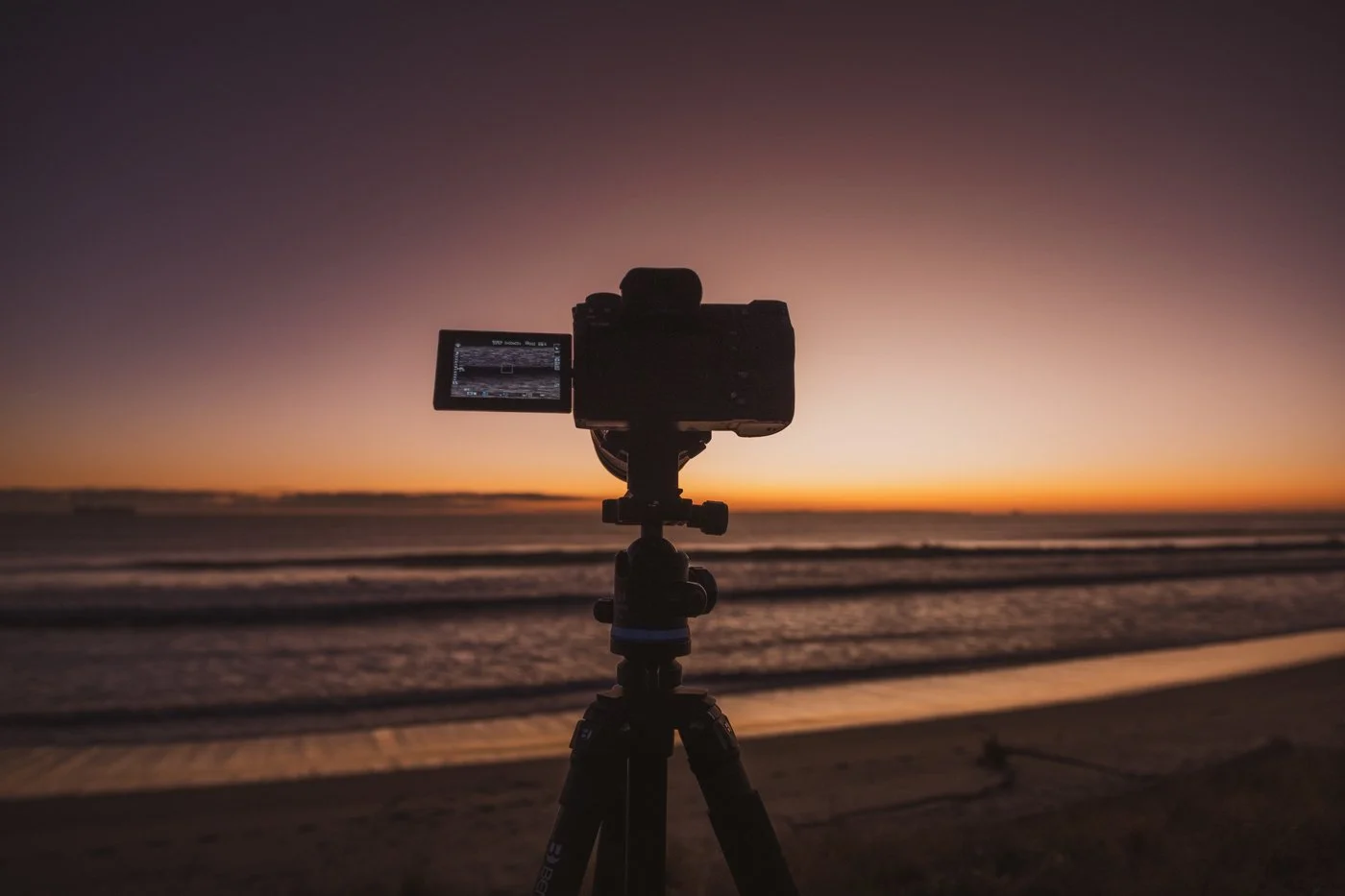
A tripod opens creative opportunities for shoreline surf photography, especially in low light and slower shutter conditions.
Even though surf photography often happens in the water, a tripod can completely change what’s possible from land.
I use one regularly for photographing waves, ocean scenes and slow shutter images of surfers on waves. It also allows me to experiment more with timing and composition when the ocean is calmer.
It’s not essential on day one, but a tripod becomes valuable quickly once you start exploring the full potential of surf photography, from action shots to coastal surf scenes.
The lenses I rely on most
You don’t need a large lens collection to begin.
The three focal lengths that cover almost everything I photograph are:
16–55mm for flexibility in the water
80mm or 90mm for detail and compression in surf conditions
100–400mm for shoreline shooting and photographing the moon
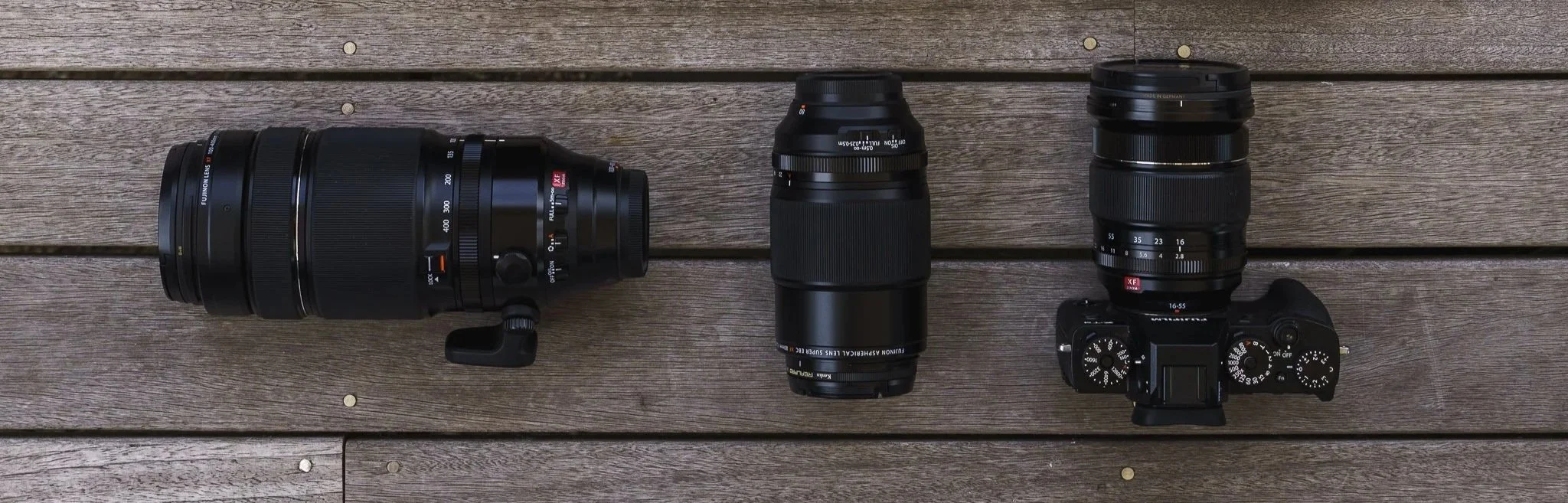
The three focal lengths I rely on most for surf photography, covering both in-water positioning and shoreline shooting.
If you already own something like a 70–200mm, that can work well too. The only real limitation is distance. Surfers usually sit quite far out from shore, so extra reach makes framing easier.
For in-water surf photography gear setups, shorter focal length lenses are usually the most practical choice. Mid-range zoom lenses like a 16–55mm give flexibility when surfers move closer than expected, while small prime lenses can work well if you prefer a lighter setup inside a housing. Because positioning changes constantly in the lineup, wider focal lengths make it easier to frame quickly without needing to adjust distance as often between sets.
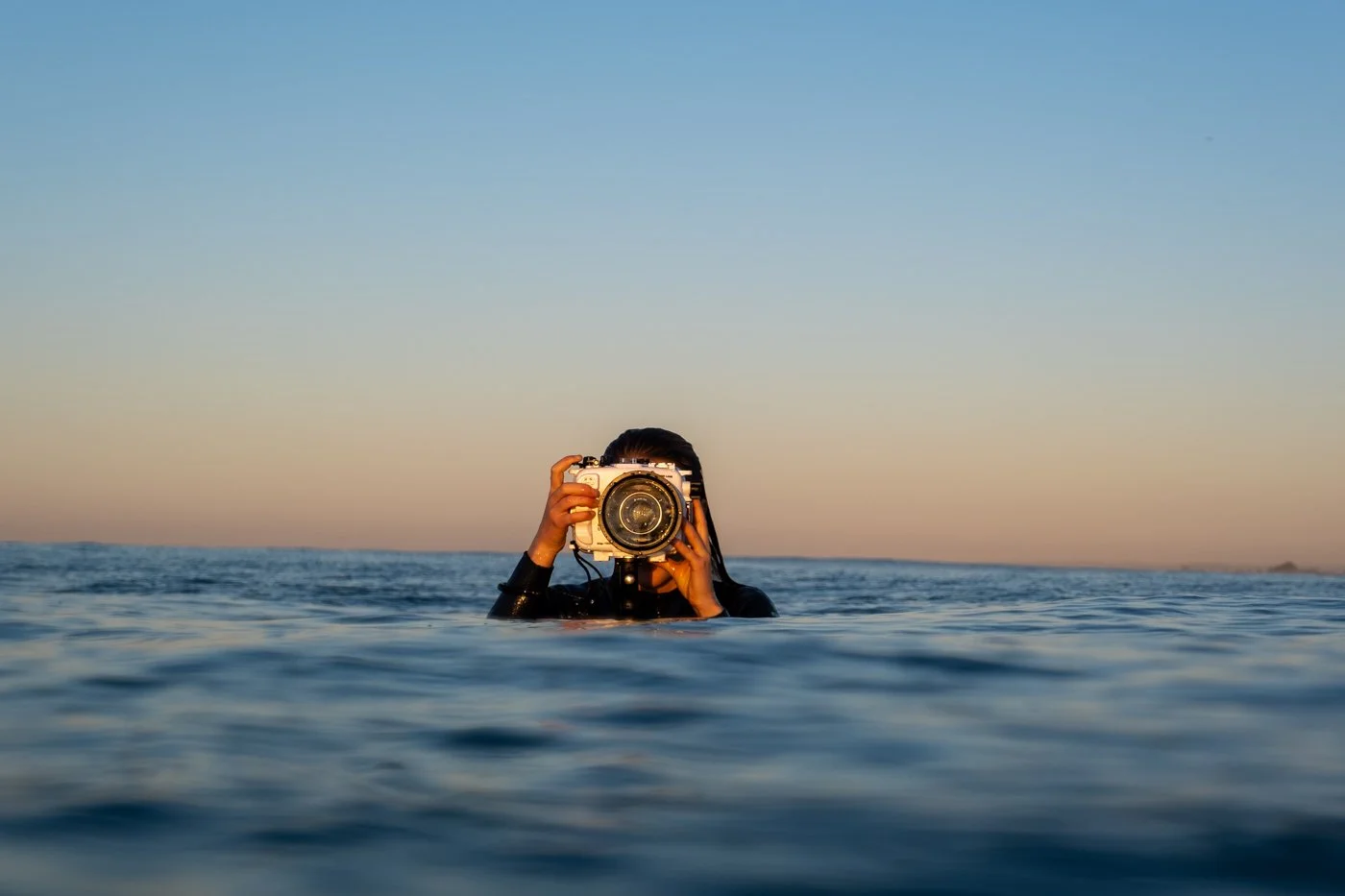
A mid-range zoom lens makes it easier to adjust framing quickly when positioning changes between sets in the lineup.
Shoreline surf photography gear usually includes longer focal lengths like 100–400mm lenses and a tripod for stability. These become especially useful when surfers are sitting far beyond the break and you’re working from the beach rather than inside the lineup.
Lens choice becomes one of the biggest differences between shoreline and in-water surf photography gear setups. My advice is always to start with what you have and learn how it behaves in the environment you are shooting in.
If you want a deeper breakdown of focal lengths, check out my guide to the best lenses for surf and water photography.
Anti-fog strips and lens port care matter more than you think
One of the most frustrating things that can happen in the water is fog building inside your housing.
Anti-fog strips help absorb moisture and keep your port clear while you are shooting. I always place them inside my housing before heading into the ocean.
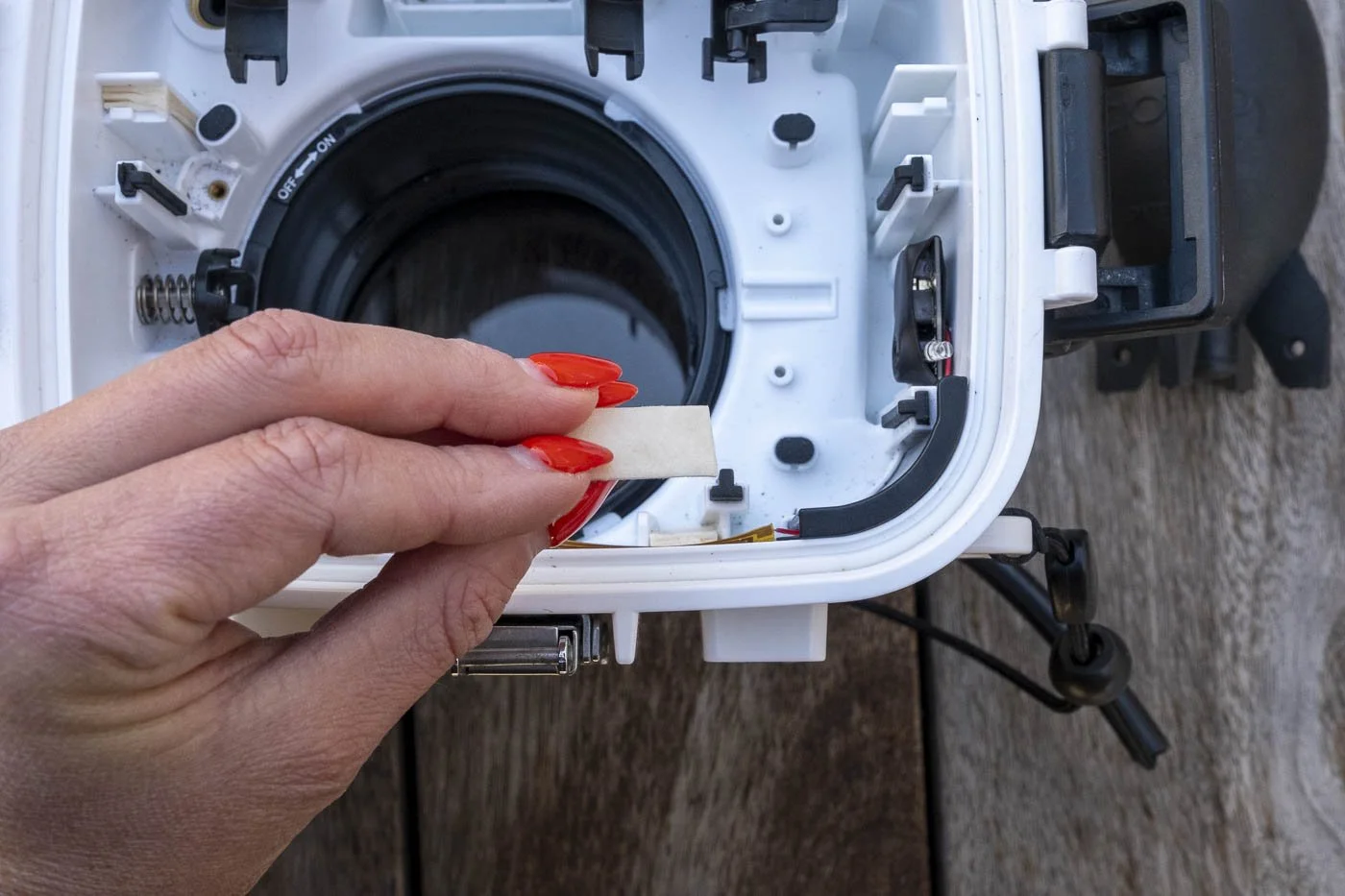
Placing anti-fog strips inside the housing before entering the water helps prevent condensation forming on the lens port during surf photography sessions.
Another habit I swear by is preparing the lens port before entering the water. A quick spit and rinse across the surface, or the dry-port technique helps prevent water droplets sticking to the front of the housing during a session.
It sounds simple, but it makes a real difference.
Small adjustments like this often make more difference than upgrading cameras when refining a surf photography gear setup in the water.
A comfortable camera backpack makes everything easier
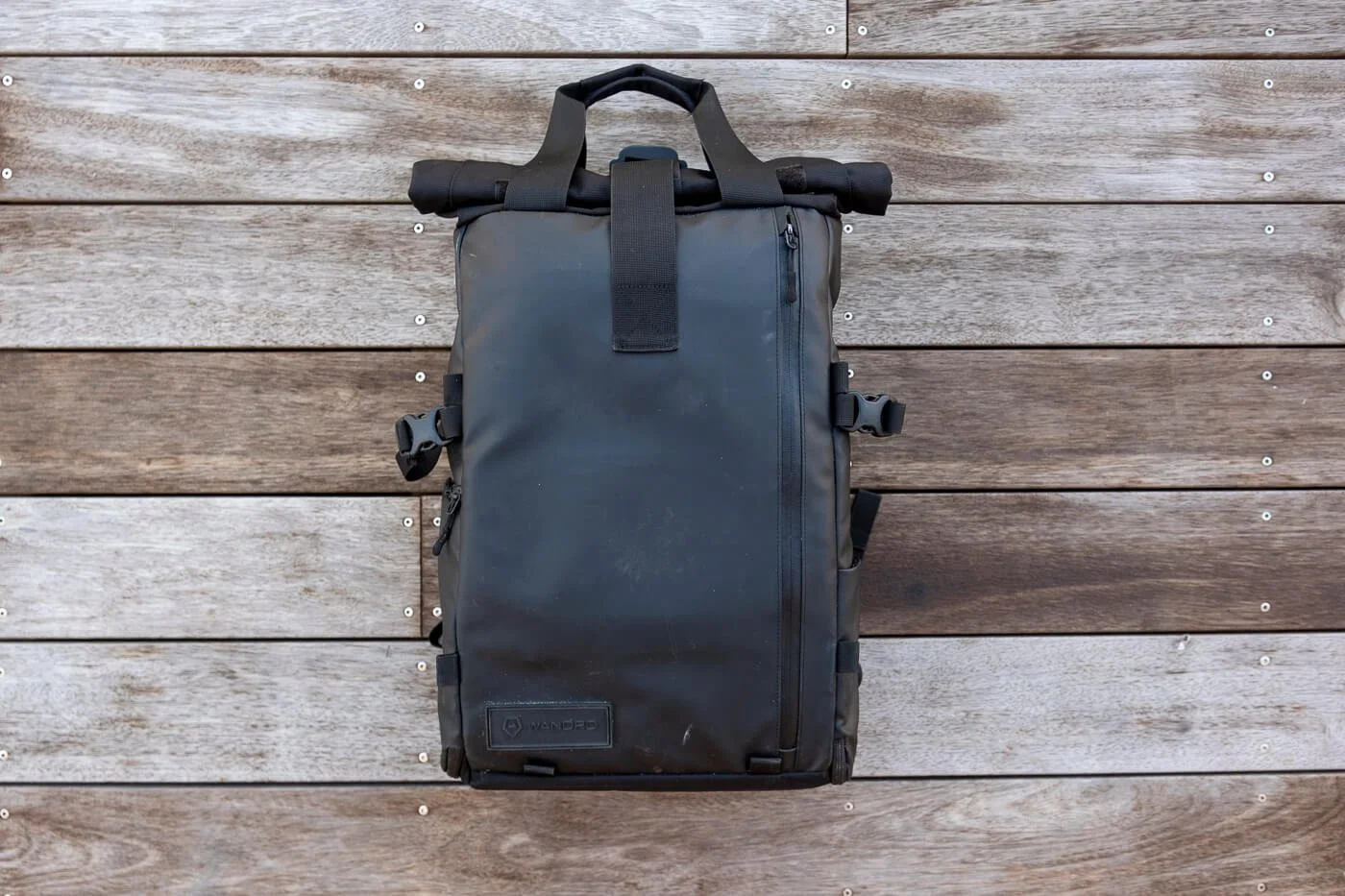
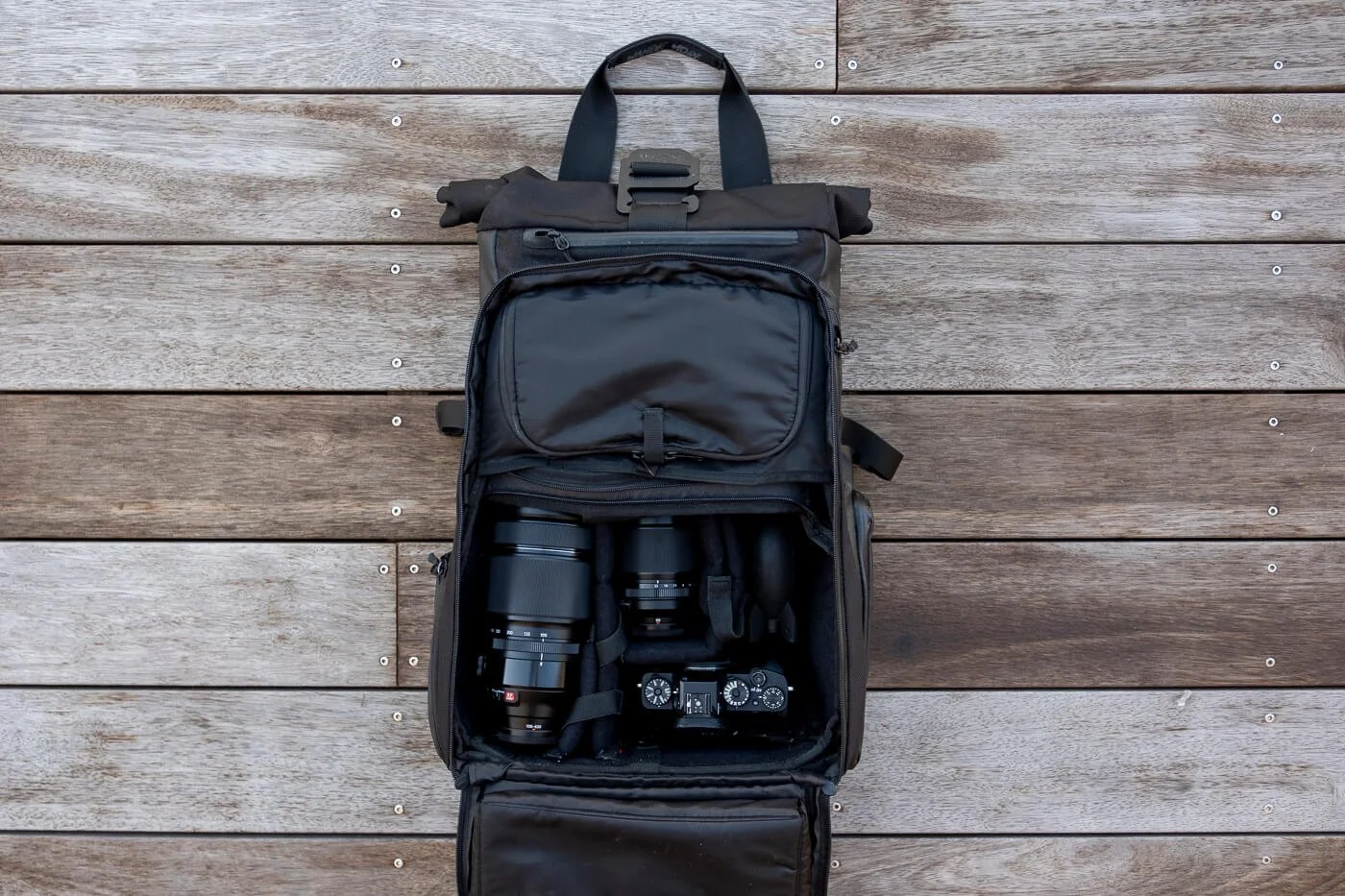
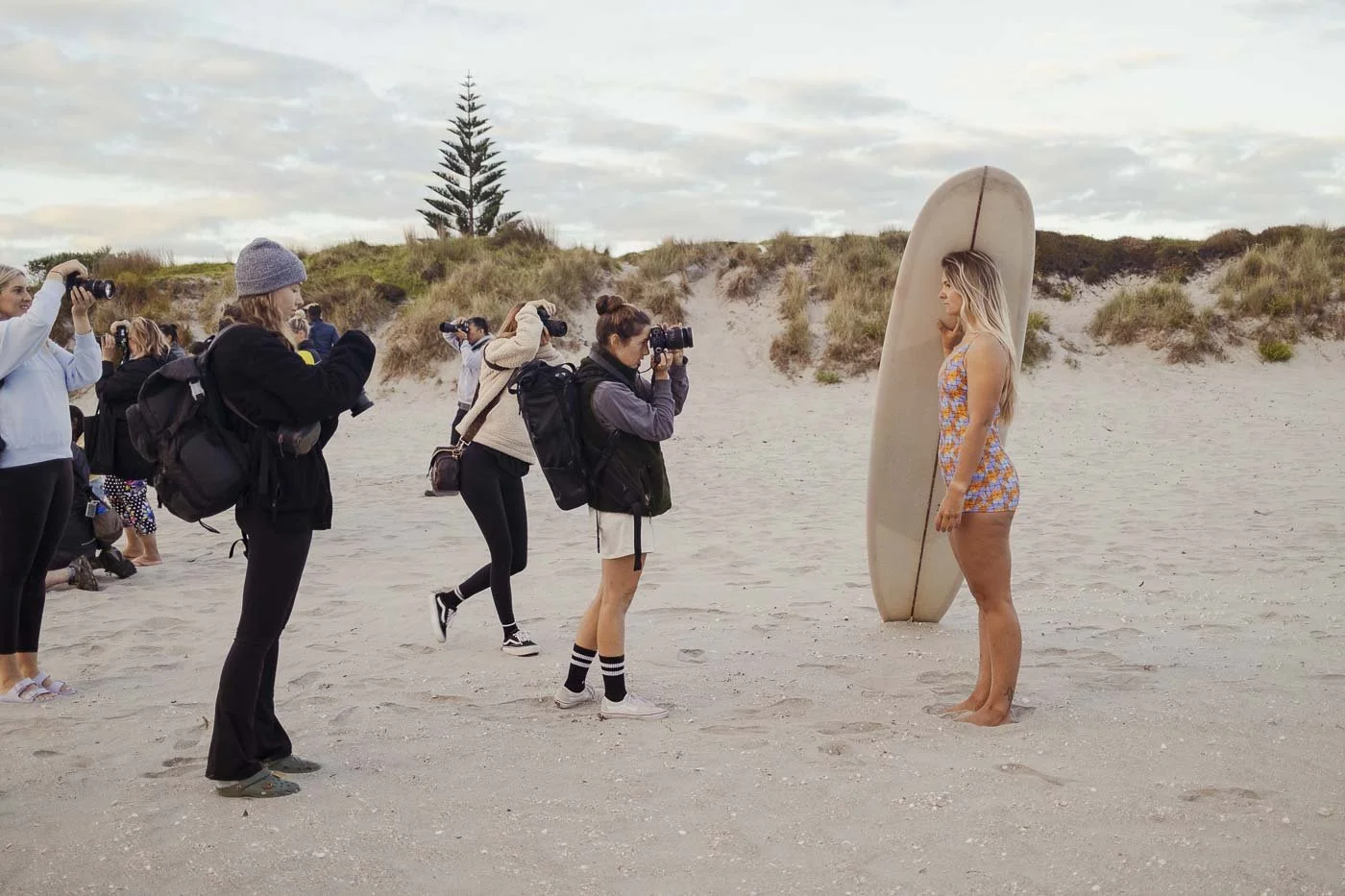
Camera bags are easy to overlook when you’re starting out, but they become important quickly once you begin carrying housings, fins, lenses, and extra layers.
I started with a lower-cost surf camera bag that worked fine at the time, but it wasn’t waterproof and became uncomfortable on longer walks.
Now I use a WANDRD PRVKE backpack and this has made a huge difference. It’s durable, comfortable to carry long distances, and protects my gear properly from the inevitable environmental elements like water and sand.
A good bag protects your equipment and makes longer walks to the beach much more comfortable once your setup gets heavier.
What to wear in the water while shooting
You’ll usually feel colder photographing than surfing, and there’s actually some interesting science behind that.
Your body loses heat around 20 to 25 times faster in water than it does in air, even when the water doesn’t feel especially cold. When you’re photographing, you’re also spending more time floating and waiting for moments rather than paddling constantly like you would when surfing, which means you cool down even quicker.
As a general rule, I wear one wetsuit thickness warmer than I would normally surf in. Even in warmer water this makes a noticeable difference over longer sessions and helps me stay focused instead of thinking about getting cold.
Some photographers also wear helmets in busy lineups or reef environments for extra protection, especially when they’re still getting comfortable moving around with a housing.
If you’re refining your surf photography gear setup, it helps to focus first on the pieces that make the biggest difference once you’re actually in the water.
Essential surf photography gear checklist for shooting in the water
My minimal in-water surf photography gear setup
Most of my in-water surf photography sessions rely on a small, consistent setup that keeps movement simple between sets and reduces distractions in changing conditions.
- Short swim fins for positioning between waves
- Mirrorless camera inside a reliable water housing
- Mid-range zoom lens for flexibility in the lineup
- Anti-fog strips inside the housing port
Keeping my setup simple makes it easier to reposition quickly and reduces the chance of missing moments while adjusting equipment in moving water.

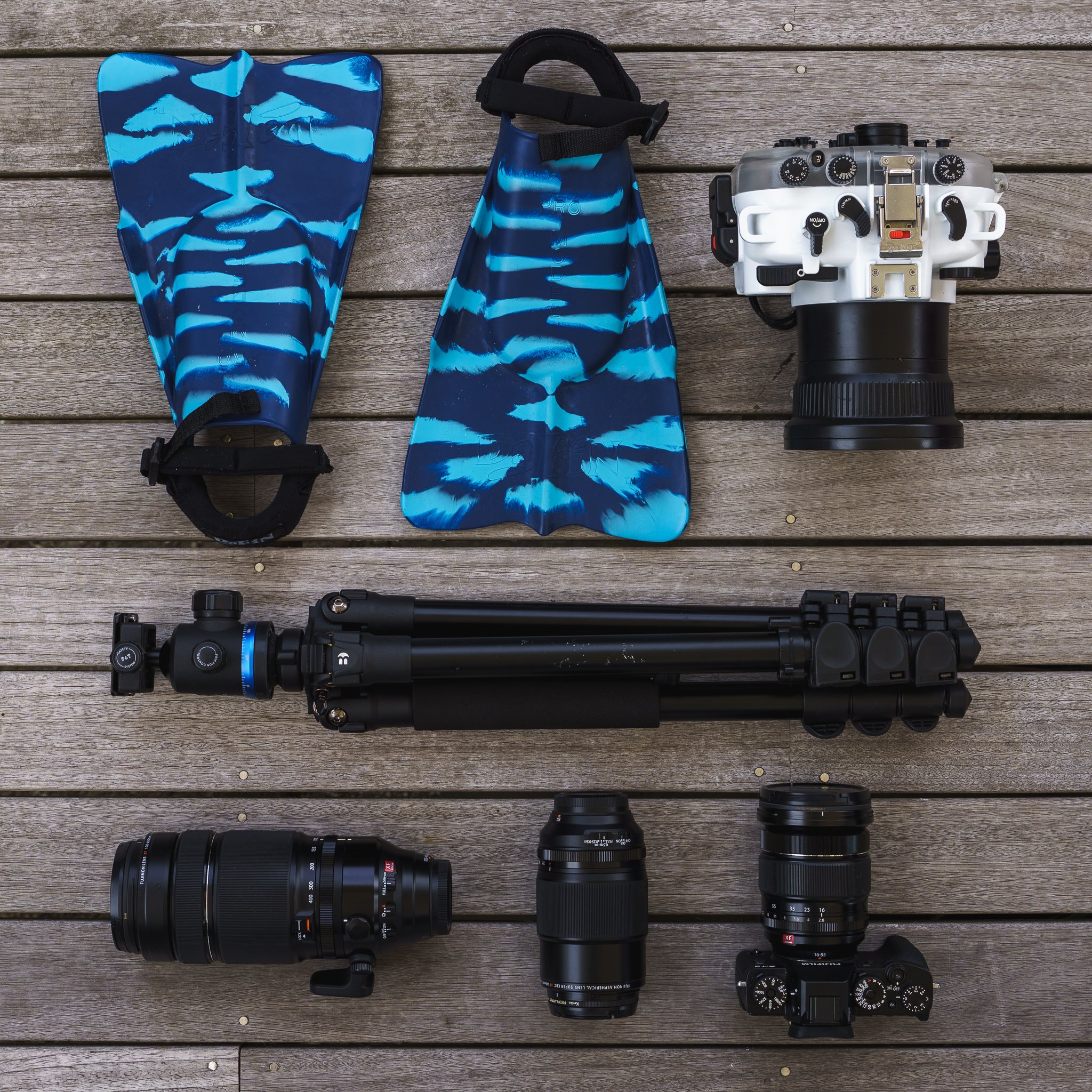
My minimal surf photography gear setup for shooting in the water, including swim fins, housing, and the lenses I rely on most. Plus a tripod for shoreline shooting.
It’s easy to feel like you need a full kit before getting started with surf photography.
If you’re building your first surf photography gear setup, it helps to think in layers. Start with what keeps you safe and mobile in the water, then add the equipment that improves image quality later. This approach keeps surf photography accessible without needing a full professional kit straight away.
In reality, the essential surf photography gear setup list is simple:
Swim fins
Reliable surf photography housing
Mirrorless camera with accessible controls
Mid-range zoom lens
Anti-fog strips inside the port
Everything else can come later. My surf photography FAQs article covers a few common beginner gear questions as well.
And, if you’re just getting started, check out my guide to common surf photography mistakes in the water and watch out for things to avoid (or tell me if you relate to any!)
I hope you enjoyed this article. Which piece of gear made the biggest difference for you when you started? I’d love to hear.
Until next,
L ✌️
FAQs about surf photography gear setups in the water
What gear do you need to start surf photography?
The essentials are swim fins, a reliable water housing, a camera you can adjust quickly, and one versatile lens.
Do beginners need a professional camera for surf photography?
No. A camera you already understand how to use is more valuable than upgrading early.
Are fins necessary for surf photography?
Yes. Fins improve positioning, safety, and mobility in moving water and are one of the most important pieces of surf photography gear for shooting in the water.
What is the best housing for surf photography beginners?
Lots of photographers start with AxisGO or JOBY SeaPal for smartphones or Seafrogs for mirrorless cameras before moving to higher-end housings later. You can learn more about water housings for surf photography in my guide here.
What lens should beginners start with for surf photography?
A 16–55mm lens is one of the most flexible choices for in-water shooting when starting out.
Can you do surf photography with a GoPro or phone?
Yes. Waterproof smartphone housings like AxisGO or JOBY SeaPal are a great place to start before moving to mirrorless cameras. It's a simple way to learn positioning and timing in the surf.
Is surf photography dangerous?
Surf photography can be challenging in moving water, so confidence swimming beyond the break and understanding conditions matters more than camera experience when starting out.
Where to start buying surf photography gear as a beginner?
Start with swim fins and a reliable housing before upgrading your camera. These make the biggest difference when learning positioning in moving water.
What surf photography gear do professionals use?
Most professional surf photographers use mirrorless cameras inside Aquatech housings with mid-range zoom lenses and swim fins for positioning in the lineup.
What gear do you need for shoreline surf photography?
A long lens like a 100–400mm and a tripod are the most useful upgrades when photographing surfers from land.
Why do simple surf photography gear setups work best in the water?
The more equipment you carry into the ocean, the harder it becomes to reposition quickly between sets. A simple surf photography gear setup makes timing easier and reduces the risk of missing moments while adjusting controls in moving water.