Behind the scenes of a styled surf shoot: Nostalgic Surf with Fujifilm
When people see the final images from my Nostalgic Surf workshop with Fujifilm, they notice the vintage aesthetic, the styling, and the final photo edit, along with that effortless surf lifestyle vibe: girls living their best salty life guided by the rhythms of the ocean.
What people don’t see is the location scouting, council approvals, partner conversations, mood boards, and the slightly nerve-wracking logistics of staging a vintage caravan as close to the sand as possible. This shoot was so fun to organise and lead, but it also required some serious coordination to bring together as a live event.
This shoot was not loosely pulled together on a whim. It was carefully curated to feel like an effortless morning at the beach with a couple of frother longboarder girls.
Styled surf shoots like this are often used in brand campaigns to create lifestyle imagery that feels natural while still being carefully directed behind the scenes to meet a client objective.
For my Nostalgic Surf masterclass with Fujifilm, I wanted photographers to first experience an aesthetic that felt like a feast for the eyes, inspiring image after image and strengthening their sense of art direction, before learning what goes into shaping a campaign-style shoot from the ground up.
Step behind the scenes of Nostalgic Surf
Jump to:
Concept direction
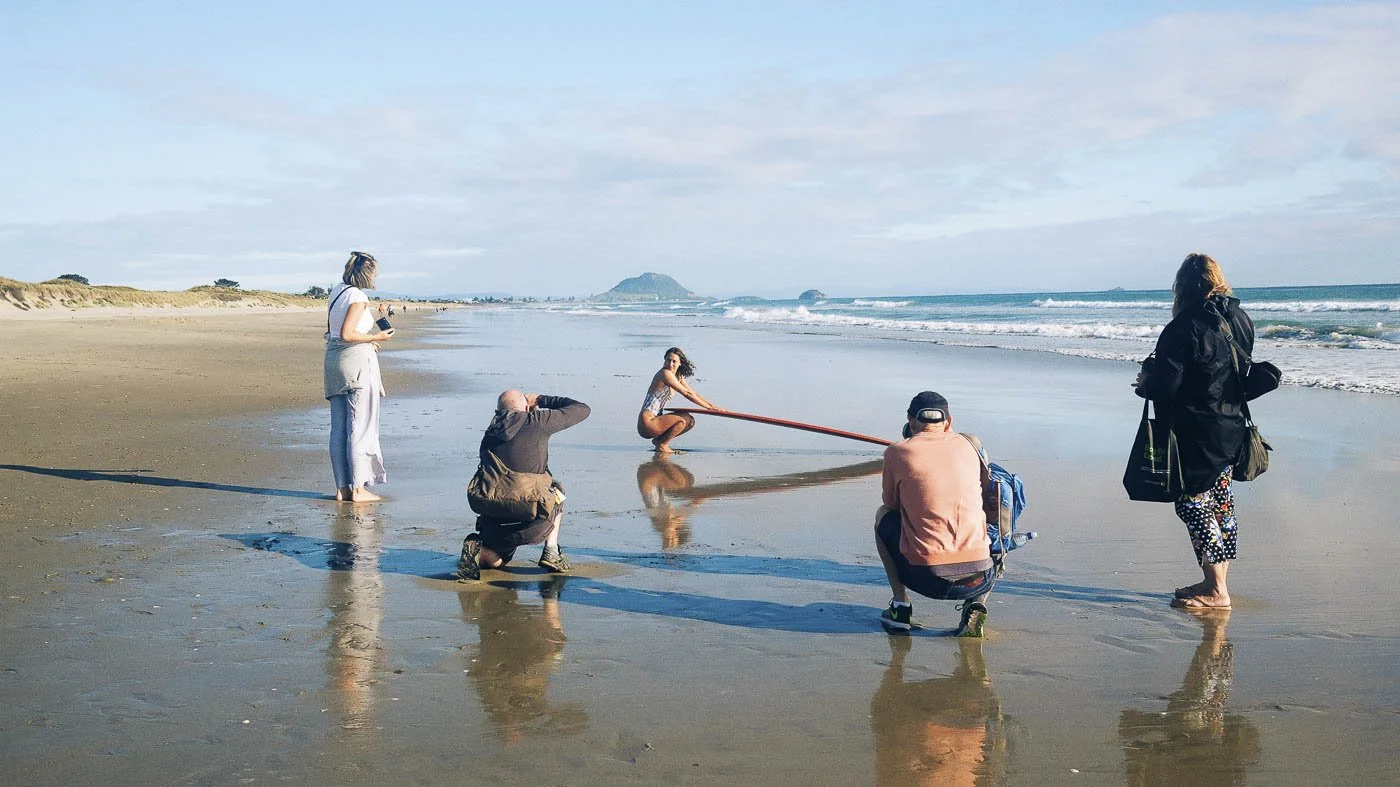
Working through campaign-style direction together during the Nostalgic Surf styled surf shoot with Fujifilm.
The direction for Nostalgic Surf was to capture the atmosphere of vintage surf culture without turning it into costume or nostalgia for its own sake.
When I first pitched the idea to Inner Realm, they asked for a mood board straight away. They wanted to understand the visual language before committing as a partner. That board ended up being integral to bringing the collaboration together. Once the concept was clear, the rest of the partnership flowed naturally.
Fujifilm became another important part of the story. Their film simulations already carry echoes of analogue photography, so leaning into a retro surf mood felt like working with the grain rather than against it, i.e. very on brand!
It also connected back to my own background. Before photography, I studied textile and fashion design, and I’ve always collected references from earlier eras without really meaning to. This shoot gave me the chance to really tap into my sourcing and styling instincts and have fun curating details that shaped the atmosphere from the ground up.
Mood boards are always the first step inside my Brand Shoot Blueprint process because they align collaborators before anything moves into production.
Location and permits
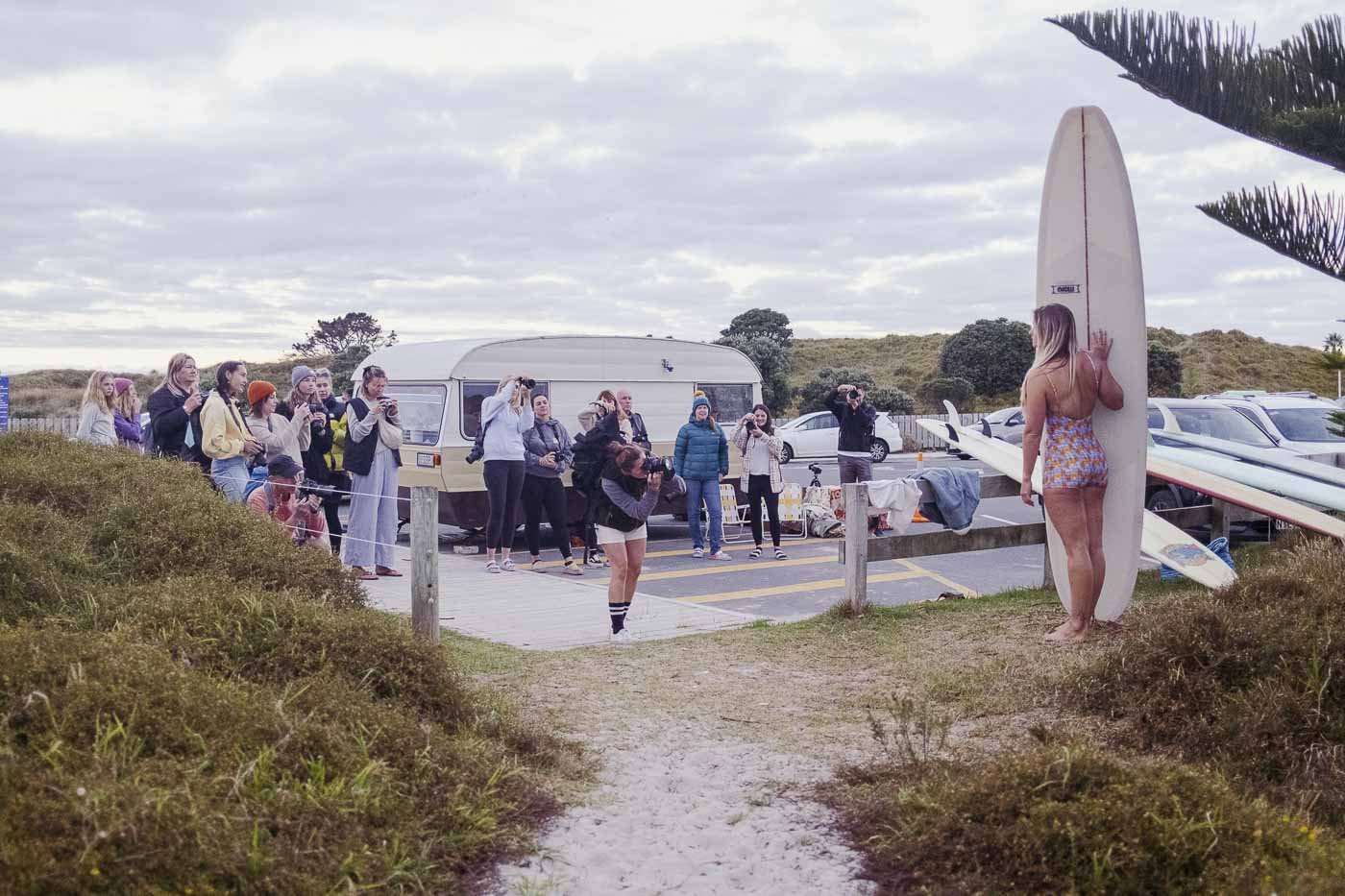
Securing permission to position the caravan close to the shoreline helped the shoot feel believable within the landscape.
Behind the final images was a surprising amount of groundwork.
Finding the right location came first. I needed a beach with enough visual variation to support multiple setups without the environment starting to repeat itself on camera. The caravan took longer. It had to feel authentic to the mood without becoming a prop that dominated the frame.
Once that was secured, council permission became the next step so we could position it close enough to the shoreline for it to feel believable in context. Luckily I have a contact at the council who looks after parks and recreation, and she put me in touch with the right person. Because it was a community growth event, they were happy to support us by allowing use of a few parking spaces and a temporary no-parking zone at the chosen car park.
At the same time I was coordinating wardrobe direction with Inner Realm and organising hospitality with Wildflour so the day felt cohesive for everyone involved (more on that in the next section).
By the time photographers arrived, the shoot already had the structure of a campaign environment rather than a casual workshop, so participants felt like they were stepping onto a set and could become fully immersed in capturing the world we’d created.
This styled surf photography shoot followed the same planning structure I use for commercial brand campaigns. The workshop environment was a new layer entirely for me.
Styling decisions
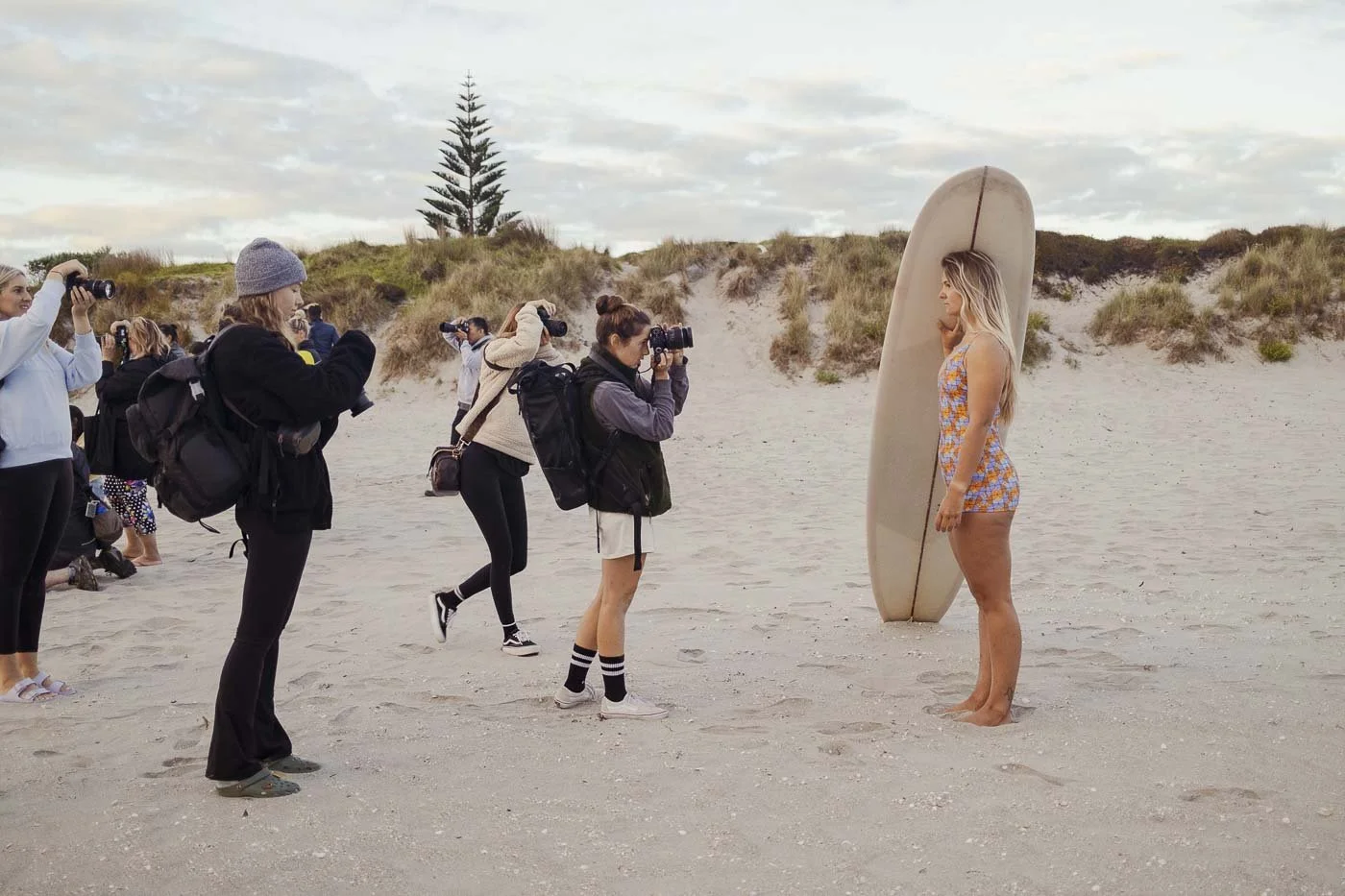
Wardrobe and props were chosen to sit naturally within the landscape while referencing the colour palette of 70s surf culture.
Styling is where an idea either holds together or falls apart.
For Nostalgic Surf, everything had to feel like it belonged naturally on that beach. The wardrobe leaned into retro-influenced swimwear and relaxed coastal layers rather than anything overly styled. Surfboards, towels, retro beach chairs, and small accessories added colour and texture without drawing attention away from the people in the frame.
The palette stayed close to the warm 70s colours like oranges, mustard yellows, browns and ocean blues documented in my mood board.
The goal was to make sure nothing inside the scene felt out of place and strongly nodded towards the 70s while maintaining modern elements.
Shoot sequencing
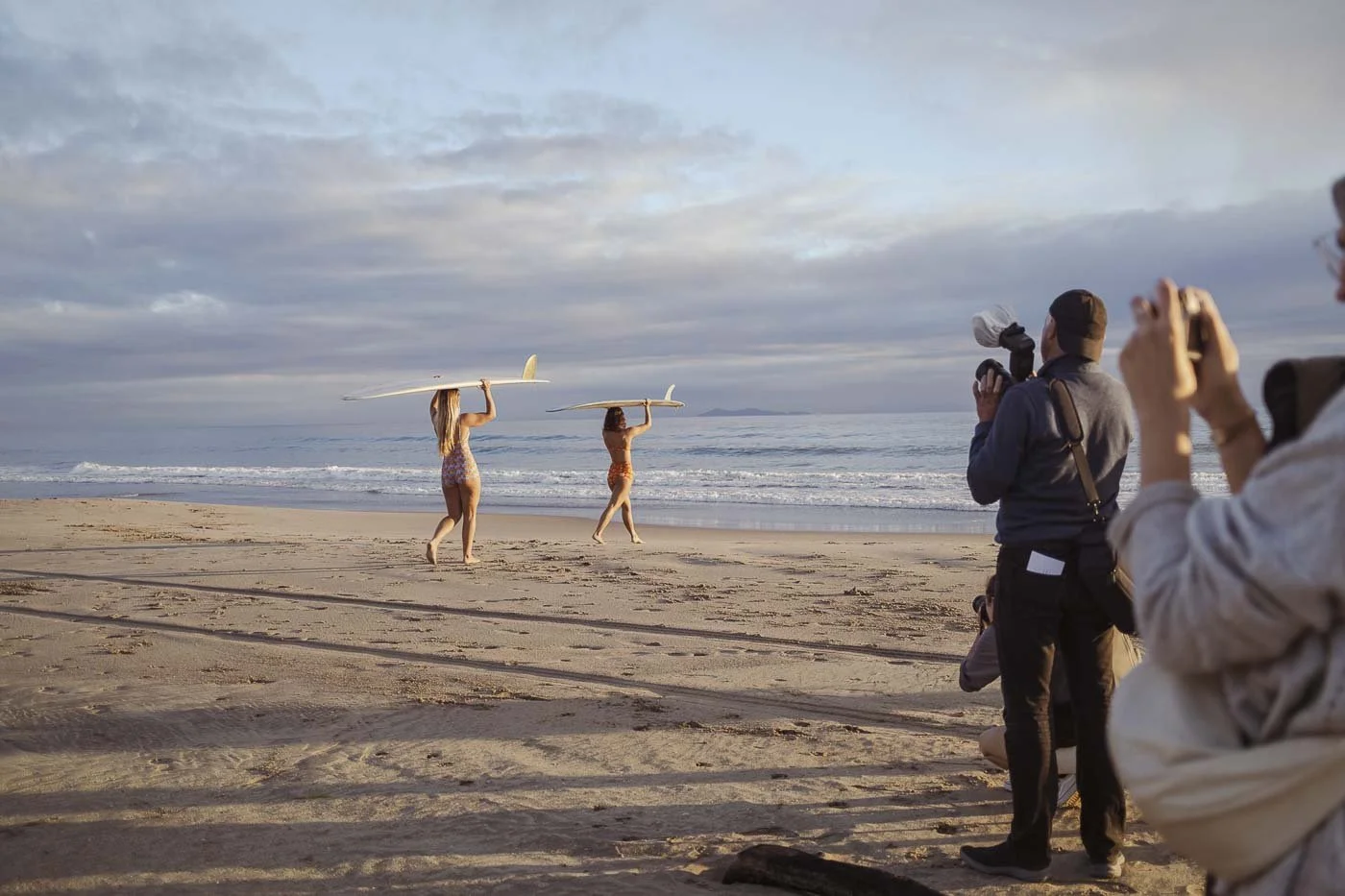
Moving from establishing frames into lifestyle movement along the shoreline helped build the story sequence naturally.
On the day, Fujifilm set up a range of cameras and lenses so participants could work with them in real conditions rather than a demo environment.
I guided the group through the way I normally build a campaign sequence on location, referencing my shot list regularly to make sure I’m hitting the objectives, starting with wider establishing frames that introduced the landscape and caravan before moving into looser lifestyle moments along the shoreline. From there we shifted into detail-driven images that focused on product, light, and smaller 70s / surf culture references that help complete a story.
What stood out most was how differently everyone interpreted the same direction. Some photographers leaned toward documentary-style frames, while others moved naturally into more editorial compositions.
Having access to Fujifilm gear while working through those decisions made the process feel practical rather than theoretical.
Real-time challenges
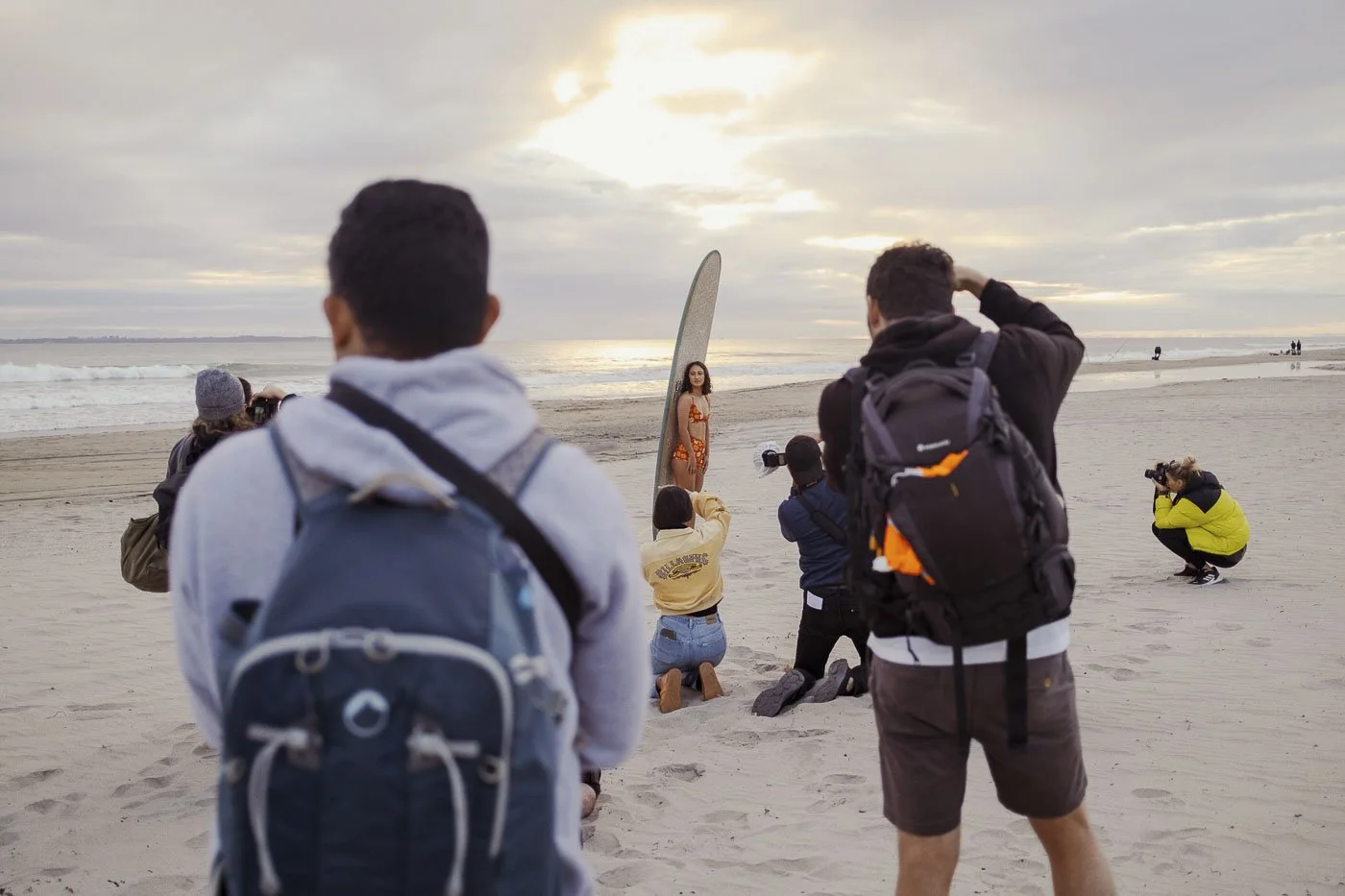
Soft cloud cover changed the light conditions early, which meant adapting the setup in real time as the shoot unfolded.
The light changed constantly across the morning, which meant some setups had to be adjusted on the spot.
The plan mattered, but the ability to change direction mattered more. I always leave room to manoeuvre around whatever light conditions arrive on the day. That’s part of the creative fun in my opinion. It started cloudy, which was actually great for sunrise because we didn’t have strong orange tones to work with in portraits. Instead, we had evenly diffused light from the get-go.
Watching photographers adapt in real time became one of the most valuable parts of the day for everyone attending.
Seeing a campaign-style surf photoshoot unfold step by step helped photographers understand how structure supports creativity on location. I regularly referred back to my mood board throughout the shoot, which many participants were surprised by, and I began working with them like we were a crew on set, which created a great environment for developing critical thinking during a shoot.
Natural moments to support storytelling
Some of my favourite frames happened while nothing official was being shot.
There was a moment where the shadows through the venetian blinds created incredible shadow play across our models inside the caravan. Another was when a surfboard dripping seawater caught my eye. These kinds of images help support the storytelling side of a campaign, where the product becomes secondary and the atmosphere carries the narrative, which is great for clients to use on social media.
Another favourite moment was when the girls caught a wave together and held hands while riding it. It feels like such an iconic photo, and I’m stoked to have captured it while shooting surf from land.
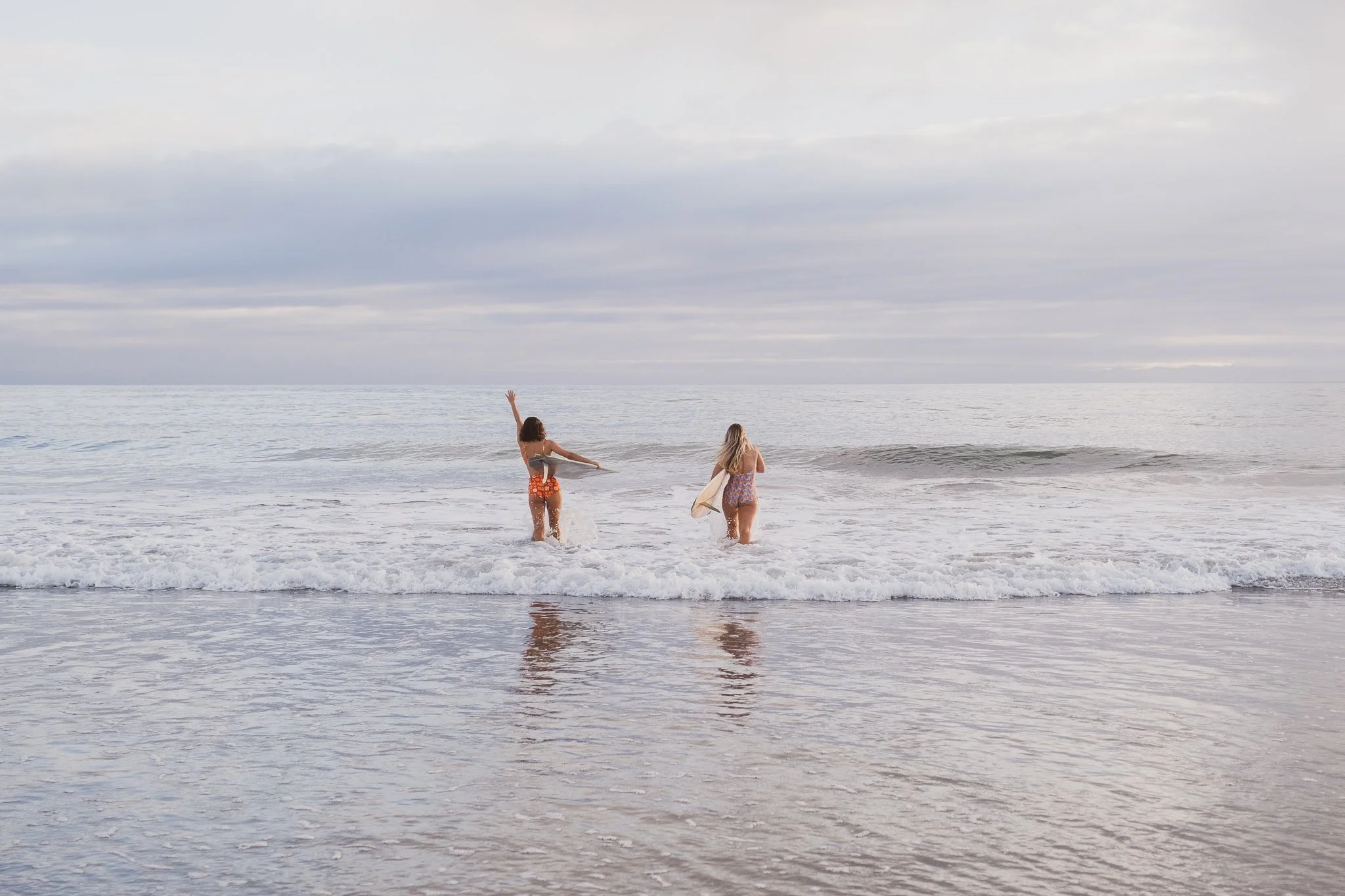
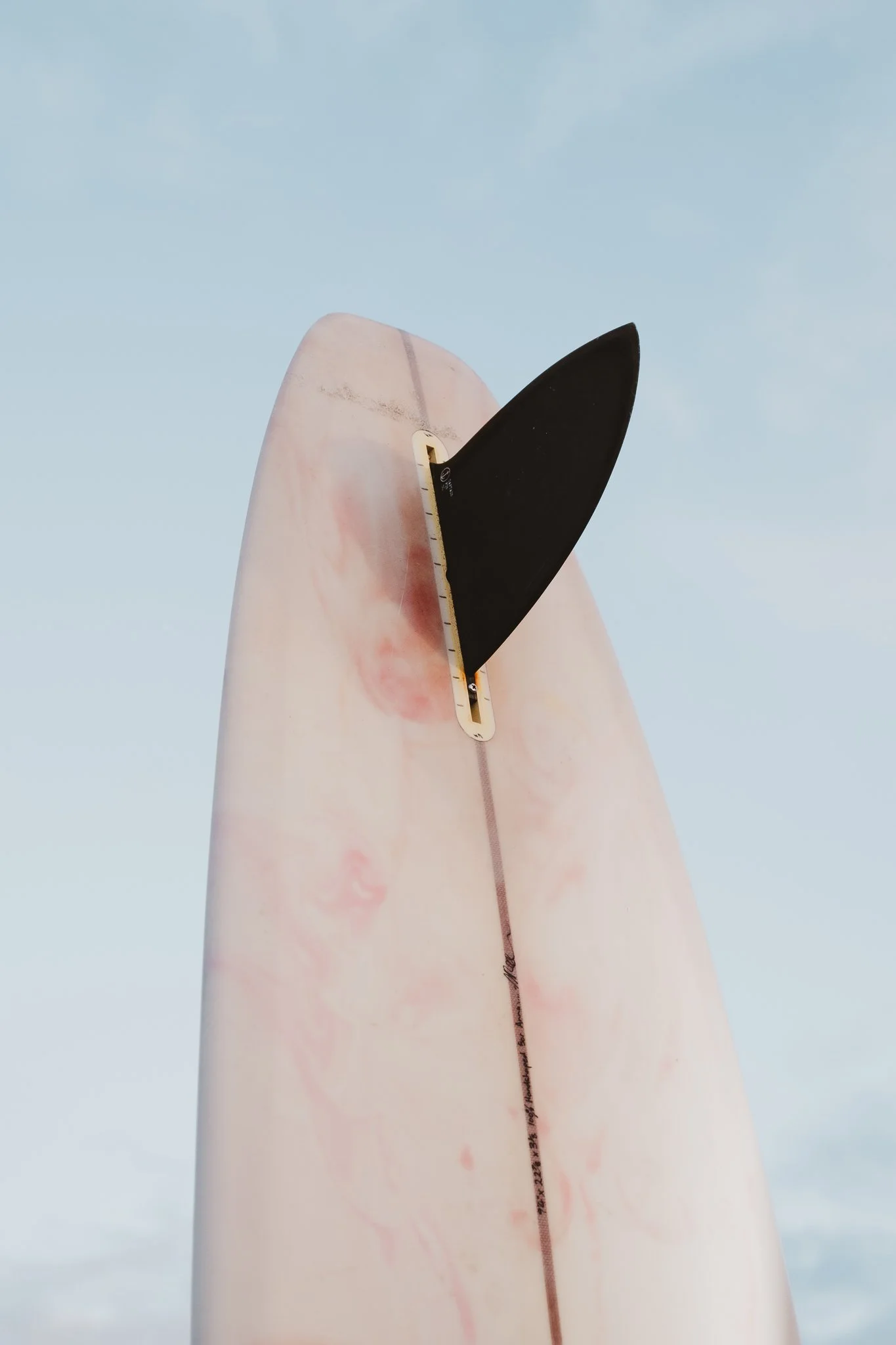
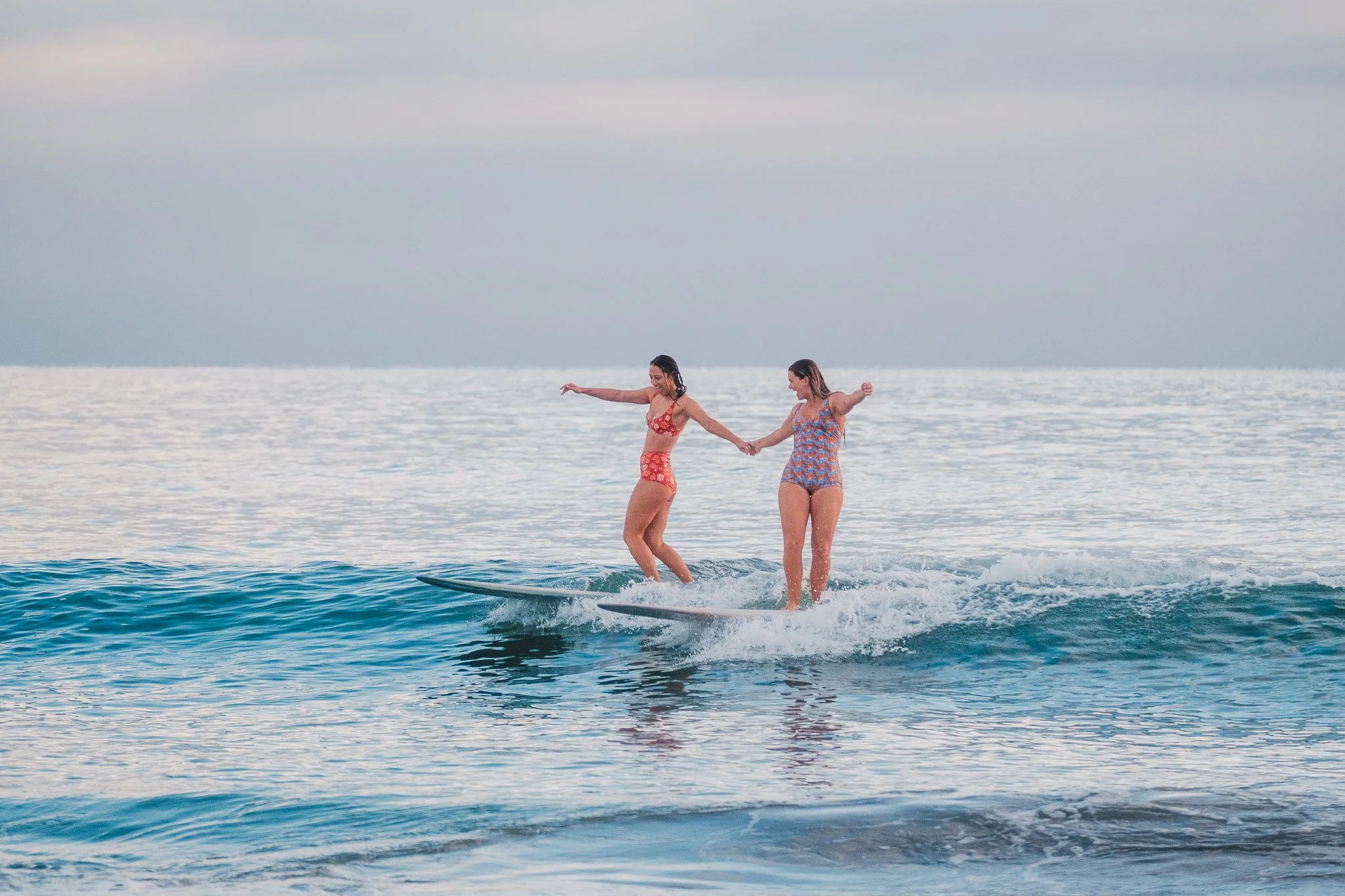
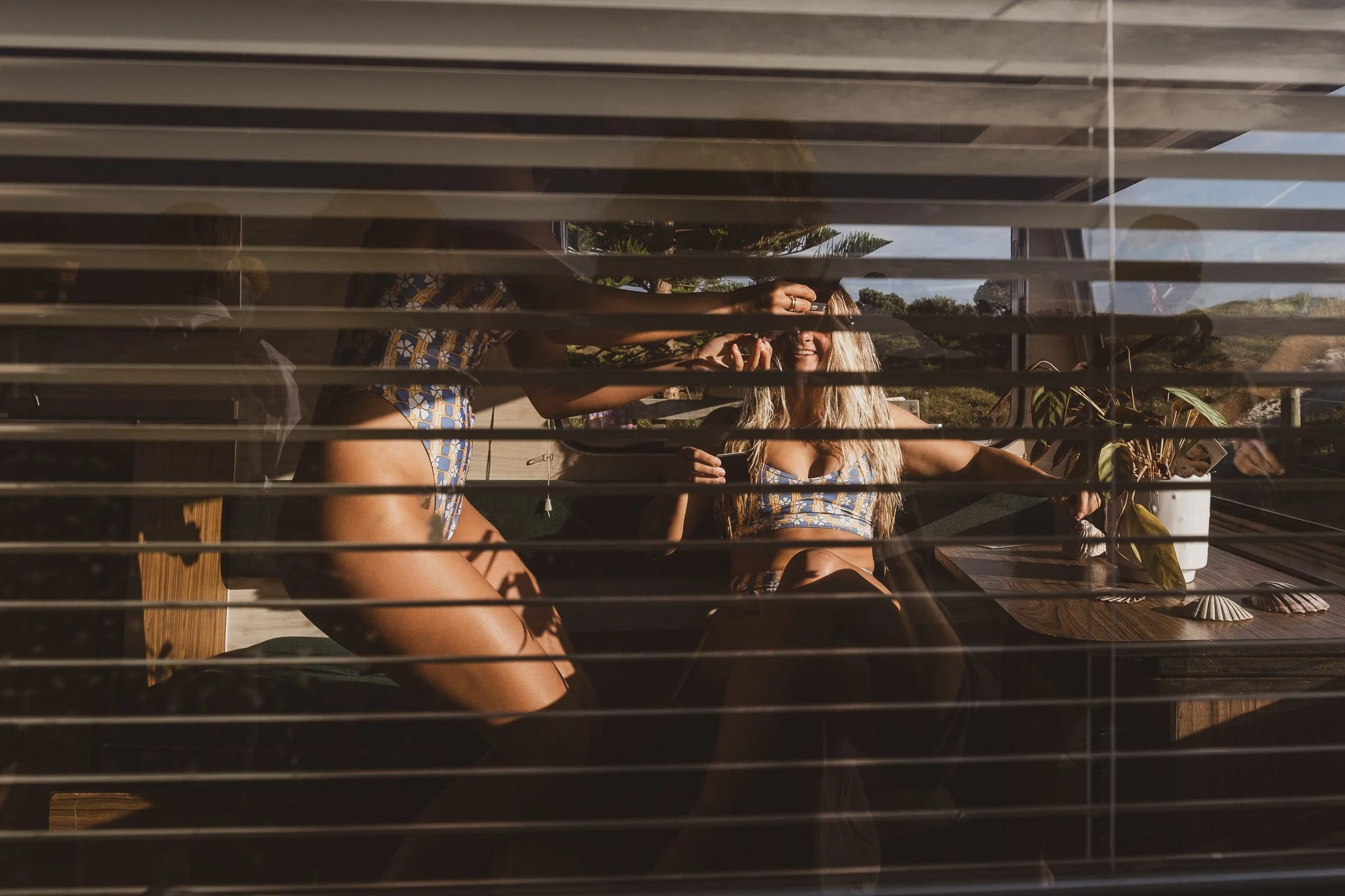
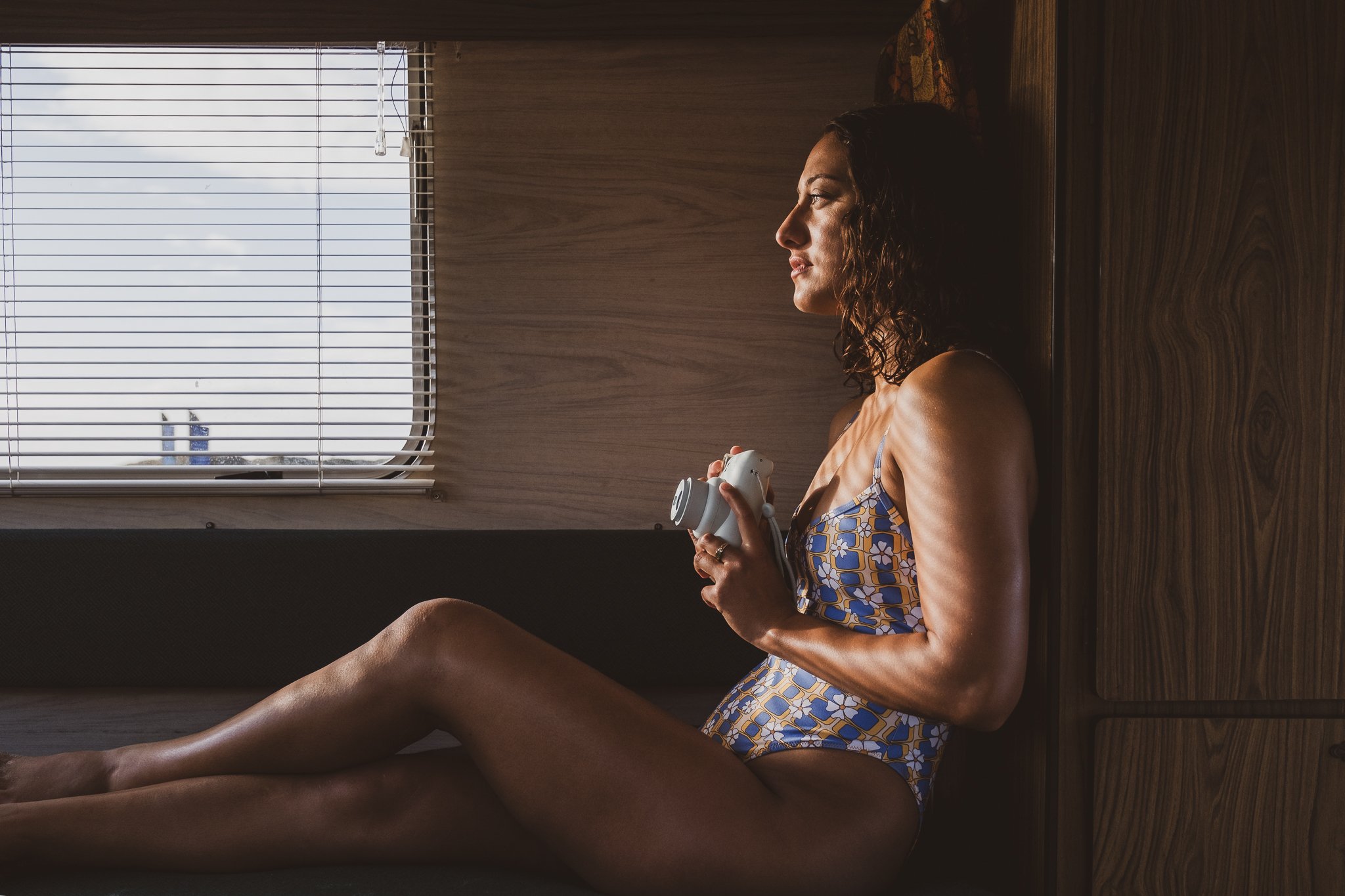
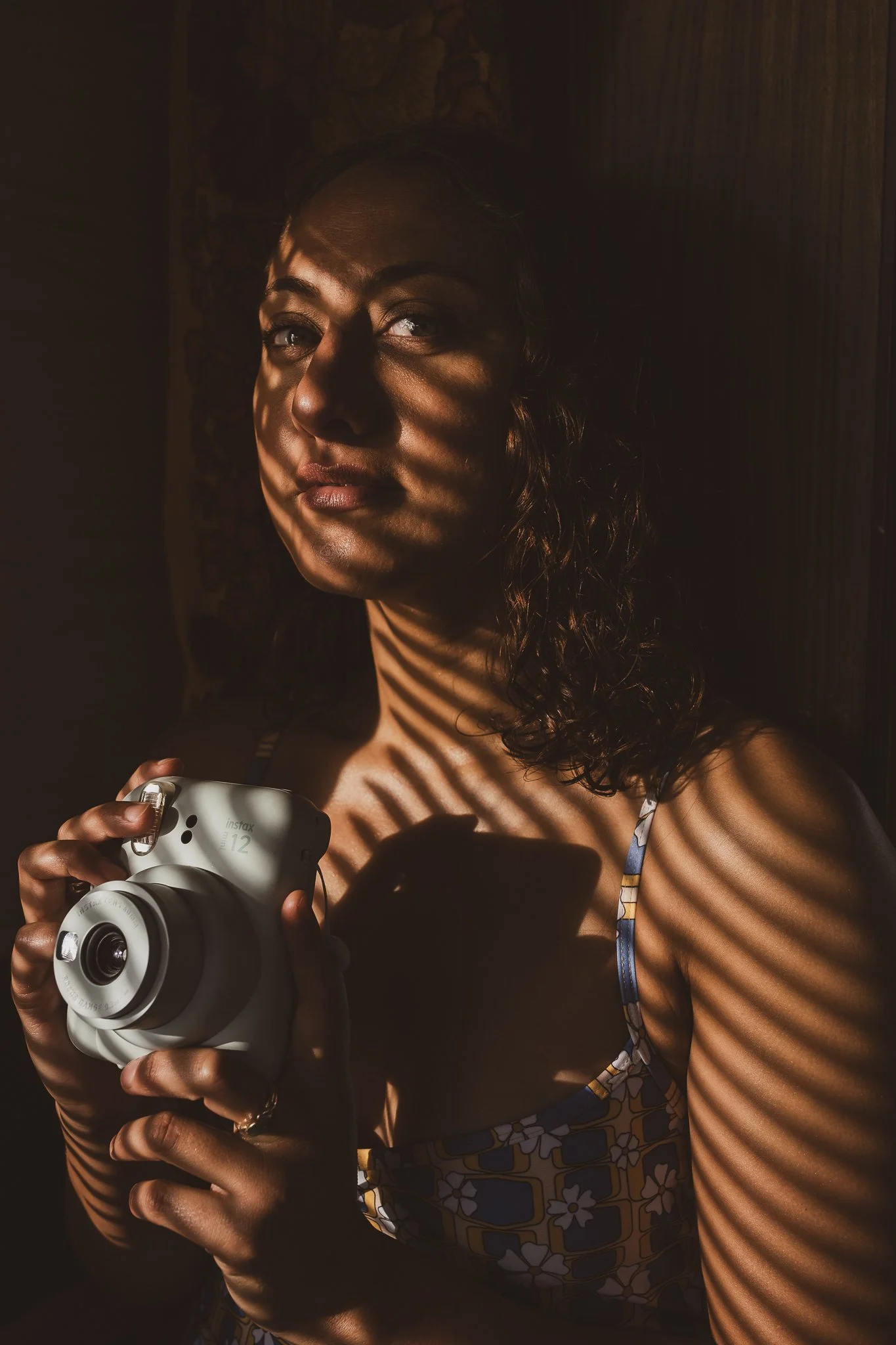
Those in-between or unexpected moments often produce the strongest images for supporting storytelling.
What photographers learned
The mood board set the tone early. The styling and staging helped shape the colour language. From there, the morning and the story unfolded naturally.
Most photographers left with strong images. What they didn’t expect was how much clarity they gained about how a shoot like this actually comes together behind the scenes.
Seeing the preparation, sequencing, and adjustments in real time shifted the way many of them approached their own work afterwards.
After the shoot, we also spent time unpacking parts of my editing workflow together and I shared several free tools I use to keep post-production simple and organised after campaign-style sessions. If you’re building your own process, I’ve written about the free workflow tools for photographers I regularly rely on here.
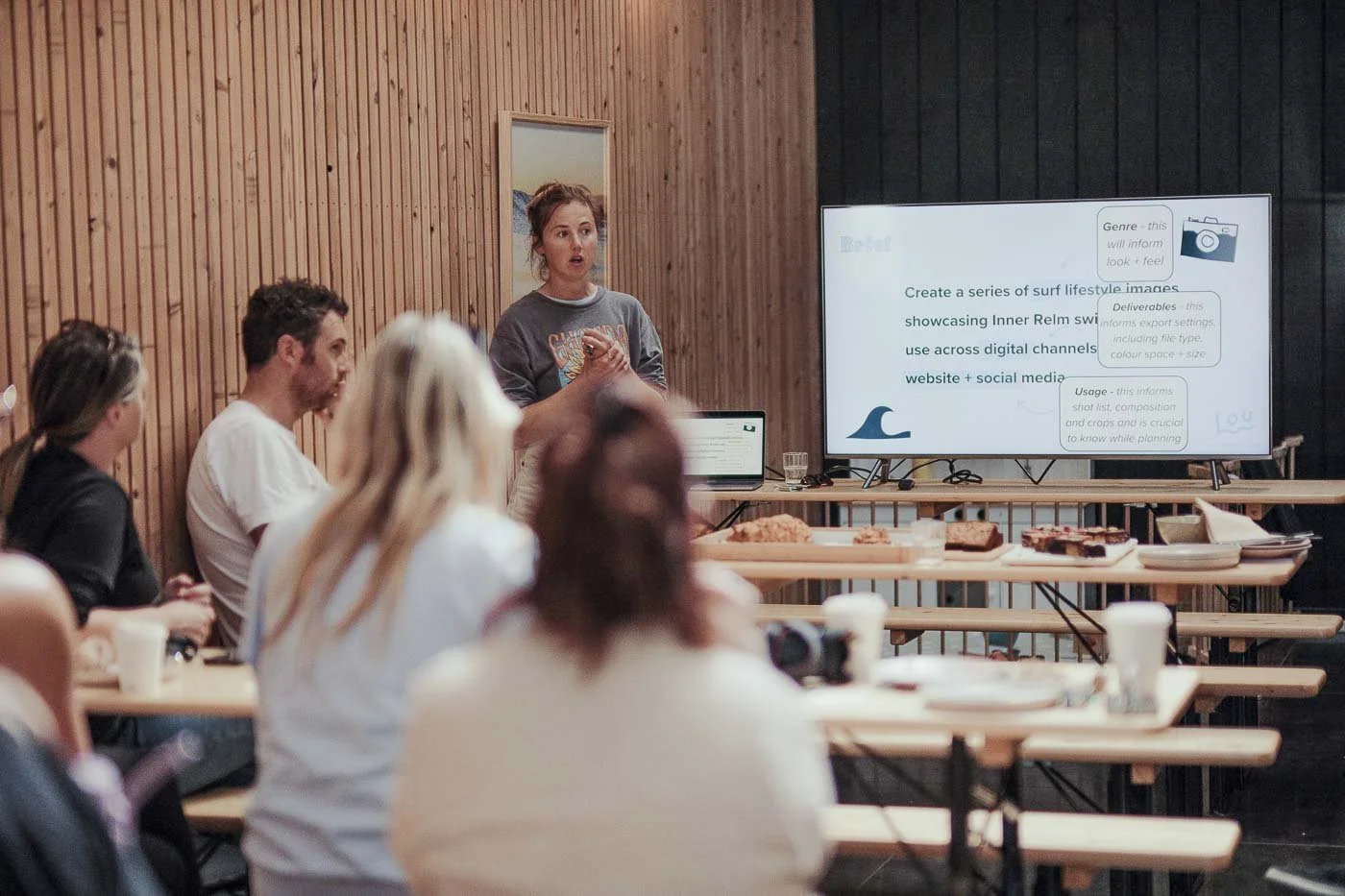
Unpacking the campaign brief together afterwards helped photographers understand how structure supports creativity throughout a shoot.
The wrap up
Nostalgic Surf followed the same planning structure I use across all my brand shoots, from mood board development through to shot sequencing and on-location direction.
Shoots like Nostalgic Surf are exactly why I built the Brand Shoot Blueprint framework in the first place. I created it to support photographers who want to move into campaign-style work and learn how these shoots are structured from both the creative and client side, drawing on my experience working across photography, marketing, and project coordination where building ideas into real-world campaigns became second nature.
Save this post if you’re planning your first styled brand shoot.
Until next time,
L ✌️
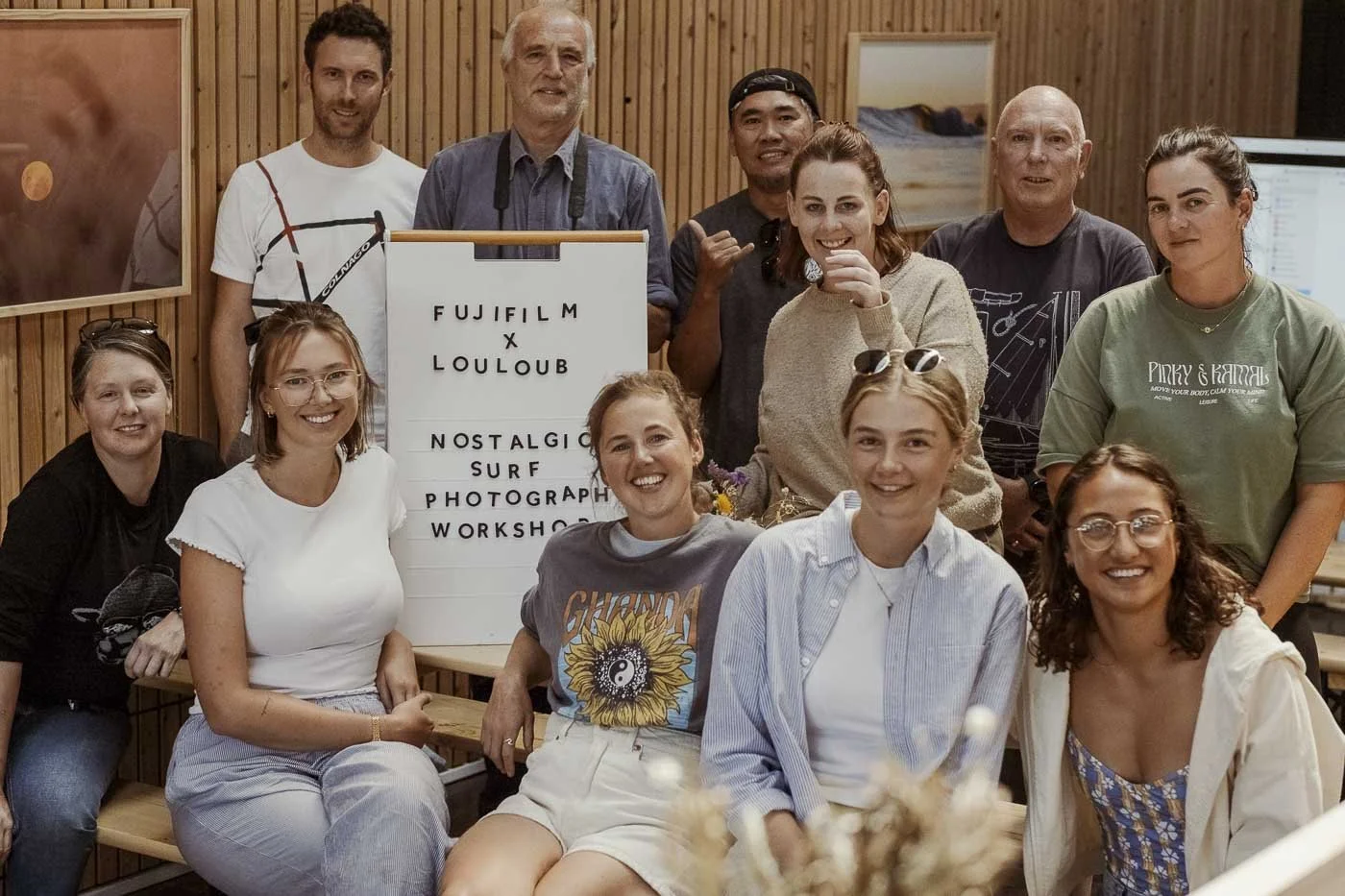
Wrapping up the Nostalgic Surf workshop with the crew who helped bring the campaign environment to life.
FAQs about styled surf shoots behind the scenes
How do you plan a styled surf photography shoot like Nostalgic Surf?
It starts with a strong concept and mood board. From there I coordinate location permissions, wardrobe direction, partner collaboration, and shot sequencing so the day runs like a campaign environment rather than a casual shoot.
Do you always use mood boards before brand shoots?
Yes. Mood boards help align collaborators early and make sure styling, colour direction, and location choices all support the same visual language.
Why was a vintage caravan included in the shoot?
The caravan helped anchor the nostalgic surf atmosphere without overpowering the story. It added context while still allowing movement and lifestyle moments to feel natural.
What cameras were used during the Nostalgic Surf masterclass?
Attendees worked with a range of Fujifilm cameras and lenses so they could experience film simulations and colour rendering in real shooting conditions.
Can this planning approach work for smaller personal shoots?
Absolutely. Even simple lifestyle shoots benefit from concept direction, location awareness, and sequencing. The structure scales depending on the size of the project.